
Broccoli (Brassica oleracea var. italica)
OriginA cabbage that Rome turned into a delicacy
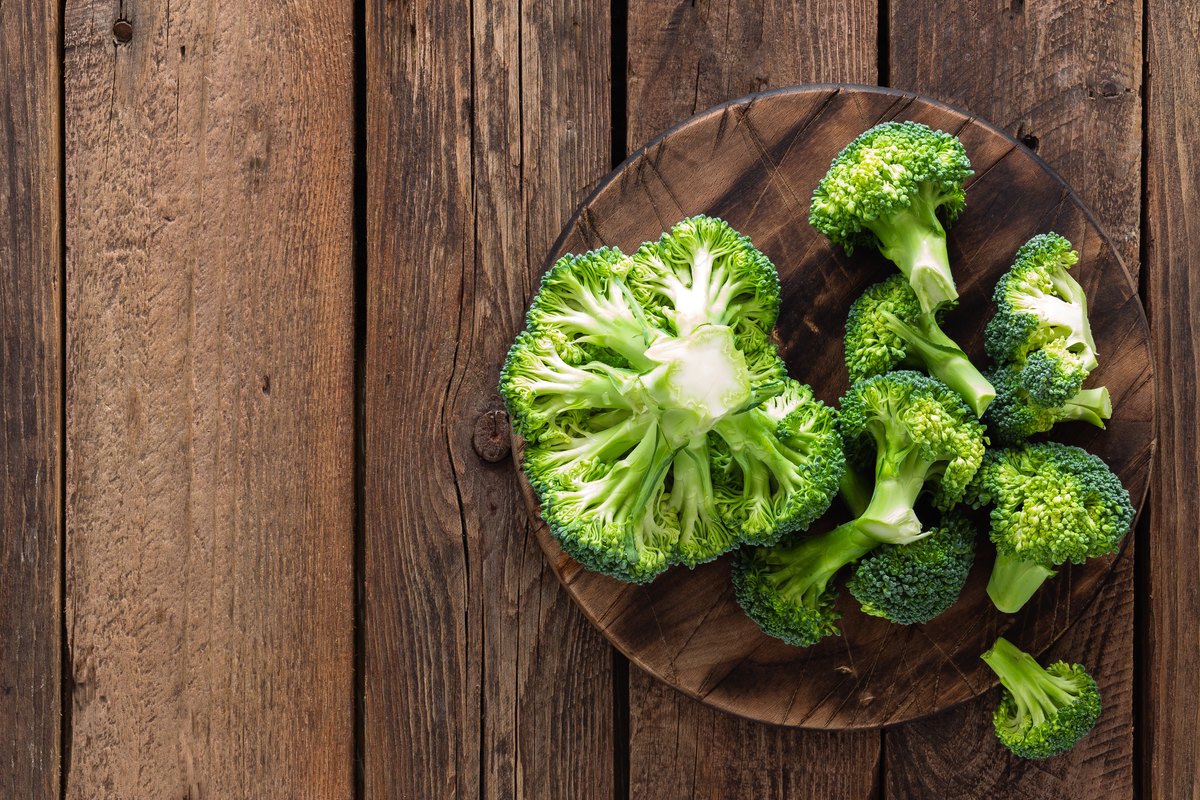
Brokkoli, Karfiol, Kohlsprossen, Kohlrabi und Grünkohl sind alle dieselbe Art - nur verschieden gezüchtet.
Brassica oleracea ist eine der erstaunlichsten Kulturpflanzen überhaupt. Aus dem unscheinbaren Wildkohl, der an europäischen Atlantik- und Mittelmeerküsten wächst, hat die Züchtung in wenigen tausend Jahren eine ganze Gemüsefamilie geformt: Beim Kopfkohl wurde auf die Endknospe selektiert, beim Kohlsprossen auf die Seitenknospen, beim Kohlrabi auf den Stängel, beim Grünkohl auf die Blätter - und bei Brokkoli und Karfiol auf den Blütenstand.
Broccoli originated in Italy; the name comes from brocco, Shoot or sprout. The Romans already knew and appreciated it, and for centuries it remained an Italian specialty. It only arrived in Northern Europe and the USA in the 18th and especially the 20th century – in America, Italian immigrants made it popular in the 1920s.
What we eat is an immature flower head. If broccoli is left to grow, the buds open into yellow cruciferous flowers, and the head becomes woody. Therefore, color is an indicator of freshness: tightly closed, dark green to bluish-green florets mean fresh, while yellowish discoloration indicates that flowering is beginning.
To useSulforaphane - and why it is usually lacking
Broccoli is a food with an excellent nutritional profile: over ninety milligrams of vitamin C per one hundred grams—more than an orange—along with plenty of vitamin K, folate, potassium, and fiber. This alone makes it one of the most valuable vegetables of all, without any further claims.
However, its reputation is due to another substance: sulforaphane. It is one of the best-studied secondary plant compounds and, in cell culture experiments, activates the so-called Nrf2 signaling pathway, which upregulates the body's own detoxification and protective enzymes. Extensive research has been conducted on it, ranging from cell culture experiments and animal models to small human studies on inflammatory markers, blood sugar, and—in one widely noted study—on autism symptoms. Clinical evidence is limited across the board.
The crucial point for culinary purposes is something else entirely. Sulforaphane is not present in the intact plant. It contains a precursor, glucoraphanin, as well as—separately in other cell compartments—an enzyme called myrosinase. Only when the cells are damaged do the two come into contact, and the myrosinase breaks down the glucoraphanin into sulforaphane. This is a defense mechanism of the plant against herbivores.
And this is where heat comes into play. Myrosinase is a protein and is destroyed at around 60 to 70 degrees Celsius. Cooked broccoli therefore contains glucoraphanin, but no functioning enzyme – and thus practically no sulforaphane is produced. Studies show losses of 80 percent or more during cooking. While some is still metabolized by gut bacteria, the amount is significantly less and varies considerably from person to person.
IngredientsThree ways to increase sulforaphane
The first approach, as described in the research literature, is called... hack and holdChop or dice the broccoli and let it stand for forty minutes before heating. During this time, the myrosinase remains active at room temperature and produces sulforaphane, which is significantly more heat-stable than the enzyme. Subsequent heating hardly destroys it. Studies confirm this effect.
The second method is brief steaming. Steaming for about three to four minutes preserves a significant portion of the myrosinase while the broccoli cooks. If steamed for longer than five minutes or boiled in rapidly boiling water, the enzyme is destroyed – and some of the water-soluble vitamins are also lost to the cooking water.
The third way is the most elegant: obtain myrosinase from elsewhere. Mustard seeds, mustard powder, radish, cress, and arugula all contain the same enzyme in its active form. One study showed that half a teaspoon of mustard powder sprinkled over cooked broccoli increased sulforaphane production many times over. So, if you like your broccoli cooked until soft, you can simply serve it with mustard or fresh arugula—and still get what you're looking for.
A fourth point concerns sprouts. Broccoli sprouts contain ten to one hundred times more glucoraphanin compared to mature florets – this finding was what sparked sulforaphane research in the first place. They can be grown at home in a sprouting jar and sprinkled raw over salads and bread. Those specifically seeking sulforaphane should choose sprouts, not florets.
Enhanced combinationsHow to properly care for broccoli
The combinations here are not just about taste - the preparation of these vegetables has a chemical consequence.
Mustard provides active myrosinase. Half a teaspoon sprinkled over cooked broccoli significantly increases sulforaphane production.
The same principle applies with fresh leaves - and it makes a good combination in terms of taste.
Chop into small pieces before heating and let stand. The sulforaphane that forms will withstand the heat.
Three to four minutes of steam preserves some of the enzyme and all water-soluble vitamins.
Ten to one hundred times the glucoraphanin content. Can be grown at home in three to four days.
The peeled stem is tender and aromatic and contains just as much value as the florets.
What contradicts itselfIt's best to avoid these combinations.
It destroys the enzyme and leaches out water-soluble vitamins. The most common avoidable mistake.
Sulforaphane is an interesting subject of research. Clinical evidence for specific applications is limited.
Glucosinolates can impair iodine absorption in cases of simultaneous iodine deficiency. This is irrelevant with adequate iodine intake, and cooking further reduces the levels of these substances.
The vitamin C content drops noticeably. Consume within a few days or freeze after blanching.
A sign of beginning flowering and waning freshness. Choose tightly closed, dark green heads.
The high vitamin K content can influence your mood. No prohibition – but eat regularly instead of in bursts.
In the kitchenWhat's going on with him?
- SubduedThree to four minutes - the best standard preparation.
- With mustard vinaigretteMustard provides the enzyme and is a good match in terms of taste.
- RoastedBake in the oven with oil at 200 degrees until the edges brown.
- wokBriefly stir-fried with garlic and soy sauce.
- Raw in saladFine rosettes raw with lemon dressing - full enzyme activity.
- SoupPüriert mit Erdapfel und einem Löffel Senf zum Schluss.
- stalkPeeled and cut into strips - tender and aromatic, no waste.
- SproutsGrown in a sprouting jar, served raw over salad and bread.
- FrozenBriefly blanched and frozen; however, the enzyme is then destroyed.
- Hack and holdCut, wait forty minutes, then heat.
As a home remedyGrow your own broccoli sprouts
The germination jar on the windowsill
- Purchase broccoli sprouting seeds from a specialist retailer – not regular vegetable seeds, as these are sometimes treated. A sprouting jar with a mesh lid or a canning jar with cheesecloth and a rubber band is sufficient.
- Place one to two tablespoons of seeds in the glass and cover with plenty of water, soak for six to eight hours.
- Pour off the water and place the glass at an angle with the opening facing downwards so that any remaining water can drain out and air can circulate.
- Rinse twice daily: Fill with water, swirl, drain, and tilt again. This routine is crucial – stagnant water leads to bacterial growth.
- After three to four days, the sprouts are two to three centimeters long and bear their first green cotyledons. Then they are ready.
- Drain well and store in the refrigerator, consuming within three to four days. Serve raw over salads, breads, and soups – do not heat, otherwise all the benefits are lost.
For a glucoraphanin content orders of magnitude higher than that of fully grown broccoli - and for fresh greens all year round, even in winter on the windowsill.
Enjoy as a food item. When handling sprouts, pay attention to hygiene: rinse twice daily, drain well, and consume promptly. People with weakened immune systems, pregnant women, and young children should avoid raw sprouts – this applies to all sprouts.
Ayurveda & TCMWhat the old systems say
Ayurveda
Broccoli is an Italian variety and not included in Ayurveda; cruciferous vegetables in general are considered there as vata-classified as causing bloating, and traditionally combined with warming spices such as cumin, asafoetida and ginger - a practice that actually improves digestibility.
Traditional Chinese Medicine
In Chinese dietetics, broccoli is considered - Xi Lan Hua It is described as sweet and cooling, with a connection to the liver, kidneys, spleen, and stomach, and as strengthening Qi and supporting eyesight. It is a late introduction; the classic Chinese cabbage vegetable is bok choy., Bai Cai, which also Brassica belongs and contains the same glucosinolates.
Warning noticesWhen you should be careful
Please note
- Don't overcook: The enzyme myrosinase is destroyed at temperatures above 60 to 70 degrees Celsius, and without it, sulforaphane cannot be produced. Briefly steam or add mustard.
- Thyroid gland and iodine deficiency: Glucosinolates can impair iodine absorption in cases of simultaneous iodine deficiency. This is irrelevant if iodine intake is adequate.
- Vitamin K and Marcumar: High salaries can influence attitudes. No prohibitions – but eat regularly instead of in large quantities.
- Raw sprouts: People with weakened immune systems, pregnant women and small children should avoid raw sprouts.
- Sulforaphane is not a cure: It is an intensively researched plant substance with limited clinical evidence.
- Recognizing freshness: Yellowish rosettes indicate the beginning of flowering and decreasing vitamin content.
This page provides information and does not replace medical advice. If symptoms persist, please consult a doctor.
Related to the topicRead on and cook along!
Shop links lead to our product pages; it is indicated there if a partner is involved.
SourcesWhat is this based on?
- Fahey JW et al.: Broccoli sprouts - an exceptionally rich source of inducers of enzymes that protect against carcinogens. PNAS 1997.
- Ghawi SK et al.: The potential to intensify sulforaphane formation in cooked broccoli using mustard seeds. Food Chemistry 2013.
- Dosz EB, Jeffery EH: Modifying the processing and handling of frozen broccoli for increased sulforaphane formation. Journal of Food Science 2013.
- Souci-Fachmann-Kraut: The composition of foodstuffs, entry broccoli.
- Federal Institute for Risk Assessment: Information on goitrogenic substances in cruciferous vegetables and on raw sprouts.


