
OriginThe plant of the Puna
Maca grows at altitudes of 4000 meters, where frost, storms and UV radiation prevent almost everything - and it is traditionally cultivated only there.
Lepidium meyenii It is a low-growing cruciferous vegetable, related to cress, radish, and mustard, which forms a turnip-like tuber about three to five centimeters in diameter. Botanically, this tuber is not a root vegetable in the strict sense, but rather a thickened hypocotyl – the same principle as in radishes. The leaves lie in a flat rosette on the ground, which is the only practical growth habit during storms and frost.
Its growing region is the Puna of the central Peruvian Andes, primarily the Junín plateau at altitudes of 3,800 to 4,500 meters. Conditions there are such that hardly any other crop can survive: nighttime frost almost year-round, strong winds, intense UV radiation, and poor soil. Maca is one of the highest-altitude cultivated crops in the world, and on such land, its cultivation is often the only viable agricultural option.
Its use is ancient: archaeological finds indicate cultivation for at least two thousand years. In Inca times, maca was a valued food and trade commodity; Spanish chroniclers report that the tuber was believed to bestow fertility upon the animals and people of the high plateau—an observation likely simply related to the fact that a nutritious crop at high altitudes could mean the difference between scarcity and survival. The Western boom began in the 1990s and has greatly expanded cultivation; maca is now also grown in China, which has led to significant conflicts in Peru.
To useSmall studies, big promises
There is no EMA monograph and no Commission E assessment for maca. In the EU, it is classified as a food or food supplement. The research focused primarily on one question: Does maca affect sexual function and libido?
The answer is a cautious "maybe, but the data aren't sufficient." A systematic review found several small randomized trials in which maca improved subjectively reported sexual desire in healthy men, as well as one study on antidepressant-induced sexual dysfunction with a positive signal. The authors concluded that the evidence was limited and the studies too small and methodologically weak to support a recommendation. Studies on sperm parameters showed increases in sperm count and motility in a few isolated cases—also small and not sufficiently replicated.
A second area investigated is menopausal symptoms. Here, too, there are a few small placebo-controlled studies showing improvements in symptom scores, and here, too, the summary of the reviews is that the data is insufficient to make a recommendation. The important point is the mechanism—or rather, that it is unknown. Maca contains no phytoestrogens and no steroidal hormones; several studies found no change in hormone levels with maca. This is a remarkable finding: if an effect exists, it does not occur via the mechanism suggested by advertising.
What remains is a nutritious root vegetable with an interesting nutritional profile—carbohydrates, about ten percent protein, fiber, iron, calcium—and one unanswered question. Anyone who wants to try maca can do so; it's a food with a long history of use and a good safety profile. However, anyone being offered it as an aphrodisiac or hormone replacement should know that both claims are based on inaccurate data.
IngredientsMacamides, glucosinolates and three colours
The characteristic constituents of maca are macamides – fatty acid amides found in this form only in this plant – and macaenes. These are considered the most pharmacologically interesting components, and extracts are sometimes standardized based on them. Their function in the body is unclear; there are animal studies, but the mechanism of action in humans has not been elucidated.
As a member of the cruciferous family, maca also contains glucosinolates – mustard oil glycosides, the same group of substances found in mustard, cress, and cabbage. These are responsible for the characteristic pungent, earthy aroma and are converted to isothiocyanates when maca is crushed. This group of substances is the reason for a practical warning that is often overlooked: in larger quantities, glucosinolates can inhibit the thyroid gland's uptake of iodine. This is not a problem with adequate iodine intake; however, it is a reason for caution in cases of existing iodine deficiency or thyroid disease.
Traditionally, maca is never eaten raw. In Peru, the tuber is sun-dried after harvesting, then cooked, roasted, or mashed. There are good reasons for this: raw maca is difficult to digest, and cooking or the so-called gelatinization process—in which the starch is broken down under pressure and heat—significantly improves its digestibility. "Gelatinized maca" on a package means exactly that and has nothing to do with gelatin.
There are color variations: yellow maca is the most common and mildest, while red and black are rarer and more expensive. In marketing, different effects are attributed to them—black maca for men, red for the prostate and for women. There are some animal studies, but no human studies to support these claims. Those who pay the premium are buying into a hypothesis.
Enhanced combinationsMaca in everyday life
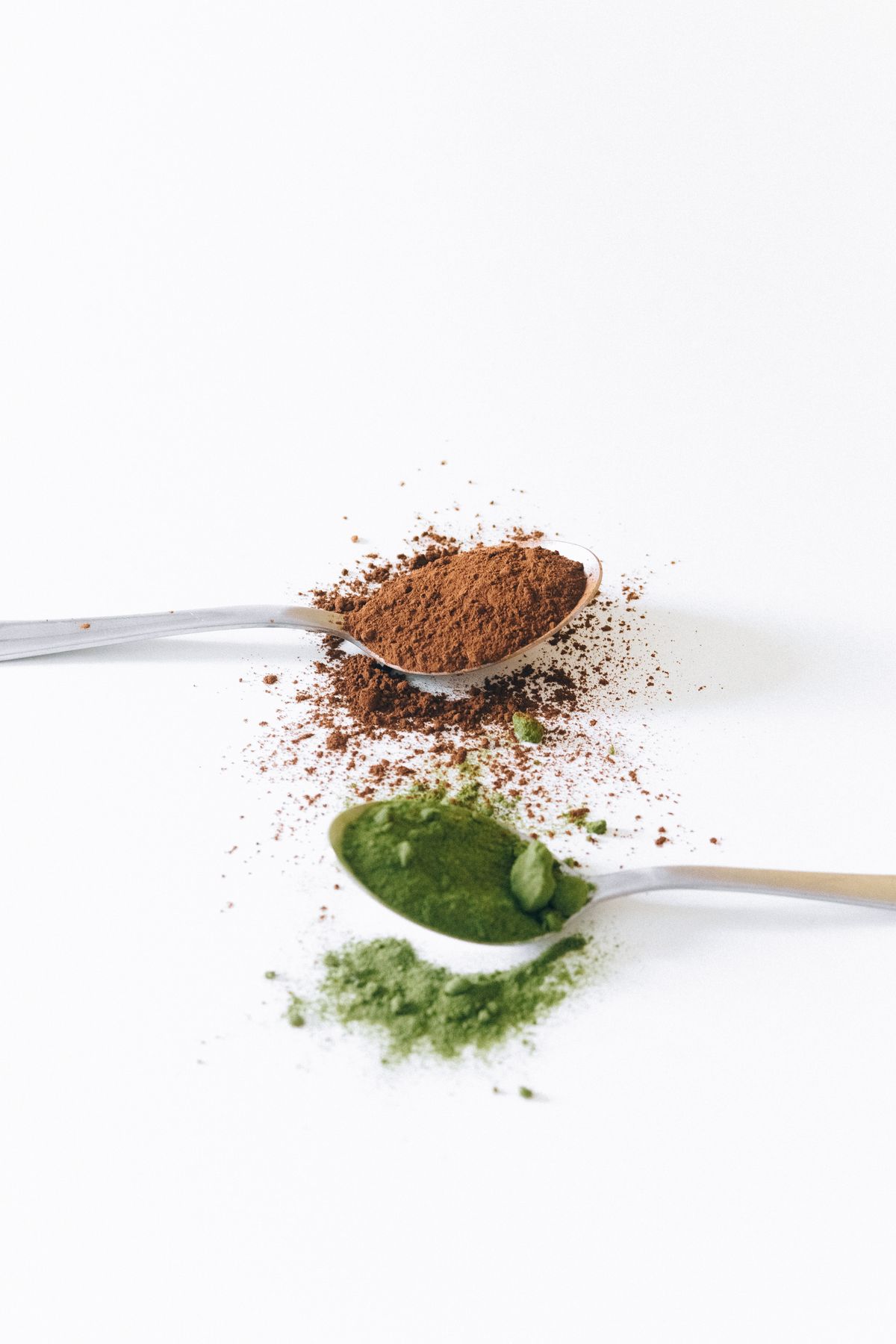
Maca is a food, and that's how it can be used most effectively - as a nutritious powder with an earthy taste, not as a product with promises.
The processed form is significantly better tolerated than raw powder. Anyone trying maca and experiencing bloating should start with this form.
The flavor is earthy and malty with a slight mustard note. Cocoa and banana balance this well – making it most commonly used in smoothies.
Stir a teaspoon into the porridge; it goes well with cinnamon and nuts.
Baked into cookies and bars - a malty note that goes well with chocolate.
Start with half a teaspoon and gradually increase the amount. The most common mistake beginners make is taking too much at once, which can lead to bloating.
Traditional cultivation in the Puna of Junín is tied to a specific region and local producers. Origin labeling is a useful criterion here.
What contradicts itselfIt's best to avoid these combinations.
As a cruciferous vegetable, maca contains glucosinolates, which in larger quantities can inhibit iodine absorption. Use with caution if you have thyroid disease or a known iodine deficiency.
Maca contains no hormones or phytoestrogens, and studies have found no changes in hormone levels. It is neither intended nor suitable as a hormone replacement.
Traditionally, maca is never eaten raw. Raw powder is more difficult to digest and more often leads to bloating and abdominal discomfort.
The different effects of the color variations are not supported by human studies. The higher price buys a hypothesis.
Erectile dysfunction is often an early sign of vascular disease or diabetes. It should be investigated, not treated with a powder.
As a foodstuff in normal quantities, it is unproblematic; data on concentrated preparations during this period are lacking.
To which courtHow to use maca
- SmoothieA teaspoonful with banana, cocoa and milk - the most common use.
- PorridgeStirred into oatmeal breakfast, with cinnamon and nuts.
- MazamorraThe traditional Peruvian porridge made from cooked maca with milk and sugar.
- Chicha de macaA traditional Peruvian drink made from cooked, fermented maca.
- Energy barMade with dates, nuts and cocoa.
- pastriesIn cookies and muffins; the malty note goes well with chocolate.
- GelatinizedThe processed form is better tolerated than raw powder.
- Gradual increaseStart with half a teaspoon, increase over a week.
- In the morningMany users report a stimulating effect - therefore not recommended in the evening.
- OriginPeruvian Puna origin is a sensible selection criterion.
As a home remedyThe beginning
Maca in the morning shake
- Check beforehand: no known thyroid disease, no diagnosed iodine deficiency. As a cruciferous vegetable, maca contains glucosinolates, which in larger quantities can affect iodine absorption.
- Choose gelatinized maca powder, not raw – the processed form is much better tolerated.
- Start with half a teaspoon: stirred into a shake made with banana, cocoa and milk or plant-based drink.
- Increase to one to two teaspoons daily over one to two weeks if well tolerated. This corresponds to approximately 1.5 to 3 g, the amount typically used in studies.
- Take in the morning - many users report a stimulating effect that can be disruptive in the evening.
- After four to six weeks, assess the situation. If nothing noticeable happens, a higher dose is not the answer. If you experience bloating or abdominal discomfort, reduce the amount or discontinue use.
As a nutritious dietary supplement with a long history of use. Studies have primarily focused on libido and menopausal symptoms – with positive indications, but without sufficient evidence for a recommendation.
1.5 to 3 g of powder daily, as in most studies. There is no officially approved dosage recommendation. Use with caution in cases of thyroid disease; during pregnancy and breastfeeding, adhere to normal food intake levels.
Ayurveda & TCMWhat the old systems say
Ayurveda
Maca is a South American plant and not used in Ayurveda. The category it's placed in in Western marketing—strengthening, fertility-enhancing—corresponds to the... Vajikarana-means, with Ashwagandha, Shatavari and Kapikacchu as classic representatives. The fact that maca is now on the same shelf as these plants is a market summary, not a shared tradition.
Traditional Chinese Medicine
The Chinese materia medica also lacks this. Lepidium meyenii Classic. The more recent developments are interesting: China now cultivates maca itself in Yunnan, and the plant is being incorporated into modern applications there – described as warming and sweet, strengthening kidney yang, which corresponds to the category in which ginseng and fenugreek are also found. Peruvian cultivation has suffered greatly from this competition, and the dispute over seeds and origin remains unresolved to this day.
Warning noticesWhen you should be careful
Please note
- Thyroid: As a cruciferous vegetable, maca contains glucosinolates, which in larger quantities can inhibit iodine absorption. Use with caution if you have thyroid disease or iodine deficiency.
- No hormone preparation: Maca contains no hormones or phytoestrogens; studies have found no changes in hormone levels. Unsuitable as hormone replacement therapy.
- Have erectile dysfunction checked out: They are often an early sign of vascular disease or diabetes. This should be investigated, not covered up.
- Raw, poorly tolerated: Traditionally, maca is always cooked or processed. Raw powder often leads to bloating.
- No approved dosage: There is no monograph and no official dosage recommendation.
- Pregnancy and breastfeeding: Data is lacking for concentrated preparations; for typical food quantities, the data remains the same.
This page provides information and does not replace medical advice. If symptoms persist, please consult a doctor.
Related to the topicRead on and cook along!
Shop links lead to our product pages; it is indicated there if a partner is involved.
SourcesWhat is this based on?
- Shin B.-C. et al.: Maca (Lepidium meyenii) for improving sexual function: a systematic review. BMC Complementary and Alternative Medicine 2010.
- Gonzales GF: Ethnobiology and ethnopharmacology of Lepidium meyenii, a plant from the Peruvian highlands. Evidence-Based Complementary and Alternative Medicine 2012.
- Lee MS et al.: Maca for treatment of menopausal symptoms: a systematic review. Maturitas 2011.
- Wang S., Zhu F.: Chemical composition and health effects of maca. Food Chemistry 2019.
- Federal Institute for Risk Assessment: Information on goitrogenous substances in cruciferous plants.