OriginThe rock celery
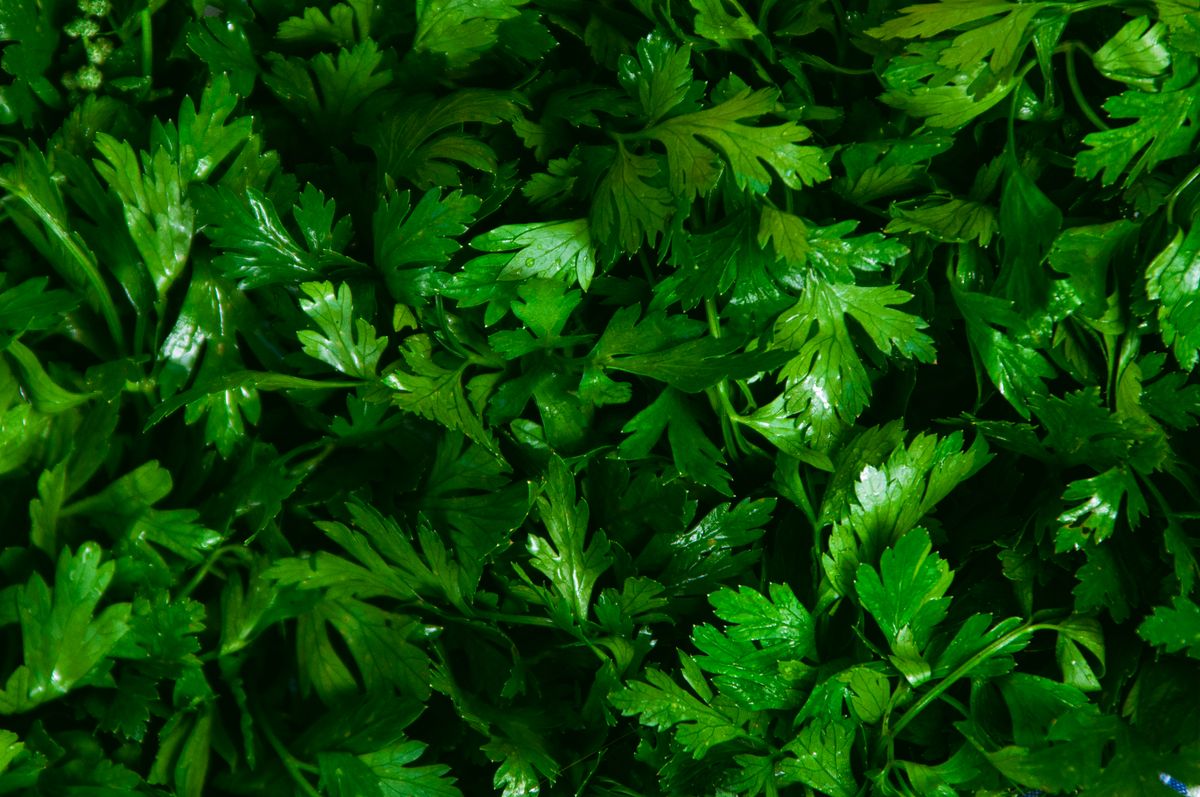
Petroselinum It is called rock celery - and indeed the wild form grows on rocky slopes of the eastern Mediterranean, where nobody would expect to find it.
Parsley originates from the eastern Mediterranean and was known to the Greeks and Romans, though initially less as a spice and more as a wreath plant and grave decoration: For the Greeks, it was associated with the cult of the dead, and the expression "he'll soon need parsley" meant that someone didn't have long to live. It only became established as a culinary herb in the Middle Ages, but then it gained widespread popularity – today it is one of the most widely used herbs in Europe.
Three forms are available commercially. flat-leaf parsley This is the more aromatic form and the standard form in Southern Europe and the Middle East. curly parsley It was originally bred to prevent confusion with poisonous umbellifers – it tastes milder and has therefore been relegated to the role of a decorative plant in Germany. Parsley root is a separate group of varieties with a fleshy, white root, which is found in soup greens and whose leaves are also usable.
The risk of confusion is real and the reason for an old kitchen rule. fool's parsley (Aethusa cynapium(This plant) is a poisonous umbellifer that resembles flat-leaf parsley. It differs by an unpleasant, garlicky odor when crushed, shinier, darker leaves, and, most importantly, by the long, drooping bracts beneath the individual umbels – a characteristic that true parsley lacks. If you're sowing seeds in your garden and unsure what's sprouting: rub the leaves and smell them. Parsley smells like parsley.
To useWhat parsley does for you
Parsley has an image problem: it's placed next to the plate as decoration and pushed aside. Yet it belongs to the most nutrient-rich leaves in the kitchen. One hundred grams of fresh parsley contain more vitamin C than a lemon, as well as an extremely high amount of vitamin K, plenty of folic acid, iron, potassium, calcium, and carotenoids. The usual amounts are, of course, smaller – but a good bunch of parsley in tabbouleh is nutritionally a leafy vegetable, not just a garnish, and that's exactly how Levantine cuisine treats it.
The diuretic effect is primarily used medicinally: Commission E has approved parsley herb and root for Flushing of the urinary tract and is also valued for the prevention of kidney stones. The flavonoids and components of the essential oil are responsible for this effect. As with any flushing therapy, the main benefit comes from the amount consumed, and it is not suitable for those with impaired heart or kidney function. Traditionally, parsley is also considered an appetite stimulant and digestive aid – and a remedy for garlic breath, which actually works: chlorophyll and polyphenols bind some of the sulfur compounds in the mouth.
And then there's a point where the quantity used in cooking and the concentrated preparation diverge significantly. Parsley contains... Apiol and Myristicin Apiol is found primarily in the seeds and essential oil, and significantly less in the leaves. Historically, it was used as an abortifacient, resulting in severe poisoning and death; in high doses, it damages the liver and kidneys and has a strong effect on the uterine muscles. This does not apply to the bunch of parsley in the salad. The concentration there is orders of magnitude lower. This applies to parsley seeds, parsley essential oil, and highly concentrated extracts, and these have no place in self-medication.
IngredientsThis is what's in parsley
The leaf provides remarkable amounts of nutrients: Vitamin C (around 160 mg per 100 g, which is more than three times the amount in a lemon), Vitamin K in peak values, folic acid, iron, potassium, calcium, magnesium and carotenoids, plus plenty Apigenin - a flavonoid with described antioxidant and anti-inflammatory properties. The high vitamin K content is the reason for a specific warning: those taking coumarin-type blood thinners should not suddenly and drastically change the amount of parsley they consume, because vitamin K reverses the coagulation process.
The essential oil It is sparsely represented in the leaf at 0.05 to 0.3 percent, somewhat more in the root, in the seeds In contrast, it is highly concentrated at two to seven percent. Its critical components are Apiol and Myristicin - Phenylpropanes, which in high doses affect the liver, kidneys, and uterus. This explains the sharp distinction between culinary herbs and concentrated preparations.
Two practical points for the kitchen. First: The stems contain more essential oil than the leaves. Throwing them away is wasteful; finely chopped, they belong in the dish or stock. Secondly, parsley loses almost everything during cooking, both vitamin C and aroma. It belongs at the end, not the beginning – with one exception: stock, where the stems can and should be cooked along with the rest.
Enhanced combinationsWhat makes parsley stronger
A herb that should be treated like a vegetable rather than a decoration - in large quantities, fresh, and at the end.
Tabouleh, Persillade, Salsa verde: Where parsley plays the main role, it becomes truly delicious.
More flavor than the leaves - chop them up and use them along with the rest, or cook them in the stock.
Gremolata and persillade: Parsley also helps to neutralize garlic breath.
The plant-based iron from parsley is well absorbed thanks to its own vitamin C - a rare stroke of luck.
Carotenoids need fat; a spoonful of good oil makes more of the herb.
Place it in water like flowers, put a bag over it, and put it in the refrigerator - it will keep for a week.
What contradicts itselfIt's best to avoid these combinations.
Aroma and vitamin C disappear after a few minutes - put it at the end, not in the pot.
That's where apiol is concentrated; it has caused severe poisonings and should not be used for self-administration.
It's unproblematic as a culinary herb, but avoid parsley treatments, seeds or oils during pregnancy.
The high vitamin K content can shift the setting - keep the amount constant.
Curly parsley is decorative, but significantly less aromatic than flat-leaf parsley.
The poisonous fool's parsley resembles the flat-leaf variety - crushed parsley smells like parsley, fool's parsley smells unpleasant.
To which courtWhere she belongs
- TabboulehThe Lebanese salad: parsley is the main ingredient, bulgur is just a side dish.
- GremolataParsley, lemon zest, garlic - over ossobuco and braised dishes.
- PersilladePetersilie und Knoblauch in Butter - zu Fisch, Muscheln und Erdäpfel.
- Salsa verdeWith capers, anchovies, vinegar and oil - to go with boiled beef and fish.
- Green sauceOne of the seven herbs and the main ingredient in the Frankfurt version.
- parsley potatoesThe German classic - butter, salt, plenty of freshly chopped parsley.
- ChimichurriArgentinian style, with oregano, garlic, vinegar and oil for grilled meat.
- Stock and soup vegetablesThe stems and root parsley give the broth depth.
- parsley pestoInstead of basil - use walnuts and pecorino; it keeps longer in the refrigerator.
- After the garlicChewing a few leaves binds some of the sulfur compounds in the mouth.
As a home remedyThe green bundle
Parsley-lemon water
- Wash half a bunch of flat-leaf parsley, drain well and roughly chop including the stems.
- Pour into a carafe, add the juice of half a lemon and fill with one liter of cold water.
- Let it steep in the refrigerator for two hours, then drink it throughout the day. The parsley can stay in.
- Repeat as needed over a few days - also drink normal water, this is not a replacement fluid, but a part of it.
To support flushing out the urinary tract in cases of mild urinary tract discomfort, and simply as a pleasant way to drink more. To be honest: Parsley's diuretic effect is traditionally recognized, but the vast majority of the effect simply comes from drinking an extra liter. This isn't a disadvantage – the flushing process works just as well regardless. We're not marketing this as a "detox cure.".
One liter throughout the day, for several days. Not suitable for patients with impaired heart or kidney function., Because increased fluid intake can be harmful during pregnancy, not during pregnancy. Those taking coumarin-type blood thinners should keep their parsley intake constant. Burning during urination accompanied by fever, flank pain, or blood in the urine should be checked by a doctor immediately.
Ayurveda & TCMWhat the old systems say
Ayurveda
Parsley is not a classic ingredient in Ayurveda. Based on its properties, it would be classified as pungent, bitter, and slightly warming, while also having a diuretic effect. Kapha lowering, Vata in moderation, Pitta In larger quantities, it increases the effects. It would be well-suited as a remedy for water retention and sluggish digestion – a general principle, not a traditional one.
Traditional Chinese Medicine
Parsley is also absent from the Chinese Materia Medica; coriander takes over the role of the fresh, aromatic umbellifer there (Hu SuiAccording to its nature, parsley would be a pungent, warming herb that opens the surface, eliminates dampness and moves Qi - in the vicinity of herbs used for water retention and blockages in the middle burner.
Warning noticesWhen you should be careful
Please note
- Seeds and essential oil: Contains apiol in high concentrations - severe poisonings have been documented; not for self-administration.
- Pregnancy: Kitchen quantities are unproblematic, but parsley cures, seeds and oil are not - apiol affects the uterine muscles.
- Blood thinners: The high vitamin K content can delay the level of coumarins - keep the amount constant.
- Heart and kidneys: Flushing therapies with increased fluid intake are not suitable in cases of impaired function.
- Confusion: The poisonous fool's parsley resembles the smooth variety - smell test and look at the drooping bracts.
- Photosensitization: Umbellifers contain furocoumarins; skin reactions are possible with intensive skin contact with the sap followed by sun exposure.
This page provides information and does not replace medical advice. If symptoms persist, please consult a doctor.
Related to the topicRead on and cook along!
Shop links lead to our product pages; it is indicated there if a partner is involved.
SourcesWhat is this based on?
- Commission E: Monograph Petroselini herba/radix (parsley herb and root), Federal Gazette 1988 - Flushing of the urinary tract; contraindications: pregnancy and kidney inflammation.
- Blaschek W (ed.): Wichtl - Herbal drugs and phytopharmaceuticals. 6th edition 2016, monograph Petroselini fructus/herba - Apiol and myristicin.
- Federal Institute for Risk Assessment: Assessment of apiol and myristicin in foods and essential oils.
- Tang EL et al. Petroselinum crispum has antioxidant properties, protects against DNA damage and exhibits antiproliferative effects. Journal of the Science of Food and Agriculture 2015; 95(13): 2763–2771.
- USDA FoodData Central: Parsley, fresh - Vitamin C and vitamin K content.