
OriginThe root that nobody finds wild
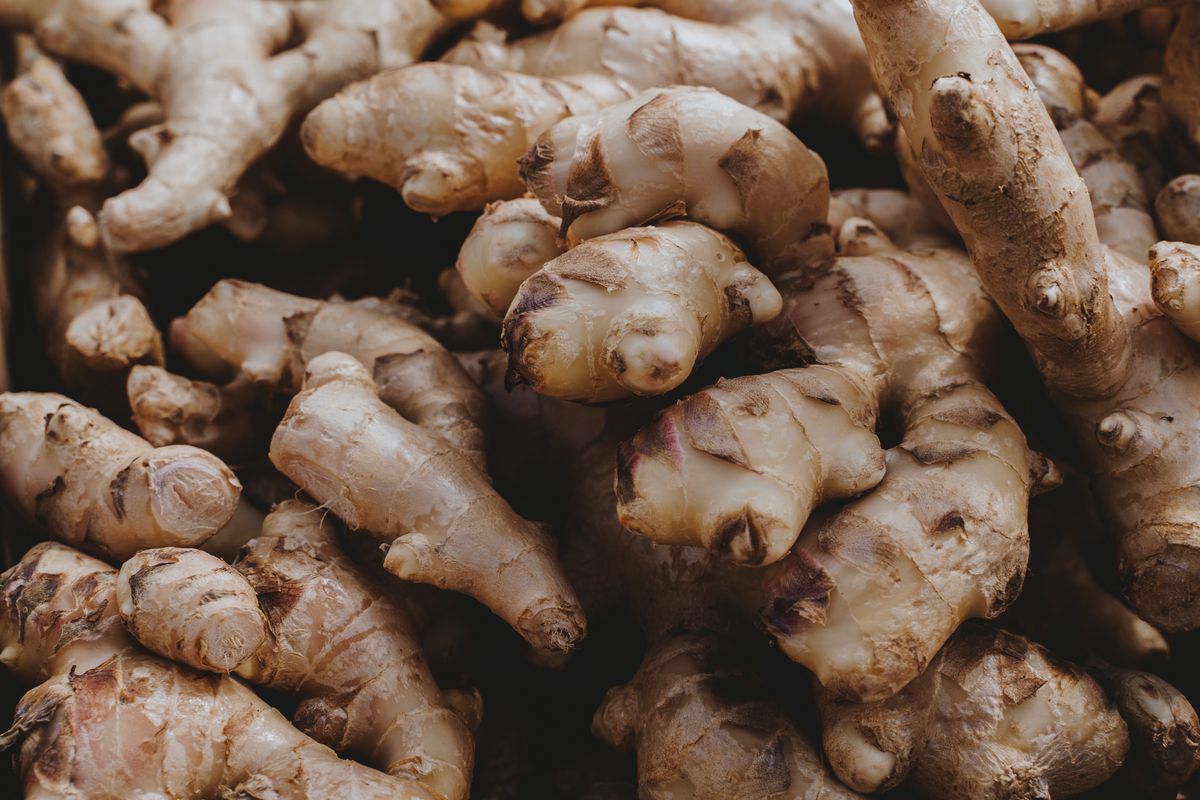
Ginger only exists as cultivated food – and has for so long that the wild form has disappeared. Humans and ginger have been inextricably linked for at least 3,000 years.
Ginger originates from tropical Asia, probably India or southern China, where it has been cultivated as a spice and medicine since antiquity. It reached ancient Rome via Arab traders, where it was the second most traded spice after pepper; in the Middle Ages, it was found in every European cookbook and pharmacy. The English made ginger ale and gingerbread from it, the Japanese sushi ginger, and the Indians chai.
What we buy as a root is actually a rhizome – an underground stem that sprouts anew each year. Young ginger is tender, low in fiber, and mild; older ginger, as it is usually found in stores, is woody and pungent. It is cultivated today in India, China, Nigeria, Nepal, and Peru – Peru supplies the organic ginger found in German shops.
To useWhat ginger does for you
Ginger is the best-documented kitchen remedies Absolutely. Against nausea – due to travel sickness, during pregnancy, or after surgery – it has proven as effective as many medications in dozens of studies, without their side effects. The gingerols and shogaols directly soothe the stomach and accelerate its emptying; the European Medicines Agency recognizes precisely this.
Die zweite Stärke sind Entzündung und Schmerz: Ingwer hemmt dieselben Enzyme wie Ibuprofen, nur schwächer. In Studien linderte er Regelschmerzen, Muskelkater und Arthroseschmerz - nicht vollständig, aber spürbar. Dazu wärmt er, regt die Verdauung an, löst Schleim bei Verkühlung und senkt in kleinen Studien Blutzucker und Blutfette leicht.
Honestly, there's hardly another spice where tradition and research are so closely intertwined. If you only want one root in your kitchen, this is the one.
IngredientsThis is contained in the rhizome
Gingerol These are the pungent compounds in fresh ginger; when dried and heated, they become... Shogaols, which are spicier and more strongly anti-inflammatory – therefore, dried ginger is not weaker than fresh ginger, but different. The essential oil with Zingiberen, Citral and cineole provide the citrus and resinous notes.
Ginger also contains starch, mucilage, enzymes (zingibain, which tenderizes meat), vitamin B6, potassium, manganese, and magnesium. The active ingredients are located just under the skin – peel it thinly or use organic ginger with the peel on.
Enhanced combinationsWhat makes ginger stronger
Ginger is a universal partner: spicy with sweet, warm with cold, fresh with fatty.
The tea everyone knows: ginger warms and loosens, lemon provides vitamin C and acidity, honey soothes the throat. All three complement each other; none is merely decorative.
The foundation of Chinese cuisine: ginger, garlic, and spring onion in hot oil – then comes the vegetables. Without these three, every wok lacks a foundation.
Golden milk: Turmeric and ginger are related with similar effects; pepper improves absorption; fat dissolves both.
Candied ginger, gingerbread, ginger ale: sweetness carries the spiciness and makes it a pleasure.
Steamed fish with strips of ginger, soy and hot sesame oil - the Cantonese way of preparing fish.
In Ayurvedic digestive tea: ginger stimulates movement, cumin relaxes, fennel cools - for a heavy stomach after eating.
What contradicts itselfIt's best to avoid these combinations.
Mediterranean resinous herbs and ginger don't talk to each other - one kitchen or the other.
Ginger becomes warmer and duller when cooked. Grate it for a fresh note and add it at the end.
Powder makes the tea cloudy and stronger, without the citrus notes. Powder is fine in baked goods, but the root is best for tea.
Ginger inhibits platelets. Kitchen amounts are not critical; however, discuss the use of capsules and ginger treatments with patients taking warfarin, aspirin, and similar medications.
Stop taking high doses of ginger two weeks beforehand - because of the tendency to bleed.
Ginger stimulates bile flow - this can trigger colic in people with bile stones.
To which courtWhere he belongs
- Ginger teaSimmer four slices of fresh lemon with 300 ml of water for 10 minutes; add lemon and honey to the cup only after adding the lemon.
- Steamed fishSteam whole fish with strips of ginger and spring onion for 10 minutes, then add hot oil and soy sauce.
- ChaiGinger, cardamom, cinnamon, clove, black tea, milk - simmer for 10 minutes.
- Golden MilkTurmeric, ginger, pepper, a little coconut oil in warm milk.
- Stir-fried vegetablesGinger, garlic, spring onion in hot oil, then vegetables, then soy.
- Pumpkin soupCook a piece of ginger with the pumpkin, then blend with coconut milk.
- Sushi gingerYoung ginger, thinly sliced and preserved in rice vinegar, sugar and salt - served between the appetizers.
- GingerbreadGround ginger with cinnamon and molasses - the English Christmas pastry.
- Ginger shotJuice ginger, lemon, orange, and a little turmeric - a shot glass in the morning.
- Candied gingerCubes boiled in sugar syrup and dried - for use against travel sickness in your bag.
As a home remedyIngwertee gegen Übelkeit und Verkühlung
Ginger tea
- Cut a thumb-sized piece of fresh ginger into thin slices - leave the peel on if it's organic.
- Add 300 ml of water and simmer gently for 10 minutes - boiling brings out the shogaole.
- Strain; add lemon juice and honey to the cup first, so that the vitamin C and enzymes do not cook off.
- Bei Übelkeit in kleinen Schlucken; bei Verkühlung heiß, zwei bis drei Tassen am Tag.
Reiseübelkeit, Schwangerschaftsübelkeit (bis 1 g getrockneter Ingwer täglich gilt als sicher), Völlegefühl, Verkühlung mit Frösteln, Regelschmerzen, Muskelkater. Kandierter Ingwer ist die Notfallversion für unterwegs.
Up to 4g of fresh or 1g of dried ginger per day. More than that won't help and will cause stomach upset. During pregnancy, stick to 1g and consult your midwife.
Ayurveda & TCMWhat the old systems say
Ayurveda
Shunthi (dried) Ardraka (Fresh) peppers are considered "the universal remedy" (Vishwabhesaj) in Ayurveda: They ignite Agni, burn Ama (undigested matter), reduce Vata and Kapha, and are included in almost every formula - often together with pepper and long pepper as Trikatu.
Traditional Chinese Medicine
Sheng Jiang (fresh) warms the surface, dispels cold, stops vomiting and coughing; Gan Jiang (Dried) it warms the center more deeply. Ginger is one of the most frequently used remedies in Chinese medicine and appears in hundreds of classic formulas – usually as a complementary ingredient that makes other herbs more tolerable.
Warning noticesWhen you should be careful
Please note
- Blood clotting: High doses of ginger (capsules, treatments) enhance the effect of blood thinners; discontinue use two weeks before surgery.
- Gallstones: If you have known kidney stones, avoid high doses – ginger stimulates bile production.
- Stomach: Too much ginger burns and can trigger heartburn; use sparingly if you have gastritis.
- Pregnancy: Up to 1 g of dried product daily is considered safe against nausea; discuss higher doses and treatments with your midwife.
- Diabetes: Ginger slightly lowers blood sugar – monitor when taking other medications.
- Children: Safe as a spice and mild tea; capsules are not.
This page provides information and does not replace medical advice. If symptoms persist, please consult a doctor.
Related to the topicRead on and cook along!
Shop links lead to our product pages; it is indicated there if a partner is involved.
SourcesWhat is this based on?
- European Medicines Agency (EMA), HMPC: Community herbal monograph on Zingiber officinale Roscoe, rhizoma, 2012 - Prevention of nausea and vomiting in travel sickness, minor digestive problems.
- Commission E: Monograph Zingiberis rhizoma (ginger rhizome), Federal Gazette 1988.
- Viljoen E et al. A systematic review and meta-analysis of the effect and safety of ginger in the treatment of pregnancy-associated nausea and vomiting. Nutrition Journal 2014; 13:20.
- Bartels EM et al. Efficacy and safety of ginger in osteoarthritis patients: a meta-analysis. Osteoarthritis and Cartilage 2015; 23(1): 13–21.
- Mao QQ et al. Bioactive compounds and bioactivities of ginger (Zingiber officinale Roscoe). Foods 2019; 8(6): 185.


