
Cornelian cherry (Cornus mas)
OriginFrom spearwood to dirndl branding
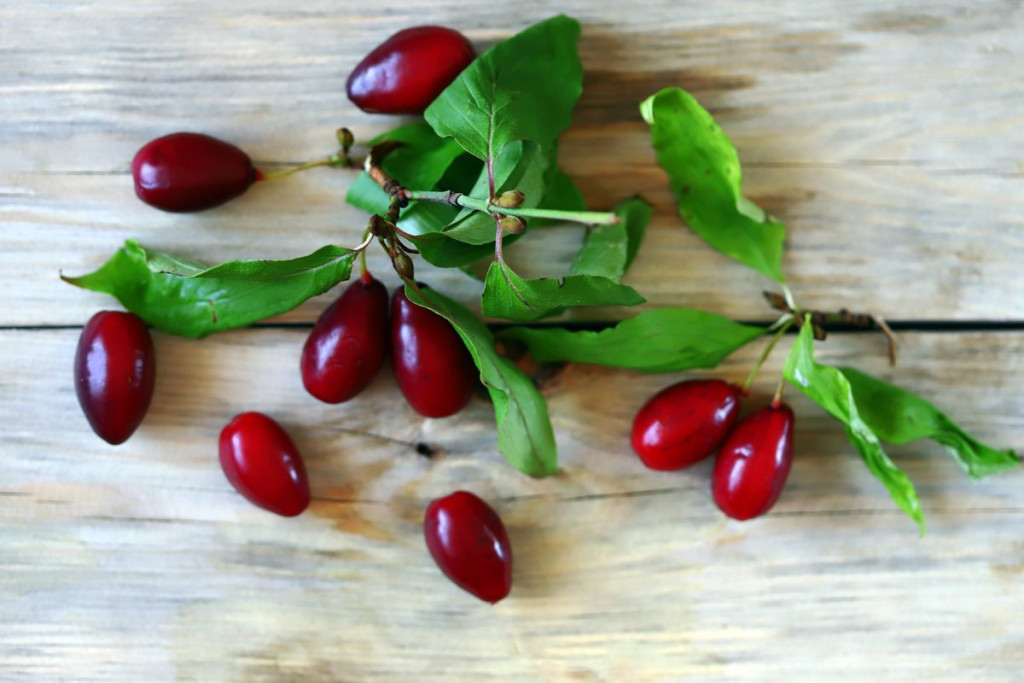
The wood of the cornelian cherry is so hard and heavy that it sinks in water - the Macedonians made their long spears from it.
The cornelian cherry grows wild from southern Europe across the Balkans to Asia Minor and the Caucasus. In Germany, it is found primarily on warm slopes in the southwest, for example along the Saar, Moselle, and Rhine rivers. Greeks and Romans ate the fruit and valued the almost unbreakable wood for spears and tool handles.
Many names show how widespread it was: Herlitze, Dürlitze, and Hirlnuss in Germany; Dirndl or Dirndlstrauch in Austria; Tierlibaum in Switzerland. In the Pielach Valley in Lower Austria, the dirndl remains a cultural asset to this day – with jam, juice, liqueur, and the famous Dirndl brand. In Turkey and the Caucasus, the fruits are dried or cooked into syrup.
To useWhat the cornelian cherry can do for you
The cornelian cherry is one of the richest in vitamin C Wild fruits of Europe: Depending on the variety and ripeness, 100 g contain approximately 70 to 125 mg of vitamin D, and in some measurements even significantly more – up to twice as much as in lemons. A handful covers a large portion of the daily requirement (95–110 mg). In addition, they contain about 8 to 9 mg of sugar, 2 to 3 mg of fruit acids, and Dietary fiber.
The deep red color comes from Anthocyanins, primarily glycosides of cyanidin and pelargonidin – the same pigments that color blueberries and cherries. In addition, there are flavonoids, ellagitannins, and the compounds typical of dogwood. Iridoids like loganic acid. In the laboratory, they have antioxidant and anti-inflammatory effects.
In humans, there are some initial small studies: In a study with 60 people with type 2 diabetes, capsules containing cornelian cherry extract slightly lowered long-term blood sugar levels (HbA1c) and blood lipids somewhat over six weeks. These were extracts, not jam. The data is insufficient for a firm recommendation – the cornelian cherry is a vitamin-rich wild fruit, not a diabetes medication.
IngredientsThis is what's in the cornelian cherry
The cornelian cherry contains vitamin C, sugars (glucose, fructose), organic acids such as malic and citric acid, pectin and other dietary fiber, anthocyanins (especially cyanidin, pelargonidin and delphinidin galactosides), flavonoids such as quercetin and kaempferol glycosides, phenolic acids, ellagitannins, iridoids such as loganiic acid and cornuside, as well as potassium, calcium, magnesium and iron.
The darker the fruit, the more anthocyanins and sugars it contains, and the fewer tannins. The large, oblong stones contain oil and tannins, but they are rock-hard and are not eaten.
Enhanced combinationsWhat makes the cornelian cherry stronger
Cornelian cherries are sour and tart - with sweetness, warmth and spice they become well-rounded.
Vitamin C helps with plant-based iron.
Reduces the acidity in purées and jams.
As compote or fruit sauce.
For dirndl roast and compote.
Like cranberries.
It makes the fruit softer and sweeter.
What contradicts itselfIt's best to avoid these combinations.
Very tart and sour - wait until they are dark red.
Steinhart - tooth and swallowing hazard.
Its bluish-black berries are inedible.
Vitamin C is lost.
Acid and tannins are irritating.
Dirndlbrand is alcohol, not a source of vitamin C.
In the kitchenWhere she belongs
- Dirndl jamClassics from the Pielach Valley.
- Cornelian cherry jellyPassed through a cloth.
- compoteBriefly boiled, then stoned.
- Dirndl juiceDiluted with water.
- ChutneyWith onion, ginger, and vinegar.
- Fake olivesUnripe fruit in brine.
- Fruit leatherSpread the puree thinly and let it dry.
- Wild sauceRegarding deer and stag.
- Cold soupWith yogurt and honey.
- Dirndl brandAustrian fruit brandy - in moderation.
As a home remedyCornelian cherry juice for winter
Cornelian cherry juice
- Wash 500g of fully ripe, dark red cornelian cherries.
- Bring to a boil with 300 ml of water and simmer gently for only 5 to 10 minutes.
- Pour through a sieve or cloth, gently squeezing the fruit - seeds and peels will remain.
- Sweeten to taste with a little honey, fill into clean bottles and store in the refrigerator or freeze in portions.
Als säuerlicher, vitamin-C- und anthocyanreicher Durstlöscher in der kalten Jahreszeit. Ein Lebensmittel, kein Arzneimittel gegen Verkühlungen.
50 to 100 ml per day, diluted with water. Keeps for about a week in the refrigerator, several months in the freezer.
Ayurveda & TCMWhat the old systems say
Ayurveda
The cornelian cherry is not described in classical Ayurveda. According to current understanding, the fruit is considered sour and astringent (kashaya), cooling and light – balancing for Kapha, and better suited to Pitta when cooked and sweetened.
Traditional Chinese Medicine
Traditional Chinese Medicine (TCM) uses the closely related Japanese cornelian cherry (Cornus officinalis, „Shan Zhu Yu“) as an acid-astringent agent that is supposed to strengthen the liver and kidneys and reduce sweating and frequent urination.
Warning noticesWhen you should be careful
Please note
- Cores: Do not eat or bite them - they are rock hard; supervise children while they are snacking.
- Confusion: the red dogwood (Cornus sanguineaIt blooms white and bears bluish-black, round berries - they are inedible and can cause gastrointestinal problems.
- Acid: If you have a sensitive stomach, heartburn, or sensitive tooth enamel, do not eat it raw in large quantities.
- Diabetes: Concentrated extracts can affect blood sugar levels - consult a doctor if you are taking diabetes medication.
- Alcohol: Dirndl brandy and liqueur are luxury goods; they are taboo during pregnancy and breastfeeding, as well as for children.
This page provides information and does not replace medical advice. If symptoms persist, please consult a doctor.
Related to the topicRead on and cook along!
Shop links lead to our product pages; it is indicated there if a partner is involved.
SourcesWhat is this based on?
- Dinda B et al. Cornus mas L. (cornelian cherry), an important European and Asian traditional food and medicine: Ethnomedicine, phytochemistry and pharmacology for its commercial utilization in drug industry. Journal of Ethnopharmacology 2016; 193: 670-690.
- Bayram HM, Ozturkcan SA. Bioactive components and biological properties of cornelian cherry (Cornus mas L.): A comprehensive review. Journal of Functional Foods 2020; 75:104252.
- Soltani R et al. Evaluation of the effects of Cornus mas L. fruit extract on glycemic control and insulin level in type 2 diabetic adult patients: a randomized double-blind placebo-controlled clinical trial. Evidence-Based Complementary and Alternative Medicine 2015; 2015: 740954.
- Federal Centre for Nutrition (BZfE): Wild fruit cornelian cherry.


