
OriginBlue to the horizon
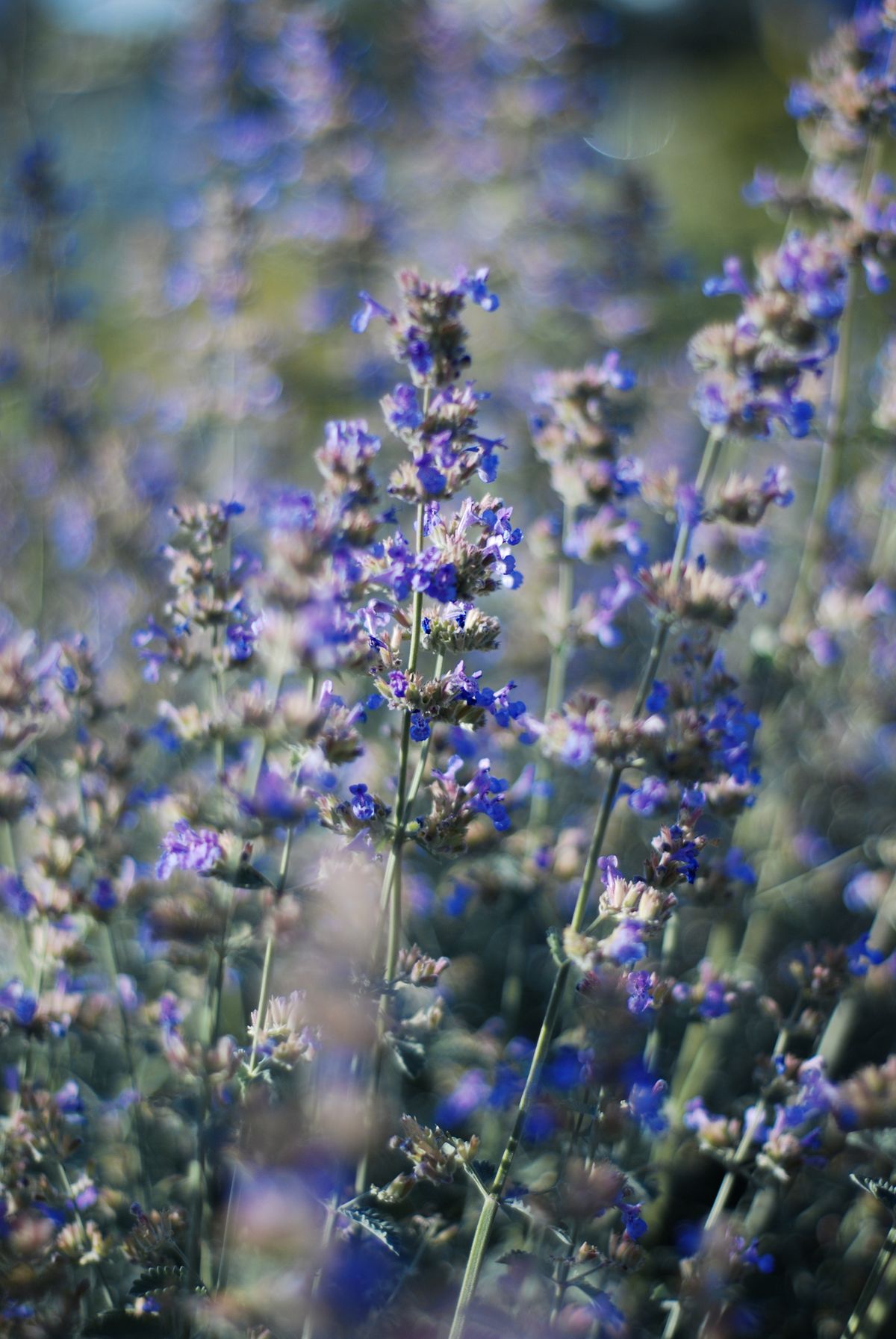
The name comes from Latin. lavare, washing - the Romans added lavender to the bathwater, and a few thousand years later half of all detergents still smell of it.
True lavender originates from the limestone slopes of the western Mediterranean and grows wild primarily at altitudes between 700 and 1,400 meters. This is precisely the reason for its quality: the higher the altitude, the more linalyl acetate and the less camphor the plant produces – and the softer and sweeter the oil smells. The high plateaus of Provence, the Valensole plateau, and the slopes around Sault are therefore the classic growing areas; today, large quantities also come from Bulgaria, which has become one of the largest producers.
One should distinguish between three lavenders. True Lavender (Lavandula angustifolia) is the medicinal plant: relatively small, grows at high altitudes, has a fine, sweet oil, and contains little camphor. The Lavandin (Lavandula x intermediaIt is a hybrid of true and spike lavender, grows deeper, becomes much larger, yields three to four times the oil, and contains significantly more camphor – it smells sharper, "like cleaning products," and is what's found in soaps, scented sachets, and inexpensive oils. Spike lavender (Lavandula latifolia) is even richer in camphor and is used almost exclusively for technical purposes. Only true lavender is suitable for tea, medicine, and cooking.
Culinary uses of lavender in Europe are newer than many people think. In classic dishes Herbes de Provence It wasn't originally included – it was only added in the 20th century when the mixture became an export commodity. In English cuisine, however, it has been a staple since the 17th century: in shortbread, syrup, and sugar. And bees transform it into one of the most sought-after single-varietal honeys of the Mediterranean.
To useWhat lavender does for you
Regarding lavender, there's something you rarely see written about fragrant plants: The calming effect is not just a tradition. Commission E has given a positive assessment of lavender flowers for restlessness, difficulty falling asleep, and functional upper abdominal complaints; the European Medicines Agency lists them as a traditional use for nervous tension and sleep problems. Furthermore, there is a standardized lavender oil in capsule form that is approved as a medicinal product in Germany – tested in several randomized, placebo-controlled trials for restlessness and anxiety symptoms, with results that secured its approval. This is remarkable for a plant primarily used in fragrance.
However, this doesn't mean that every form performs the same way in everyday life. tea A remedy made from lavender blossoms is a mild, pleasant option for the evening – its effect is significantly weaker than that of the tested capsule and is not supported by the same studies. Scented sachet on the pillow It's a ritual that works through habit and association; the research on aromatherapy as a whole is sparse, although smaller studies in hospital settings have found indications of reduced tension before operations. And that bath Its justification stems primarily from the warmth.
Another of lavender's benefits is its mild antispasmodic effect on the gastrointestinal tract – hence its recognized use for functional upper abdominal complaints, such as nervous stomach issues where no organic cause can be found. Furthermore, the essential oil has proven antibacterial and skin-soothing properties, which is why it is traditionally used diluted for insect bites and minor skin irritations. However, it should not be applied undiluted to the skin, despite what is often claimed.
IngredientsThat's what's in the flower
The essential oil of true lavender consists of approximately 30 to 45 percent of... Linalyl acetate and 25 to 40 percent from Linalool. These two components create the characteristic soft, sweet, slightly fruity note. The higher the proportion of linalyl acetate, the higher the quality of the oil is considered—and the more expensive it is. For linalool, there is evidence from animal experiments and initial human physiological studies suggesting a calming effect via voltage-gated calcium channels in the nervous system; this is the most plausible explanation for the observed effect of the capsules.
The difference to lavandin lies primarily in the Camphor: Echter Lavendel enthält typischerweise unter einem Prozent, Lavandin sechs bis acht. Campher riecht scharf, medizinisch, „nach Verkühlungssalbe“ - genau die Note, die günstigen Lavendelprodukten ihren Putzmittelcharakter gibt. Wer im Laden riecht und an Waschmittel denkt, hat Lavandin in der Hand.
In addition, the blossoms contain tannins (up to 12 percent, which explain the astringency in the tea), rosmarinic acid, coumarins, and flavonoids. The same quality criteria apply as with chamomile: good quality blossoms have a distinct, sweet fragrance when opened, a vibrant purple color, and consist of whole flowers. Faded, odorless blossoms have long since lost their oil.
Enhanced combinationsWhat makes lavender stronger
Lavender is an herb that thrives in small quantities. Almost any mistake with it is an excess – in the cup, on the plate, and in the diffuser.
The classic evening blend: lavender for tension, lemon balm for the stomach, valerian for falling asleep.
Sweetness and acidity counteract the bitterness - lavender honey, lavender syrup, lavender sugar for shortbread and panna cotta.
In Herbes de Provence, lavender carries the floral tone - but as the smallest part of the mixture, not as the main ingredient.
One to two drops of lavender essential oil on a teaspoon of almond or jojoba oil - for insect bites and minor irritations.
A strong floral infusion in the bathwater, 20 minutes at 37 degrees - here heat and fragrance work together.
Cut just before full bloom, dry upside down in the shade - sun bleaches the color and removes the oil.
What contradicts itselfIt's best to avoid these combinations.
Lavender can very quickly go from floral to soapy. A scant teaspoon of finely ground blossoms is enough for a tray of shortbread.
Lavandin, which is rich in camphor, has a medicinal taste and belongs in scented sachets, not in food.
Pure lavender essential oil can irritate and sensitize - always dilute in a carrier oil.
Essential oils should not be applied to the face or near the airways of small children.
Linalool oxidizes in the air, and it is the oxidation products that trigger contact allergies - store in a dark, closed container and use quickly.
Even the approved medication is intended for mild anxiety - a serious anxiety disorder requiring treatment belongs in professional hands.
To which courtWhere he belongs
- Lavender teaOne teaspoon of blossoms to 250 ml, covered for eight minutes - in the evening, preferably mixed with lemon balm.
- Lavender shortbreadA scant teaspoon of finely ground blossoms on a baking sheet - the English original.
- Lavender sugarPlace flowers and sugar in a glass, let steep for two weeks, then strain – for pastries and desserts.
- Lavender honeyProvençal varietal honey, light and mild - or homemade with blossoms in the jar.
- Herbes de ProvenceThyme, rosemary, savory, oregano and a pinch of lavender - perfect with lamb and roasted vegetables.
- Panna cotta with lavenderBriefly steep the blossoms in the cream, strain, then bind - subtly floral, never soapy.
- Lavender syrupBoil blossoms in sugar water, let steep overnight, strain - for lemonade and aperitif.
- Lavender saltDried flowers with coarse salt in a mortar - served with lamb, goat cheese and baked potatoes.
- Scented sachetsDried flowers in a linen bag in the wardrobe - against moths and for sleep.
- Lavender bathAdd one liter of strong infusion to the bathwater - 20 minutes at a comfortable 37 degrees.
As a home remedyLavender oil for the evening
Soothing massage oil
- Fill a small dark bottle with three tablespoons of almond or jojoba oil.
- Add four to six drops of lavender essential oil from true lavender - the label says Lavandula angustifolia, not x intermedia.
- Close the bottle and briefly roll it between your palms to ensure everything is combined.
- In the evening, massage a small amount into the neck, shoulders and forearms, or place a few drops on a handkerchief next to the pillow.
For tense evenings, a restless mind, and the feeling of not being able to unwind. To put it honestly: what reliably works here is the combination of ritual, touch, and a scent that the brain associates with relaxation. The studies that actually exist for lavender concern the standardized oil in capsule form for oral administration—not the massage oil. This doesn't make the ritual worthless, but it is, after all, a ritual and not a medicine.
In the evening, as often as you like. Never apply undiluted to the skin, not to infants or small children, and not near the eyes. If you have a known fragrance allergy, test it first on the inside of your elbow. If restlessness or insomnia persists for more than a few weeks, or if anxiety dominates your daily life, you should consult a doctor – they can also prescribe the approved product.
Ayurveda & TCMWhat the old systems say
Ayurveda
Lavender is not part of the classical Ayurvedic materia medica, but it is frequently used in modern practice and is described as cool, light, and bittersweet: calming for Pitta and Vata, but more restrained in larger quantities for Kapha. This aligns well with our other known properties of lavender for its use in relieving tension, overheating, and a racing mind.
Traditional Chinese Medicine
Lavender is also not represented in Chinese herbal medicine – the role of the Qi-moving, calming aromatic herb is taken over there by other plants such as Mei Gui Hua, the rosebud. According to its characteristics, lavender would be a cooling, aromatic remedy that moves stagnant liver Qi and calms the mind. Shen - reassured. Again written as a contextualization, not as a tradition.
Warning noticesWhen you should be careful
Please note
- Essential oil: Never apply undiluted to the skin and do not ingest - there are tested and approved finished medicinal products for this purpose.
- Contact allergy: Oxidized linalool is a known trigger of contact eczema; store oils in the dark and do not keep them for years.
- Toddlers: Essential oils should not be applied to the face or near the airways of infants and young children.
- Hormone discussion: There are case reports of breast growth in boys after intensive use of lavender-containing care products; the data is controversial, but using them sparingly with children is still advisable.
- Fatigue: High-dose medications can cause drowsiness - be careful when driving and operating machinery.
- Not as a replacement: For anxiety or depression requiring treatment, lavender is a form of support, not therapy.
This page provides information and does not replace medical advice. If symptoms persist, please consult a doctor.
Related to the topicRead on and cook along!
Shop links lead to our product pages; it is indicated there if a partner is involved.
SourcesWhat is this based on?
- Commission E: Monograph Lavandulae flos (lavender flowers), Federal Gazette 1984 - Restlessness, difficulty falling asleep, functional upper abdominal complaints.
- EMA/HMPC: European Union herbal monograph on Lavandula angustifolia Mill., flos and aetheroleum.
- Kasper S et al. Silexan, an orally administered Lavandula oil preparation, is effective in the treatment of subsyndromal anxiety disorder. International Clinical Psychopharmacology 2010; 25(5): 277–287.
- Blaschek W (ed.): Wichtl - Herbal drugs and phytopharmaceuticals. 6th edition 2016, monograph Lavandulae flos.
- European Pharmacopoeia (Ph. Eur.): Monograph Lavandulae aetheroleum - Content limits for linalyl acetate and camphor to differentiate from lavandin.


