
OriginThe herb with the lion's tail
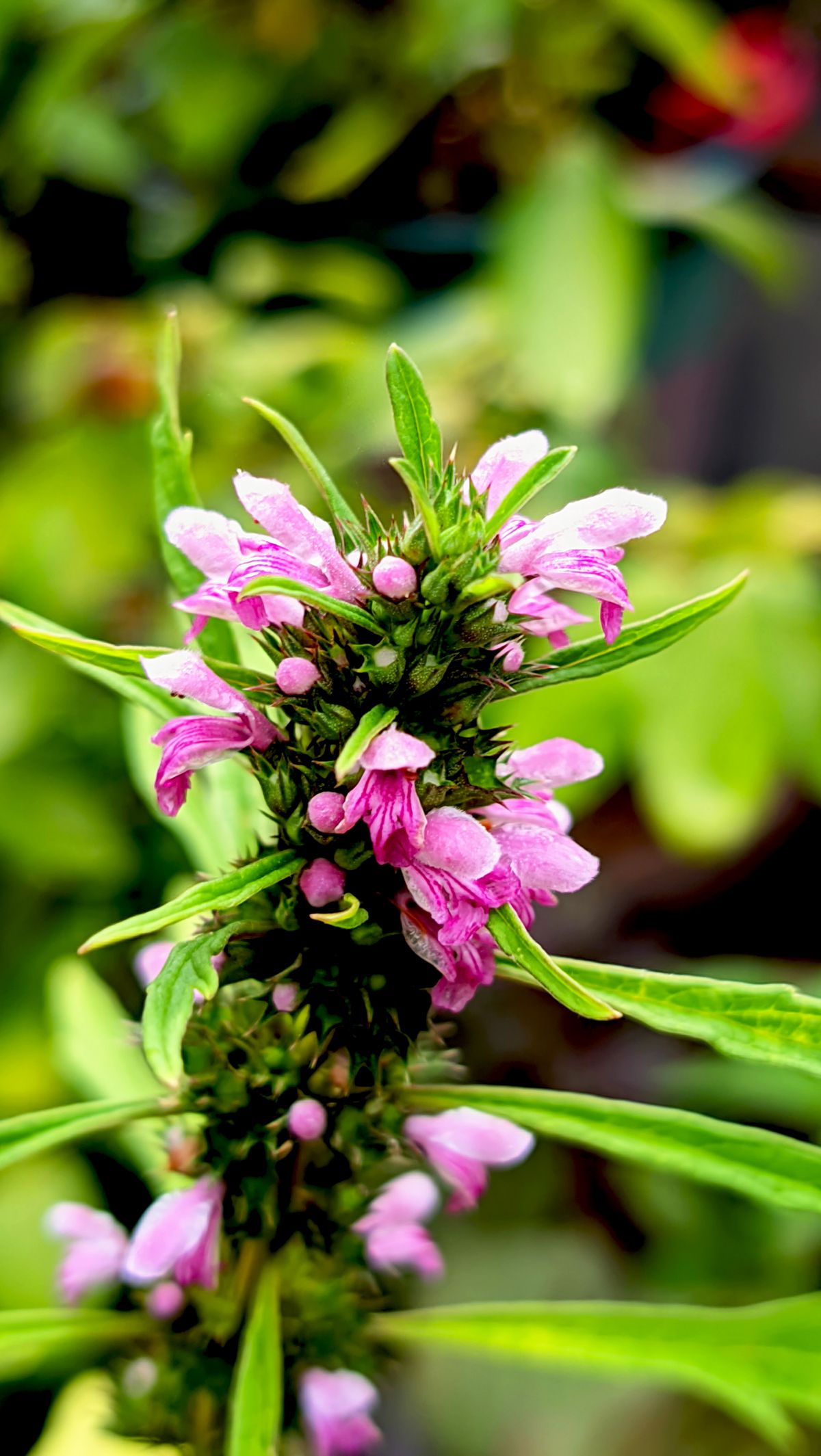
The name Herzgemutter comes from old folk medicine - it referred to the oppressive feeling that causes fear on the chest.
Leonurus cardiaca It is a member of the mint family, originally from Central Asia, and has spread throughout Europe since the Middle Ages. It grows on fences, walls, rubble, and village edges – typical habitats for a plant that has migrated alongside humans. In many parts of Germany, it has become rare today because the wild corners at the edges of villages where it once grew have disappeared.
The genus name Leonurus The name "lion's tail" refers to the shape of the flower head: dense whorls of small, pink, two-lipped flowers grow in the leaf axils of a tall, angular stem, together resembling a shaggy tail. The German name "Herzgespann" (mother heart) is older and originates from folk medicine: "Gespann" formerly described a feeling of tension and constriction in the chest, such as one experiences with anxiety and stress. The plant was the remedy for this, and the name has remained unchanged ever since.
In the history of medicine, motherwort was for a long time more prominent than it is today. It appears in the writings of Dioscorides, is mentioned by Hildegard von Bingen, and was firmly established in early modern European pharmacopoeias—often as a remedy for "heart palpitations" and weak labor. This second use explains another old name: In Eastern Europe and English-speaking countries, the plant is called... Feverfew or Motherwort. It was considered a remedy for the uterus - and that is precisely why it has no place in pregnancy.
To useNervous heart problems – and what that means exactly
The European Medicines Agency lists motherwort as traditional use For the relief of nervous heart complaints in cases of mild tension, after a serious illness has been ruled out. This addendum is stated as such in the monograph, and it is the central point of this page. Commission E formulates it similarly: nervous heart complaints, as supportive therapy for hyperthyroidism. Both are indications that require a diagnosis.
What is "nervous heart palpitations"? It refers to the racing heart that arises from excitement, stress, tension, or an anxiety-inducing situation, in a heart that is otherwise healthy. Most people are familiar with this; it's unpleasant and often self-reinforcing because feeling the heartbeat creates further anxiety. Motherwort addresses this cycle: It has a mildly calming effect and reduces the sensation of palpitations. It doesn't treat the heart itself, but rather the tension surrounding it.
The pharmacological basis is weaker than its long history of use would suggest. There are animal studies showing blood pressure-lowering and mildly antiarrhythmic effects, studies on a calming effect, and research on individual constituents. Controlled human studies are virtually nonexistent; a Russian observational study on an oil extract for hypertension is methodologically too weak to draw any conclusions. The EMA classification is explicitly based on tradition, not evidence – and we state this because motherwort is often marketed as a heart remedy.
This results in a clear boundary, which we prefer to draw twice rather than not enough. Heart rhythm disturbances that occur for a longer period, are accompanied by dizziness, shortness of breath, chest pain, or fainting, are not suitable for self-treatment with herbal remedies. Atrial fibrillation, for example, feels like "nervous heart palpitations" and is nevertheless a condition with a risk of stroke that requires treatment. Motherwort is a calming tea for people whose hearts are demonstrably healthy. In this role, it is useful and harmless—otherwise, it is dangerous because it takes time.
IngredientsA plant whose most famous substance is barely present in it.
When it comes to motherwort, it's worth taking a close look at the list of ingredients, because popular descriptions often contain inaccuracies. The alkaloid leonurine is considered the most pharmacologically interesting constituent of the genus – it is well-researched, has a vasodilatory effect, and is the subject of intensive research in China. However: In Leonurus cardiaca, In our European species, it occurs only in trace amounts or not at all. The leonurine-rich species is Leonurus japonicus, the Chinese relative. Findings regarding leonurine therefore cannot be applied to our motherwort.
What it actually contains: iridoid glycosides such as ajugol, ajugoside, and leonuride; the diterpene leocardin; phenylethanoid glycosides such as lavandulifolioside; as well as flavonoids, tannins, and a high proportion of bitter substances. Animal studies suggest that lavandulifolioside slows the heart rate; this is the most concrete finding available, yet it is still far from being a clinical indication.
The bitterness of the herb is the most important factor in its practical application. Heartache tea is so bitter that many people wouldn't drink it twice. This is why, in practice, the plant is almost exclusively used as a tincture or in ready-made preparations, and only makes up a small portion of tea blends. Those who try it as a tea mix it with lemon balm and peppermint—not because the combination is any better, but simply because it's palatable.
For harvesting: The upper shoot tips are harvested during the flowering period in June and July, approximately the top twenty to thirty centimeters, excluding the hard, angular stem parts. The plant is easily recognizable by its square stem, the opposite, deeply divided lower leaves, and the pink flower whorls in the leaf axils. It cannot be confused with poisonous plants, but populations are small in some areas – in such cases, leave it alone and purchase it commercially.
Enhanced combinationsWhat goes well with motherwort
Motherwort is rarely used alone, for two reasons: it tastes too bitter, and it only masks part of the underlying anxiety. These combinations are traditional and plausible.
Lemon balm is the mild, lemony counterpoint to bitterness and also soothes nervousness. Two parts lemon balm to one part motherwort makes a tea that one actually enjoys drinking.
The traditional combination for heart health: Hawthorn is the better-researched plant for the heart itself, while motherwort addresses the nervous system. It remains important to note that both should only be used after a cardiological examination.
In cases of mild hyperthyroidism, this is the classic two-drug combination of phytotherapy - and one that absolutely requires medical supervision, because hyperthyroidism needs diagnosis and monitoring.
If inner restlessness is particularly bothersome in the evenings and when trying to fall asleep, valerian and hops are a useful complement to motherwort. Available as a ready-made mixture or tincture combination.
In terms of taste alone: Peppermint masks bitterness better than any other tea plant. A third of the blend is sufficient for this.
The bitter substances are not a side effect, but rather, like other bitter herbs, stimulate the production of gastric juices and bile. Drinking the tea before meals provides both benefits.
What contradicts itselfIt's best to avoid these combinations.
The most important threshold. Newly occurring heart palpitations, persistent racing heart, skipped beats accompanied by dizziness or shortness of breath should be recorded with an ECG. Atrial fibrillation feels harmless, but it isn't.
The plant is called feverfew in several languages because it was traditionally used to induce labor. It is therefore contraindicated during pregnancy – even as a tea.
There is evidence from animal studies suggesting a blood pressure-lowering effect. This should be discussed in clinical practice alongside appropriate medication.
An additive sedative effect is plausible, even if it has not been well studied. Do not combine prescribed sedatives or sleep aids without consulting a doctor.
Hyperthyroidism is not something to be treated with self-medication. Herbal support can be helpful, but only as an adjunct to conventional treatment and with regular check-ups.
There is no data on the long-term use of large quantities. The monograph dose of approximately 3 g daily is the sensible upper limit, and an assessment should be made after a few weeks.
ApplicationApplication instead of kitchen
- Tea blendOne part motherwort to two parts lemon balm - the most common and tolerable form.
- tinctureThe practical application method: 20 to 40 drops in water, two to three times daily. Completely avoids the taste problem.
- Evening teaMixed with valerian root and hops, one hour before bedtime.
- Bitter tea before mealsA small, very bitter infusion 15 minutes before a meal utilizes the bitter substances for digestion.
- Ready-made preparationMotherwort is found in several herbal calming preparations, where it is standardized and easy to dose.
- Wild collectionThe top 20 to 30 cm of the flowering shoots in June and July, excluding the hard stems.
- DryingHang loosely bundled leaves upside down in the shade. If the bundles are too dense, the leaves inside will spoil.
- storageStore in dark glass jars or paper bags for one year. After that, the bitter substances and effect diminish.
- GardenIt is quite interesting as a bee plant: bumblebees visit the flower whorls all summer long.
- Not in the kitchenMotherwort is neither a spice nor a vegetable. Its bitterness makes any culinary use impossible.
As a home remedyThe drinkable version
Motherwort and lemon balm tea
- First, a basic rule: This tea is for nervous heart palpitations in a calm, healthy heart. If your heart palpitations are new, persistent, or accompanied by dizziness, shortness of breath, or chest pain, you should consult a doctor—before drinking any tea.
- To prepare the mixture: two parts lemon balm leaves, one part motherwort, optionally half a part peppermint to reduce bitterness.
- Pour one heaped teaspoon of the mixture per cup with boiling water and let it steep, covered, for eight to ten minutes.
- Strain and drink slowly, one to three times a day - in cases of acute tension, or regularly over a few weeks during a stressful period.
- Those who cannot tolerate the taste despite the mixture can switch to a tincture: 20 to 40 drops in a little water, two to three times a day.
- Take stock after four to six weeks at the latest. If the heart palpitations remain unchanged or become more frequent, then the tea is not the answer.
For heart palpitations and inner restlessness resulting from tension, stress, or excitement – provided the heart has been examined and is healthy. Traditionally also used as a complementary treatment for mild hyperthyroidism, but then only under medical supervision.
Approximately 3 g of the herb daily, according to Commission E, corresponding to two to three cups of the mixture. Do not use during pregnancy. Consult your doctor beforehand if you are taking blood pressure-lowering or sedative medication.
Ayurveda & TCMWhat the old systems say
Ayurveda
Motherwort is not represented in classical Ayurveda. Its role – calming the heart and mind – is fulfilled there by other plants, especially... Arjuna (Terminalia arjuna), which is traditionally considered a heart tonic, as well as Brahmi and Jatamansi for the nervous system. Those looking for parallels will find them more readily in function than in botany.
Traditional Chinese Medicine
This is where it gets interesting, because TCM makes intensive use of the sister species. Yi Mu Cao is Leonurus japonicus, And in Chinese medicine, this herb belongs to the category of blood-moving agents, with a clear focus on gynecology – for menstrual disorders and after childbirth. The name literally means "herb that benefits the mother," thus perfectly matching the European "motherwort." Two traditions, two species of the same genus, the same attribution – and in China, it is the uterus, in Europe the heart, that is implied in the name.
Warning noticesWhen you should be careful
Please note
- Heart problems should be investigated: Newly occurring or persistent heart palpitations, rapid heartbeat accompanied by dizziness, shortness of breath, chest pain, or fainting are emergency situations or at least warrant medical attention. Atrial fibrillation may feel harmless, but it is not.
- Not during pregnancy: The plant was traditionally used to induce labor and is called motherwort in several languages. It is contraindicated during pregnancy, even as a tea.
- Hyperthyroidism only as an accompanying condition: Hyperthyroidism requires treatment and monitoring. Plants can be used as a complementary treatment, but not as a replacement.
- Interaction with blood pressure and sedative medications: Additive effects are plausible. Discuss taking this medication with your doctor.
- No long-term data available. There are no studies on the long-term use of high doses. It's advisable to assess the situation after a few weeks instead of continuing indefinitely.
- Children: Due to a lack of data, the application is not intended for children and young people under 18 years of age.
This page provides information and does not replace medical advice. If symptoms persist, please consult a doctor.
Related to the topicRead on and cook along!
Shop links lead to our product pages; it is indicated there if a partner is involved.
SourcesWhat is this based on?
- European Medicines Agency, HMPC: European Union herbal monograph on Leonurus cardiaca L., herba - traditional use.
- Commission E, Monograph „Leonuri cardiacae herba“, Federal Gazette No. 43 of 02.03.1989.
- Wojtyniak K. et al.: Leonurus cardiaca L. (motherwort): a review of its phytochemistry and pharmacology. Phytotherapy Research 2013.
- Ritter M. et al.: Cardiac and electrophysiological effects of primary and refined extracts from Leonurus cardiaca. Planta Medica 2010.
- Blaschek W. (ed.): Wichtl - Herbal Drugs and Phytopharmaceuticals, Chapter Leonuri cardiacae herba.


