
Chard (Beta vulgaris subsp. vulgaris)
OriginThe Romans' leaf
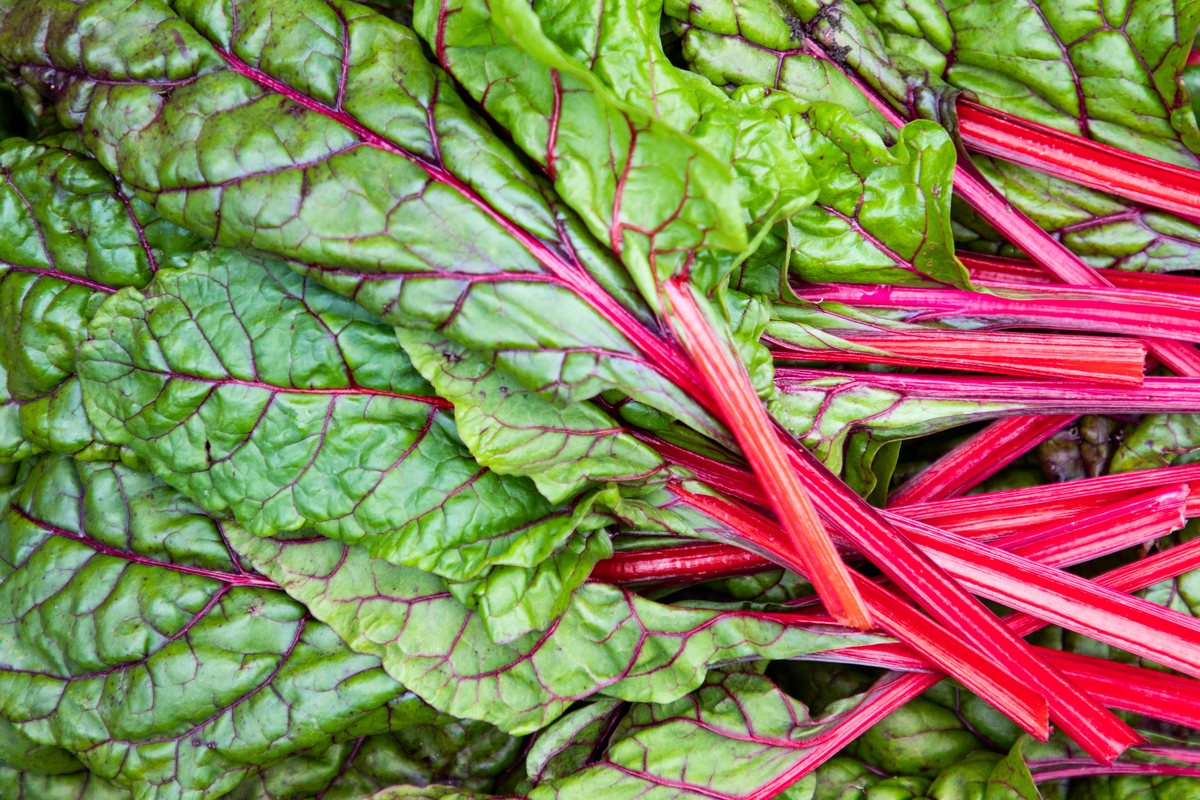
Long before the beetroot had a thick bulb, Greeks and Romans ate the leaves of the beet - as chard.
Chard is one of the oldest vegetables in Europe. Aristotle mentioned a red leaf turnip, the Romans ate the leaves cooked, and in the Middle Ages, chard was a staple in monastery gardens. Only later was it displaced by spinach, which is more tender and grows faster.
Swiss chard comes in two main varieties: leaf chard with narrow stalks and stalk chard with broad, fleshy ribs, available in white, yellow, pink, or red. The colorful varieties ("Rainbow Chard") contain betalains, similar to beetroot. It is a common vegetable in Switzerland, southern France, and Italy, and is currently experiencing a resurgence in popularity in Germany.
To useWhat Swiss chard does for you
Swiss chard is light (around 19 kcal per 100 g) and remarkably nutrient-rich: very high in nutrients. Vitamin K (over 800 µg per 100 g raw), in addition magnesium, Green leafy vegetables contain potassium, vitamin C, beta-carotene, lutein, and, in colorful varieties, betalains. Observational studies have linked green leafy vegetables to slower cognitive aging.
Like spinach and beetroot, chard contains a lot Oxalic acid. It binds calcium and iron and can be problematic for people prone to calcium oxalate stones. Blanching and discarding the cooking water significantly reduces the soluble oxalate content; adding dairy products binds some of it in the intestine.
People under Coumarin blood thinners You don't have to avoid chard, but you should eat it regularly and in similar amounts - a large, single portion can shift the INR value.
IngredientsThis is what's in Swiss chard
Swiss chard contains water, Vitamin K1, Vitamin A (as beta-carotene), Vitamin C, magnesium, Potassium, iron, sodium (a lot for a vegetable, hence the slightly salty taste), lutein and zeaxanthin, as well as betalains in colored stems.
It is rich in Oxalic acid Like all leafy greens, it can contain a lot of nitrate. Do not keep leftovers warm for long; cool them quickly and reheat only once, especially for children.
Enhanced combinationsWhat makes chard stronger
Swiss chard needs garlic, fat and a little acid - and the stalks need to cook for one minute longer than the leaves.
Briefly blanch in salted water, then discard the water - less oxalate, milder taste.
Calcium binds oxalate - try chard gratin or with ricotta.
Sautéed in olive oil, seasoned with lemon.
Vitamin C improves iron absorption.
Dice the stems and cook them 3 to 4 minutes before the leaves.
Chard and chickpea stew - Mediterranean and filling.
What contradicts itselfIt's best to avoid these combinations.
Very high in oxalates - avoid or blanch.
Eat plenty of vitamin K – regularly.
Young leaves are fine raw in salads, but large quantities eaten raw provide a lot of oxalate.
Nitrate can turn into nitrite - cool quickly.
It turns grey and bitter.
Wilts quickly - if wrapped in a damp cloth, it will take two to three days.
In the kitchenWhere he belongs
- Swiss chard with garlicIn olive oil, with lemon and chili.
- Chard gratinStems with béchamel and cheese.
- CapunsSwiss chard rolls with spaetzle dough.
- Chard QuicheWith feta and pine nuts.
- Chard and chickpeasWith tomatoes and cumin.
- Pasta with Swiss chardWith ricotta and lemon.
- Swiss chard rouladesFilled with rice and minced meat.
- MinestroneWith beans and chard.
- Stems like asparagusWith butter and Parmesan cheese.
- Young chard, rawIn a salad with apple.
As a home remedyPreparing Swiss chard with low oxalate content
Blanched chard with ricotta
- Wash the chard, separate the stalks and leaves, and cut the stalks into pieces.
- Blanch stems for 3 minutes, leaves for 1 minute in plenty of boiling salted water, drain, discard water.
- Briefly toss in olive oil with a clove of garlic.
- Serve with two tablespoons of ricotta, lemon juice, salt and pepper.
For those who want to tolerate Swiss chard, especially those prone to oxalate stones or with a sensitive stomach. Blanching reduces the soluble oxalic acid, the ricotta binds some of it in the intestines, and the lemon helps with iron absorption.
As a side dish. However, if you have known oxalate stones, consult your doctor about how much oxalate-rich vegetables are safe.
Ayurveda & TCMWhat the old systems say
Ayurveda
In Ayurveda, Swiss chard, like other leafy greens, is considered light, dry, and cooling – it increases Vata and is therefore cooked and eaten with ghee and spices. Its astringent properties make it beneficial for Pitta.
Traditional Chinese Medicine
In Traditional Chinese Medicine (TCM) chard (Jun Da Cai) sweet and cool. It is said to clear heat, cool the blood, and moisten the intestines; traditionally used for heat and constipation.
Warning noticesWhen you should be careful
Please note
- Oxalate: Avoid or blanch if you have calcium oxalate stones.
- Blood thinners: Eat plenty of vitamin K – eat regularly, monitor INR.
- Nitrate: Cool leftovers quickly; reheat only once for children.
- Sodium: A relatively high amount for a vegetable - keep that in mind if you're on a low-salt diet.
- Allergy: rarely.
This page provides information and does not replace medical advice. If symptoms persist, please consult a doctor.
Related to the topicRead on and cook along!
Shop links lead to our product pages; it is indicated there if a partner is involved.
SourcesWhat is this based on?
- Noonan SC, Savage GP. Oxalate content of foods and its effect on humans. Asia Pacific Journal of Clinical Nutrition 1999; 8(1): 64–74.
- Morris MC et al. Nutrients and bioactives in green leafy vegetables and cognitive decline: prospective study. Neurology 2018; 90(3): e214–e222.
- Federal Institute for Risk Assessment: Nitrate in food - questions and answers.
- Aune D et al. Fruit and vegetable intake and the risk of cardiovascular disease, total cancer and all-cause mortality - a systematic review and dose-response meta-analysis of prospective studies. International Journal of Epidemiology 2017; 46(3): 1029–1056.
- USDA FoodData Central: Chard, Swiss, raw.


