
OriginThe joy of the mountain
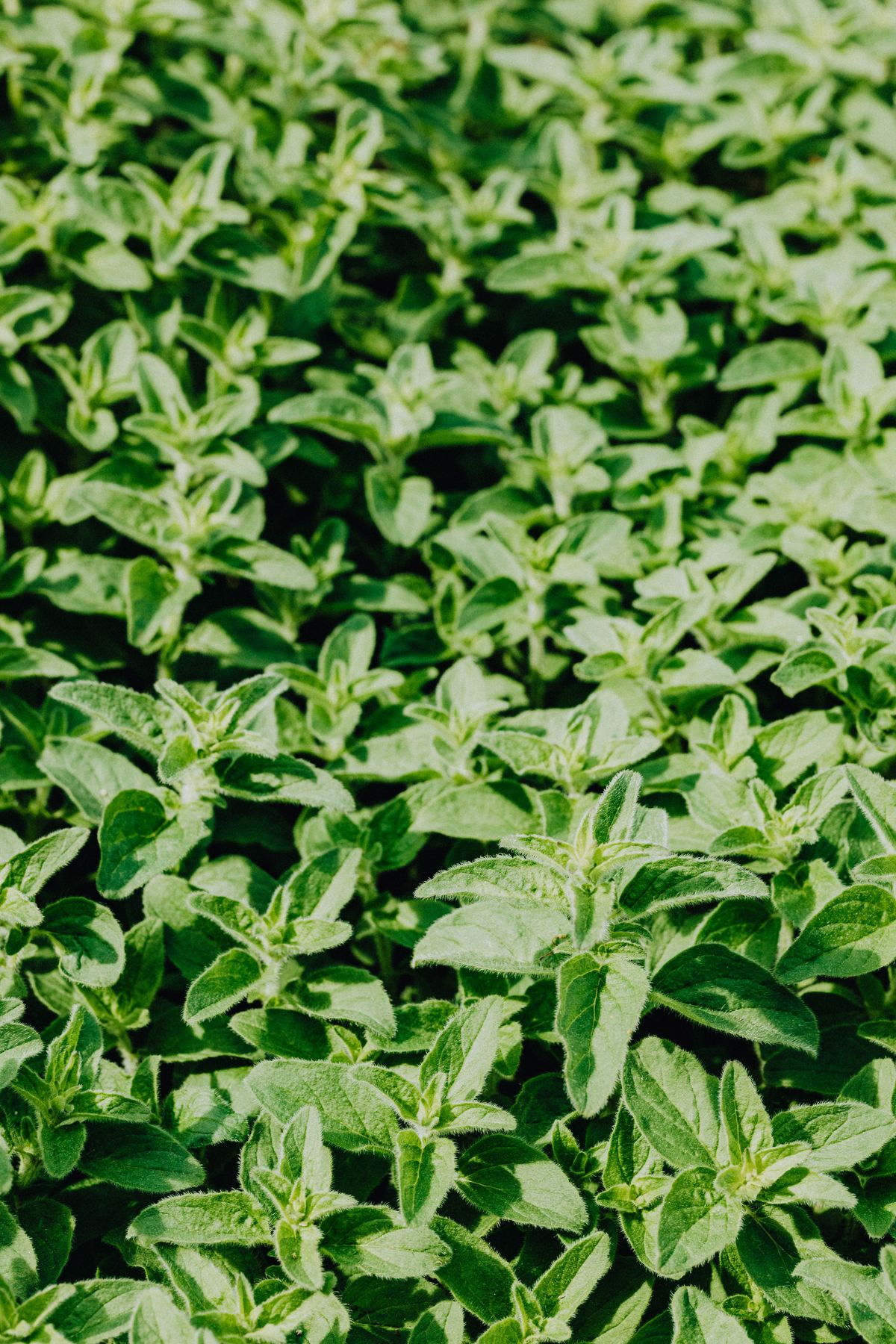
Oros and ganos - Mountain and joy: The Greeks named it after the sight of blooming slopes, where the fragrance rises even as you walk through them.
Oregano and the local Dost are botanically the same species, Origanum vulgare —and yet they taste completely different. The reason is the climate: On the hot, dry, barren soils of Greece, Italy, and Turkey, the plant produces many times more essential oil and, above all, carvacrol. The same variety growing in a Central European meadow is mild, almost floral, and hardly suitable for seasoning. Those who want strong oregano should buy Greek oregano (Origanum vulgare ssp. Hirtum) - the label usually simply says "Greek" or "Turkish".
In Central Europe, oregano was long considered primarily a magical plant: it was called "Wohlgemut" (meaning "good cheer") and was hung in stables to ward off evil spirits. Oregano only really became popular as a culinary herb here after the Second World War – through American soldiers who had discovered pizza in Italy, and through the cuisine of guest workers in the 1960s. Until then, German cuisine was more familiar with marjoram.
And that is the second important distinction: marjoram (Origanum majorana() is a distinct species from the same genus – sweeter, milder, softer, with a floral note, and in Central Europe the traditional sausage seasoning. Oregano is more bitter, peppery, and sharper. They are interchangeable like salt and sugar: theoretically both seasonings, practically two different dishes.
To useWhat oregano does for you
We need to be honest right from the start, because there's a lot of nonsense about oregano on the internet. There is no recognized medicinal use for oregano herb. Neither the European Medicines Agency nor Commission E maintains a positive monograph; its efficacy in the traditionally claimed uses is considered insufficiently proven. Traditionally, oregano has been used as a digestive aid, expectorant, and antispasmodic herb – this is based on experience, not evidence.
What there is plenty of, however, are Laboratory findings, and they are truly impressive. Carvacrol and Thymol, The two main components of the oil destroy the cell membranes of bacteria and fungi in a test tube – even those of problematic germs. Oregano oil is among the most potent antimicrobial plant oils available. This is precisely what led to the hype surrounding oregano oil capsules. And this is exactly where the misconception lies: What happens in the petri dish says nothing about what happens in the body. Concentrations that kill bacteria on the nutrient medium cannot be achieved with swallowed capsules in the blood – however, concentrated oregano oil significantly irritates the stomach and intestinal mucosa.
What oregano truly does for you is thus clearly outlined, and it's considerable: It's one of the most antioxidant-rich culinary herbs, it adds flavor to fatty and carbohydrate-rich foods without requiring additional salt, and it's one of the herbs that define Mediterranean cuisine—whose overall health benefits are well-documented. That's the honest version. Everything else is just lab results, not a promise of healing.
IngredientsThis is what's in oregano
The essential oil The alcohol content varies extremely – from 0.1 percent in Central European oregano to over four percent in Greek oregano from hot climates. Its main components are: Carvacrol and Thymol, Two closely related phenols, along with p-cymene, γ-terpinene, and linalool. Carvacrol is the compound with the typical sharp, peppery odor; thymol is known from thyme. The ratio of the two determines the character of the respective source.
Why dried oregano more intense Oregano has a unique characteristic. With most herbs, the essential oils evaporate during drying. However, in oregano, some of the aromatic compounds are bound as odorless glycosides; these are released enzymatically during drying. The result: dried oregano leaves smell and taste stronger than fresh ones. Therefore, oregano is the herb you can confidently reach for a jar of dried oregano – provided it's good quality and not three years old.
In addition, oregano contains much Rosmarinic acid and other polyphenols; in comparative tests, it regularly ranks among the spices with the strongest antioxidants. It also contains tannins, bitter substances, and flavonoids. Regarding quality: good dried product is grey-green, crumbly, and immediately releases a strong aroma when rubbed; faded, odorless powder has lost its oil.
Enhanced combinationsWhat makes oregano stronger
A robust herb that can withstand heat - making it a rare exception among Mediterranean leafy herbs.
Die Urkombination: Carvacrol ist fettlöslich und braucht Öl, die Säure der Paradeiser hebt es heraus.
Rub the dried oregano between your palms before adding it – the heat will release the aroma.
Unlike basil or parsley, oregano can tolerate heat and can be baked along with other ingredients.
The Levantine mix - with olive oil on the flatbread.
The Greek salad works precisely because of this pair.
The difference between Greek oregano and Central European oregano is greater than that between two herbs.
What contradicts itselfIt's best to avoid these combinations.
The antibacterial effect is a laboratory finding; swallowed oregano oil capsules do not reach corresponding concentrations in the body.
Concentrated oregano oil significantly irritates the stomach and intestinal lining and can cause nausea and pain.
Marjoram is sweeter and milder - it cannot replace oregano and vice versa.
After about a year, most of the oil is gone; if it no longer smells when rubbed, it's no good.
Oregano is dominant and overpowers delicate aromas - use sparingly with fish and light meat.
It's unproblematic as a spice; avoid concentrated essential oil and high-dose preparations.
To which courtWhere he belongs
- pizzaDas Gewürz, das die Pizza zur Pizza macht - über die Paradeisersauce, vor dem Backen.
- ParadeisersauceDried oregano is cooked in the sauce, fresh oregano is added only at the end.
- Greek saladParadeiser, Gurke, Zwiebel, Feta, Olivenöl und reichlich Oregano.
- ZatarWith sesame, sumac and salt - on flatbread with olive oil.
- Chili con CarneMexican oregano is a different type, but Mediterranean oregano works too.
- Oven-roasted vegetablesZucchini, Paprika, Melanzani mit Öl und Oregano bei 200 Grad.
- Souvlaki and GyrosThe Greek marinade: oil, lemon, garlic, oregano.
- White beansMit Paradeiser, Zwiebel und Oregano geschmort - ein Eintopf für den Winter.
- Oregano oil for drizzlingSoak the herb in good olive oil - not to be confused with essential oregano oil.
- Grilled fishUse sparingly, with lemon and olive oil - very little goes a long way.
As a home remedyOregano in olive oil
Infused oil with oregano and garlic
- Place two tablespoons of dried Greek oregano and one crushed garlic clove into a clean, dry glass.
- Pour over 250 ml of good olive oil so that everything is completely covered, and seal.
- Let it steep for two weeks in a cool, dark place, shaking it occasionally. Then be sure to strain it – the garlic must be removed.
- Transfer to a clean bottle and store in the refrigerator; consume within four weeks.
Zum Beträufeln von Fladenbrot, Paradeiser, Feta, Ofengemüse und gegrilltem Fleisch. Das ist ein reines Küchenrezept ohne Heilanspruch - aber es nutzt die Chemie richtig aus: Carvacrol ist fettlöslich, und Öl holt mehr aus dem Kraut heraus als Wasser. Mit dem ätherischen Oreganoöl aus der Apotheke hat dieses Würzöl nichts zu tun; das ist um ein Vielfaches konzentrierter.
In the kitchen, as you like. Important for safety: Garlic in oil at room temperature is a known risk of botulism – therefore, remove the garlic after two weeks, store it in the refrigerator, and consume it within four weeks. If you want to be absolutely safe, omit the garlic and use only oregano.
Ayurveda & TCMWhat the old systems say
Ayurveda
Oregano is not a classic component of Ayurveda. Based on its properties, it would be classified as pungent, bitter, and warming. Kapha and Vata lowering, Pitta Significantly stimulating – a spice for cold, damp, sluggish conditions and for heavy foods, less so for fiery constitutions. A general principle, not a traditional one.
Traditional Chinese Medicine
Mediterranean oregano also has no place in the Chinese Materia Medica; related Origanum-Species are regionally classified as Niu Zhi used. According to its character, it would be a sharp, aromatic, warming herb that transforms dampness and warms the center - in the vicinity of the aromatic herbs used for bloating and loss of appetite due to dampness.
Warning noticesWhen you should be careful
Please note
- Essential oil: Do not take concentrated oregano oil undiluted - it significantly irritates the stomach and intestinal mucosa.
- No miracle effect: The strong antibacterial values come from laboratory tests and cannot be extrapolated to ingestion.
- Not a substitute for antibiotics: Medical treatment is necessary in the case of bacterial infections with fever and worsening of symptoms.
- Pregnancy: It is unproblematic as a spice; avoid essential oils and high-dose preparations.
- Lamiaceae allergy: Rare, but possible - test carefully if you have a known sensitivity to thyme or mint.
- Blood clotting: High-dose extracts can slightly affect coagulation - discuss with blood thinners.
This page provides information and does not replace medical advice. If symptoms persist, please consult a doctor.
Related to the topicRead on and cook along!
Shop links lead to our product pages; it is indicated there if a partner is involved.
SourcesWhat is this based on?
- Blaschek W (ed.): Wichtl - Herbal drugs and phytopharmaceuticals. 6th edition 2016, monograph Origani herba - Evaluation of traditional areas of application.
- Baser KHC. Biological and pharmacological activities of carvacrol and carvacrol containing essential oils. Current Pharmaceutical Design 2008; 14(29): 3106–3119.
- Burt S. Essential oils: their antibacterial properties and potential applications in foods - a review. International Journal of Food Microbiology 2004; 94(3): 223–253.
- Shan B et al. Antioxidant capacity of 26 spice extracts and characterization of their phenolic constituents. Journal of Agricultural and Food Chemistry 2005; 53(20): 7749–7759.
- USDA FoodData Central: dried oregano.


