
OriginThe spice that tastes like four others
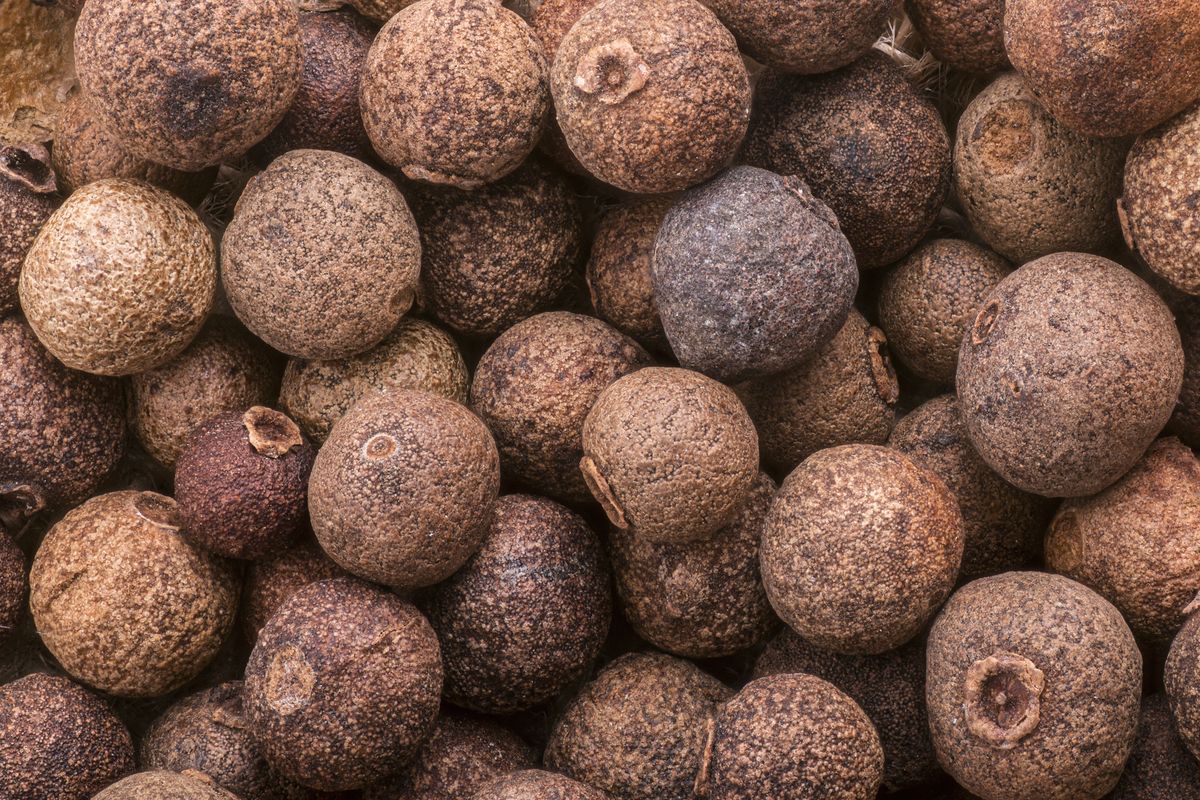
Columbus mistook it for pepper, the English called it allspice - and Jamaica still holds the monopoly because the tree hardly bears fruit anywhere else.
Allspice is the dried, unripe berry of an evergreen tree from Central America and the Caribbean. The Maya used it to smoke meat and flavor cacao; the Spanish conquistadors brought the berries to Europe as "pimienta" – pepper – and the name stuck, even though the spice has nothing to do with pepper.
To this day, most of the harvest comes from Jamaica, with a remainder from Mexico, Guatemala, and Honduras. All attempts to cultivate the tree in Asia have been unsuccessful—it flowers but produces little fruit. The green berries are picked before they ripen and dry in the sun into reddish-brown, wrinkled spheres slightly larger than peppercorns.
To useWhat allspice does for you
Pimento is a Clove oil in small doses: Its aroma contains eugenol, the same substance that makes cloves numbing, antimicrobial and digestive - only milder and rounder, because cinnamon and nutmeg notes are also present.
In Caribbean folk medicine, allspice tea is used to treat bloating, fullness, and an upset stomach; the warmth of the spice stimulates saliva and gastric juices and relaxes the intestines. Externally, the oil was rubbed on to relieve muscle and joint pain—like many eugenol-containing oils, it warms the skin and soothes the pain receptors.
Studies in test tubes show antibacterial and antioxidant effects; little has been studied in humans. Frankly, its greatest benefit is culinary: one allspice berry seasons like an entire spice drawer – and with a fraction of the salt you would normally need.
IngredientsThis is what's inside the berry
Eugenol It is the main component of the essential oil and provides the clove note. In addition, there are... Methyleugenol, Cineole (the fresh, almost eucalyptus-like tip) and β-Caryophyllen, which is also found in black pepper and gives allspice its peppery warmth.
It also contains tannins, flavonoids such as quercetin, and a good amount of manganese. As with cloves, the oil is located in the husk – ground allspice loses it within a few months, while whole berries keep for years.
Enhanced combinationsWhat makes allspice stronger
Allspice is the mediator among spices - it tastes like many things itself and therefore unites what would otherwise be separate.
Piment contains all three in hints - together with the originals, this forms the basic seasoning of gingerbread, mulled wine and pumpkin pie.
Jamaican jerk, sauerbraten, goulash: bay leaf and thyme provide the bitter base, allspice the sweet warmth on top.
The jerk marinade thrives on this: Scotch bonnet chili, garlic, spring onion and plenty of allspice - the warmth of the allspice rounds off the spiciness.
When pickling cucumbers, pumpkin and herring, vinegar draws the aroma from the whole grains - without making them bitter.
Three warming spices to combat a heavy stomach. A classic combination in braised dishes with cabbage and legumes.
Pumpkin pie, apple compote, orange marmalade - allspice is the spice you can taste in American pies without recognizing it.
What contradicts itselfIt's best to avoid these combinations.
Dill, chervil, basil disappear beside him.
Fish with lemon, asparagus, risotto - allspice tastes heavy and foreign in these dishes.
When ground, it releases its full flavor immediately. Two to three seeds per pot – more, and everything will taste of cloves.
The oil evaporates and turns bitter. Briefly warm whole grains or add them directly to the liquid.
Eugenol inhibits coagulation. It is safe to use as a spice, but should be avoided as an oil or in capsule form before surgery and when taking anticoagulants.
Pimento oil can irritate and sensitize the skin - always dilute, never use on children.
To which courtWhere he belongs
- Jerk ChickenAllspice is the heart of the Jamaican marinade: let it marinate overnight with chili, thyme, garlic and lime.
- Goulash & Sauerbraten3-4 whole bay leaves in the braising pot - gives the sauce depth without being heavy with cloves.
- Pickled cucumbersAdd mustard seeds, dill, and bay leaf to the brine. The pickled vegetables lack warmth without allspice.
- Pumpkin soup & pumpkin pieA pinch ground with cinnamon and nutmeg - American pumpkin spice is primarily allspice.
- red cabbageTwo seeds next to the clove make the herb rounder and less spicy.
- Herring & MatjesIn the marinade for fried herring and in the brine for matjes herring - the Swedish and North German tradition.
- GingerbreadIn a spice mix with cinnamon, cloves, cardamom, and coriander. Roast whole seeds and grind fresh.
- Chili con CarneTwo crushed cumin seeds give the chili a dark, sweet note.
- BologneseA little-known Italian tradition: a grain of pimento in the ragù - like a pinch of nutmeg, only rounder.
- Mulled wine & punchTwo seeds alongside clove and cinnamon - especially in white mulled wine and apple punch.
As a home remedyPimento tea for bloating
Pimento tea
- Lightly crush 5 to 6 whole grains in a mortar.
- Pour 250 ml of boiling water over it, cover and let it steep for 10 minutes.
- Strain, adding a slice of ginger or a little honey if desired.
- Drink warm after eating.
Völlegefühl nach fettem oder schwerem Essen, Blähungen, ein kalter, träger Magen. In der Karibik das Hausmittel nach dem Sonntagsessen - und für die Verkühlungszeit, weil das Öl die Atemwege angenehm wärmt.
One cup after meals, no more than two a day. Never take allspice oil internally – the amount used in cooking, in whole berries, is the safe dose.
Ayurveda & TCMWhat the old systems say
Ayurveda
Not a classic Ayurvedic spice, allspice only arrived in India after the colonial era. In terms of its effects, it would be classified similarly to cloves: warming, stimulating Agni (digestive fire), and, in small quantities, balancing Vata and Kapha.
Traditional Chinese Medicine
Not part of the classical Materia Medica. In practice, allspice is occasionally used as Ding Xiang (Clove) used: to dispel cold from the center and warm the stomach. To be honest: historically, neither system knew the plant.
Warning noticesWhen you should be careful
Please note
- Pimento oil: Highly concentrated eugenol - never pure, never internally, not for children or pregnant women.
- Blood clotting: Avoid allspice preparations when taking blood thinners or before surgery; the spice itself is harmless when used in food.
- Skin: The oil can cause irritation and allergies - always dilute, do a skin test beforehand.
- Allergy: Anyone who reacts to cloves or Peruvian balsam should try allspice carefully - the substances are related.
- Crowd: Ground allspice in large quantities can cause nausea. Two to four berries per dish are sufficient.
This page provides information and does not replace medical advice. If symptoms persist, please consult a doctor.
Related to the topicRead on and cook along!
Shop links lead to our product pages; it is indicated there if a partner is involved.
SourcesWhat is this based on?
- Zhang L, Lokeshwar BL. Medicinal properties of the Jamaican pepper plant Pimenta dioica and allspice. Current Drug Targets 2012; 13(14): 1900–1906.
- Padmakumari KP et al. Composition and antioxidant activity of essential oil of pimento (Pimenta dioica) from Jamaica. Natural Product Research 2011; 25(2): 152–160.
- European Medicines Agency (EMA), HMPC: Assessment report on Syzygium aromaticum, aetheroleum (Eugenol Safety), 2011.
- USDA FoodData Central: Spices, allspice, ground.
- Rätsch C, Katzer G: Gernot Katzer's Spice Pages, Entry pimento - Botany, trade and culinary uses.


