
OriginThe root of the Cold War
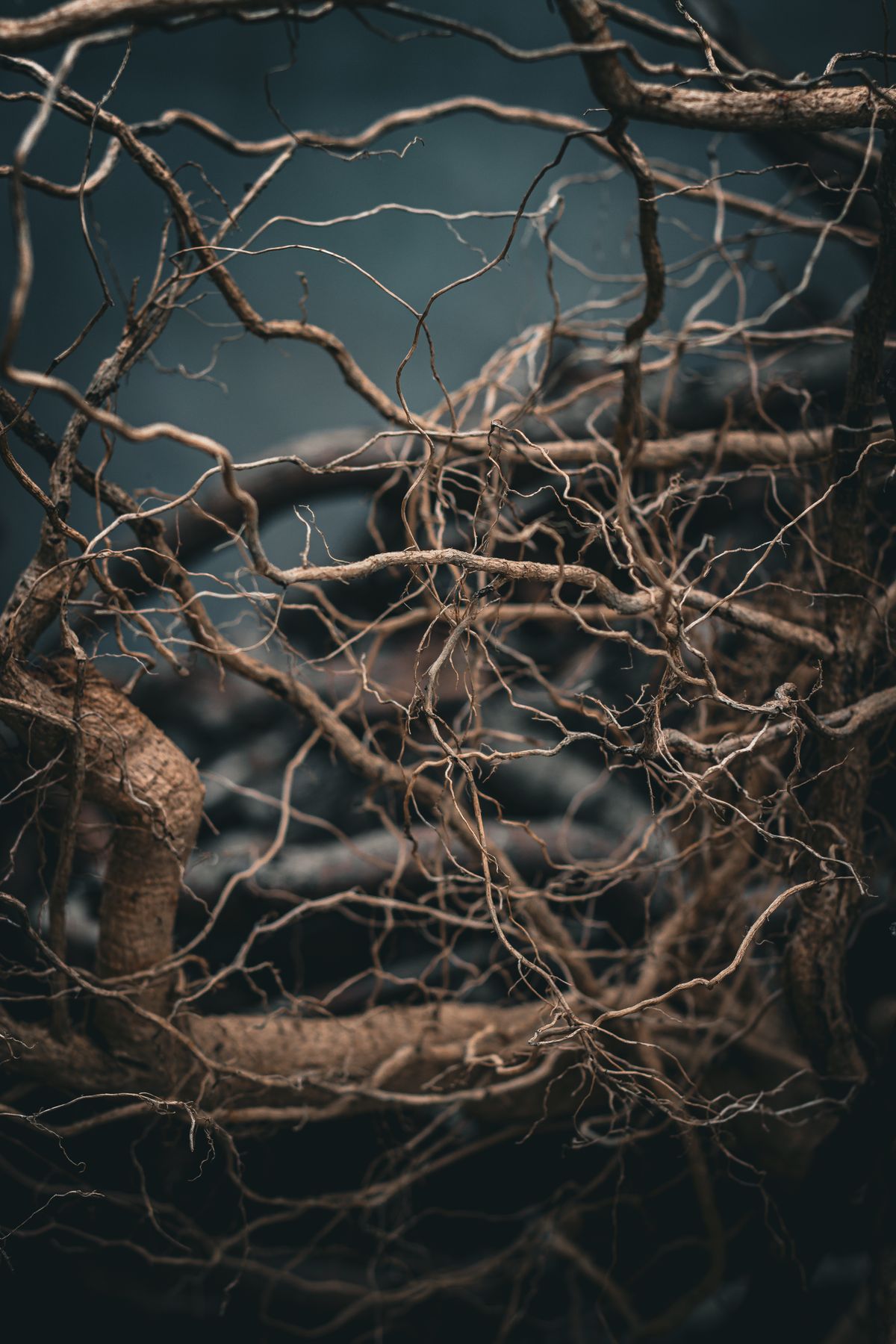
The Siberian ginseng root was systematically researched in the Soviet Union because a cheap alternative to expensive Korean ginseng was being sought.
Eleutherococcus senticosus It is a two- to five-meter-tall, densely thorny shrub from the Russian Far East, northeastern China, Korea, and northern Japan. It grows in the mixed and coniferous forests of the taiga, is extremely frost-hardy, and forms an extensive root system. The species name senticosus Its name is "thorny," and that's an understatement: the young shoots are so densely covered with fine thorns that harvesting is an unpleasant task. In Russia, it's therefore also called "devil's bush.".
Its career as a medicinal plant is recent and has a political background. In the 1950s and 60s, Soviet researchers sought a domestic alternative to Korean ginseng, which was expensive and difficult to obtain. Pharmacologist Israel Brekhman examined numerous plants for this purpose and ultimately chose Eleutherococcus. He also coined the term in this context. Adaptogen - a substance that is intended to non-specifically increase resistance to stress without disturbing normal function.
The term has stuck, but it's important to know what it is and what it isn't. "Adaptogen" is not a pharmacological category in the sense of an analgesic or antibiotic; it's a working definition from a specific research context that is not recognized as a class of action by the EMA or any other drug regulatory authority. Nevertheless, it's widely used in marketing because it sounds good and simultaneously defies any verification: something that non-specifically increases resistance is difficult to refute. Therefore, we only use the term in quotation marks on this page.
To useWhat the monograph says – and what the studies reveal
The European Medicines Agency lists Eleutherococcus root as traditional use With a narrowly defined indication: for asthenia – symptoms of weakness and exhaustion – in adults, after exclusion of serious causes. Commission E issued a positive monograph in 1991 as a tonic for fatigue and weakness, declining performance, and during convalescence. This is essentially the same indication as for true ginseng.
Studies exist, but they represent a difficult field. A large proportion of the original research originates from the Soviet Union and is methodologically unsound by today's standards—often lacking a control group, blinding, and unclear endpoints. Western studies are mostly small. A Cochrane review on chronic fatigue syndrome found insufficient evidence. Studies on physical performance in athletes yield conflicting results; several well-conducted studies found no effect.
Ein etwas interessanterer Befund liegt im Bereich der Immunologie. Eine deutsche placebokontrollierte Studie aus den 1980er Jahren zeigte unter Eleutherococcus-Extrakt eine Zunahme bestimmter Lymphozytenpopulationen. Das ist ein Laborbefund an Blutzellen, kein klinisches Ergebnis: Mehr T-Helferzellen im Blutbild bedeuten nicht weniger Verkühlungen. Die Studie wird bis heute als Beleg für „immunstärkende Wirkung“ zitiert, und diese Zuspitzung geht deutlich über das hinaus, was sie zeigt.
Our honest conclusion: Siberian ginseng is a well-tolerated plant with a traditional use for fatigue and a weak, but not non-existent, data basis. It is not a performance enhancer in the athletic sense, an immune system booster, or a treatment for chronic fatigue syndrome. If you want to try it: take it for three months, then take a break, and have the cause of your fatigue investigated beforehand.
IngredientsEleutherosides - a collective term, not a substance
The most important point regarding chemistry is a clarification of terms. "Eleutherosides" is not a single class of substances, but a collective term for seven chemically very different compounds found in the root and numbered A through G. Eleutheroside A is a sterol, B is the phenylpropanoid syringin, and D and E are lignans. They have nothing in common except their origin. If a preparation advertises itself as "standardized to eleutherosides," one must ask: which ones?
The two compounds actually measured in the standardization process are eleutheroside B (syringin) and eleutheroside E (syringaresinol diglucoside). These are the markers in the European Pharmacopoeia monograph. Whether they are also the active ingredients is unclear – marker and active ingredient are not the same, but only coincide in well-studied drugs.
What is explicitly not included: ginsenosides. Although Siberian ginseng belongs to the same family, Araliaceae, as true ginseng, it is a different genus with a completely different chemical profile. The trade name "Siberian ginseng" is therefore misleading and no longer permitted on labels in several countries. Anyone wanting ginsenosides needs... Panax; whoever wants eleutherosides needs Eleutherococcus. Products that promise both should be read carefully.
In addition, it contains polysaccharides, coumarins, triterpene saponins, and flavonoids. The polysaccharides are the primary source of immunological laboratory findings—they belong to the same group of substances studied in echinacea. A practical tip regarding quality: The root should be light-colored and fibrous, and develop a slightly sweet, woody aroma when cooked. Adulteration with other Araliaceae has been documented on the market, which is why pharmacy-grown products or preparations with declared standardization are the safest choice.
Enhanced combinationsUsing Siberian ginsengorghum correctly
As with real ginseng, it is less the combination that matters than the setting: the right time, the limited duration and a clear cause.
The stimulating component disrupts sleep. Take it in the morning or at midday, never in the evening – the same mistake as with ginseng, and just as easily avoided.
Two to three months, then at least a one-month break. This structure comes from the monograph and is an honest way of dealing with the lack of long-term data.
The traditional use: after an illness, when strength does not return - alongside sleep, exercise and nutrition, not instead of them.
A product should specify its eleutheroside B or E content. "Siberian ginseng extract" without a number is meaningless.
The taste is woody and earthy, and subtle; warming spices make the decoction more pleasant and are suitable for its intended use.
For those considering both: true ginseng has better data, while Siberian ginseng is cheaper and has a milder profile. Using both simultaneously makes no sense.
What contradicts itselfIt's best to avoid these combinations.
Commission E lists high blood pressure as a contraindication. The product is unsuitable for use in cases of uncontrolled high blood pressure.
Interactions have been reported with warfarin, but the data is inconsistent. Do not combine with warfarin without consulting a doctor if you are taking anticoagulants.
There are indications that blood sugar levels may be affected. In addition to taking appropriate medication, consult your doctor.
Elevated digoxin levels have been described in Eleutherococcus. Use of this product without medical supervision is not advisable during digitalis therapy.
Sleep disturbances and restlessness are among the reported side effects. Those who already have poor sleep habits will exacerbate the problem.
Persistent fatigue can be a sign of anemia, thyroid problems, sleep apnea, or depression. Taking a tonic that delays diagnosis is not a good idea.
ApplicationApplication forms
- decoctionSimmer 2 to 4 g of sliced root in 500 ml of water for 20 minutes - the traditional preparation.
- dry extractStandardized capsules with indication of the eleutheroside content - the most dosage-safe form.
- Fluid extractThe standard Russian form: alcoholic extract, dosed drop by drop.
- tincture20 to 40 drops in water, morning and noon.
- Tea blendWith ginger and cinnamon for a warming winter tea that also tastes good.
- In the morningThe time of administration is part of the application: early in the morning, never in the evening.
- Course planTwo to three months, then a break - and then reassess whether it is needed at all.
- Read the label„"Siberian ginseng" is a trade name. The label should state... Eleutherococcus senticosus stand.
- standardizationEleutheroside B or E with a number - without a number, an extract is not comparable.
- Do not combineUsing Siberian ginseng root and Panax ginseng at the same time makes no sense and only doubles the risk of interactions.
As a home remedyThe boil - with the necessary framework
Taiga root as a decoction
- First, determine the cause: Persistent fatigue has many possible causes, ranging from anemia and thyroid problems to depression. A tonic is not a substitute for a medical examination.
- Check contraindications: not for untreated high blood pressure, not alongside digitalis, only after consultation with anticoagulants and diabetes medication, not during pregnancy and breastfeeding, not for children and adolescents.
- Place 2 to 4 g of sliced root in 500 ml of cold water, bring to a boil, and simmer gently, covered, for twenty minutes. The woody root needs to be cooked.
- Strain and drink throughout the morning and midday. Nothing after 3 pm – otherwise you'll be awake in the evening.
- Observe for two to three weeks. If nothing changes, a higher dose is not the answer; it's simply not the right plant.
- Stop after a maximum of three months and take a break of at least one month. Discontinue earlier if you experience restlessness, sleep disturbances, headaches, or rising blood pressure.
For temporary fatigue and weakness, as well as during recovery from illness – the indication specified by the EMA and Commission E. Not for use in cases of chronic fatigue syndrome without medical supervision.
0.5 to 4 g of root daily according to Commission E; for extracts, follow the package instructions. Maximum of three months at a time. Not suitable for untreated hypertension.
Ayurveda & TCMWhat the old systems say
Ayurveda
The Siberian ginseng root is a Northeast Asian plant and is not represented in Ayurveda. The functionally corresponding category there is... Rasayana, the strengthening and regenerating agents, with Ashwagandha as the best-known representative. The fact that all three plants – Ashwagandha, Ginseng and Siberian ginseng – are now marketed under the collective term "adaptogens" is a modern conflation of three completely separate traditions and not a common origin.
Traditional Chinese Medicine
In the Chinese materia medica, the taiga root appears as Ci Wu Jia - "A prickly five-leaved plant." It is considered pungent, slightly bitter, and warming, with a connection to the spleen, kidneys, and heart, and its function is to tonify the spleen and kidneys as well as calm the mind and promote sleep. Interestingly, in Traditional Chinese Medicine (TCM), it is explicitly not considered a substitute for... Ren Shen, the real ginseng, but is considered a separate, weaker drug with a different focus - precisely the distinction that Western marketing has blurred.
Warning noticesWhen you should be careful
Please note
- No ginseng: Eleutherococcus senticosus Contains no ginsenosides. The trade name "Siberian ginseng" is misleading; pay attention to the label with the botanical name.
- Not suitable for untreated high blood pressure: Commission E lists hypertension as a contraindication.
- Interaction with digitalis: Elevated digoxin levels have been reported. Do not use during cardiac glycoside therapy without medical supervision.
- Anticoagulants and diabetes medications: Interactions have been reported, but the data is inconsistent. Discuss this before use in practice.
- Maximum three months: There is no data on long-term use. The monograph explicitly limits the duration of use.
- Not for children, pregnant women and breastfeeding women: The application is not intended for these groups due to a lack of data.
This page provides information and does not replace medical advice. If symptoms persist, please consult a doctor.
Related to the topicRead on and cook along!
Shop links lead to our product pages; it is indicated there if a partner is involved.
SourcesWhat is this based on?
- European Medicines Agency, HMPC: European Union herbal monograph on Eleutherococcus senticosus (Rupr. et Maxim.) Maxim., radix - traditional use.
- Commission E, Monograph „Eleutherococci radix“, Federal Gazette No. 11 of 17.01.1991.
- Cochrane Database of Systematic Reviews: Interventions for the treatment of chronic fatigue syndrome - Evaluation of herbal approaches.
- Bohn B. et al.: Flow cytometric studies with Eleutherococcus senticosus extract as an immunomodulatory agent. Drug research 1987.
- Panossian A., Wikman G.: Evidence-based efficacy of adaptogens in fatigue. Current Clinical Pharmacology 2009 - read critically.