OriginThe bitter sister of mugwort
The story that absinthe drives you crazy has persisted for over a hundred years – modern analyses of historical bottles have largely refuted it. The problem was something else.
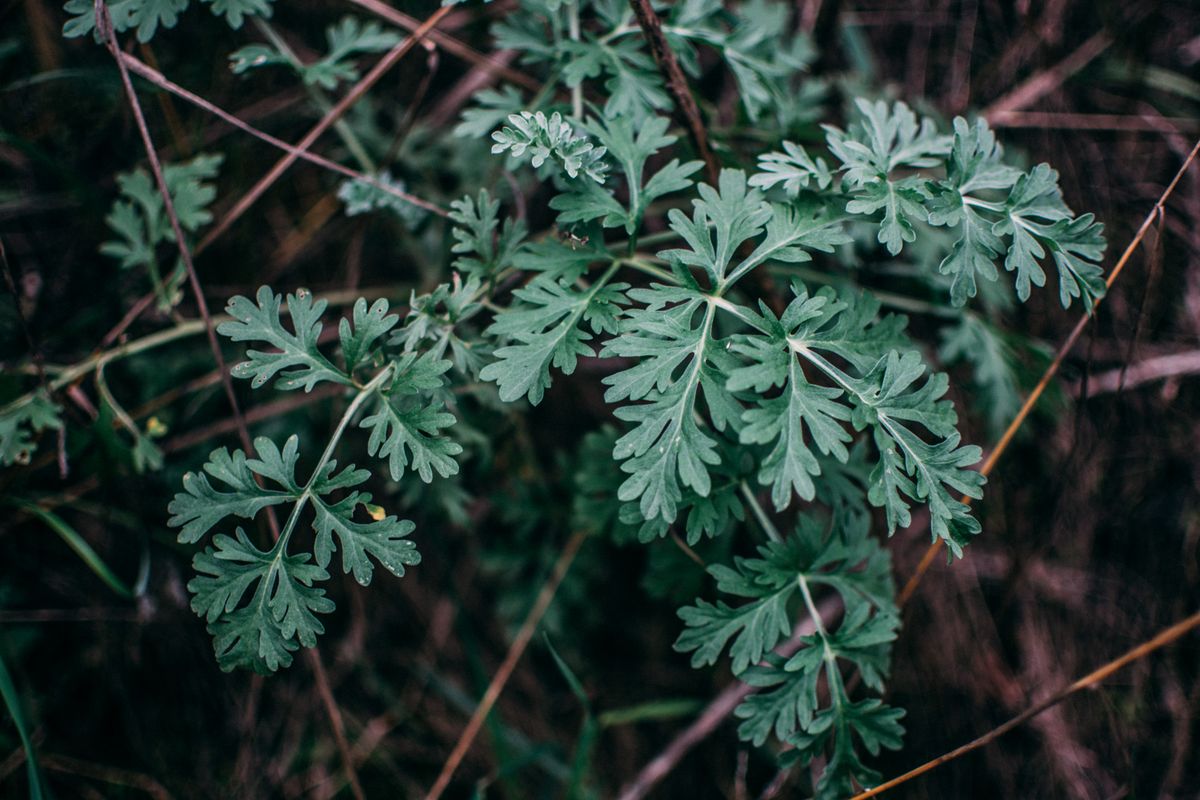
Wormwood grows on dry, stony wastelands, rubble heaps, walls, and roadsides, and is widespread in Europe and large parts of Asia. It grows to knee- to hip-high, has silvery-felted, finely divided leaves, and inconspicuous yellow flower heads. The botanical name absinthium It derives from a Greek word for "unpalatable" - anyone who has ever chewed a leaf understands why.
It is one of the oldest medicinal plants in existence: mentioned in the Egyptian Ebers Papyrus, by Hippocrates, by Dioscorides, and in every medieval herbal. It was used as a stomach remedy, as a vermifuge—hence the name "wormwood," from which "vermouth" developed—and as a bittering agent in wine. From this spiced wine came the Vermouth, which is still named after the plant today.
And then there is the absinthe. The green spirit was the drink of choice for Parisian bohemians in the 19th century and was banned in many countries from 1915 onwards – allegedly because the thujone it contained caused hallucinations and madness. Modern chemical analyses of original, sealed bottles from the pre-ban era have revealed that the thujone content was far lower than claimed and within the limits of what is permitted today. What most likely made absinthe drinkers ill was something else entirely: alcohol with up to 70 percent alcohol by volume, consumed in large quantities daily, and cheap adulterations using copper salts and antimony for the green color. Since 1991, absinthe has been permitted again in the EU – with thujone limits.
To useWhat wormwood can do for you
Vermouth is the classic bitter drug, And its mechanism of action is one of the most elegant in all of herbal medicine: it begins on the tongue. Bitter receptors in the mouth trigger a reflex via the vagus nerve that stimulates the production of saliva, gastric juices, bile, and pancreatic juice—even before the food arrives. The European Medicines Agency and Commission E have accordingly listed wormwood for Loss of appetite, dyspeptic complaints such as bloating and flatulence, as well as mild gallbladder problems.
This leads to an application rule that most people fail to follow: The bitter substance must be tasted. Wormwood tea in capsule form or heavily sweetened cannot exert its main effect – the reflex occurs via the tongue, not the stomach. Therefore: half a cup about twenty to thirty minutes before a meal, slowly, unsweetened. Those who cannot tolerate this can take drops in a little water, but these too should be allowed to take effect in the mouth before being swallowed.
Honesty also has its downsides. Wormwood contains Thujone, It contains the same neurotoxin as sage, only in a higher concentration – in large doses it can cause convulsions. Therefore: Apply in courses, A few days up to a maximum of three to four weeks, followed by a break. Not a continuous tea. And pure wormwood essential oil should not be used for self-medication at all. Its traditional use as a vermifuge is obsolete today: This would require quantities approaching toxic levels – and effective and safe medications are available.
IngredientsThat's what's in the vermouth
The substances that determine the effectiveness are the Sesquiterpene lactones, above all Absinthin and anabsinthin. They are responsible for the extremely bitter taste – absinthin is still perceptible as bitter at a dilution of one to thirty thousand. Depending on its origin, the bitterness value of the drug ranges between 10,000 and 25,000, making it one of the most bitter in our flora; only gentian root has a higher value.
The essential oil It makes up 0.2 to 1.5 percent and contains varying amounts depending on its origin. Thujone (α- and β-thujone) as well as chamazulene precursors, sabinene, and myrcene. Thujone acts on the GABA receptor and, in high doses, can lower the seizure threshold—this is the pharmacological core of the discussion surrounding absinthe and the reason for the time restriction. When preparing absinthe as a tea, only a small portion of the oil passes into the infusion; with alcoholic extracts, significantly more.
In addition, the herb contains flavonoids, phenolic acids, and tannins. Important for practical purposes: those who want to use wormwood as a bitter tonic don't need a high dose—quite the opposite. Half a teaspoon per cup is perfectly sufficient, and the preparation should taste bitter, not unpalatable. More herb doesn't improve the effect, only the thujone content.
Enhanced combinationsWhat makes the wormwood stronger
A plant where less really is more - and where timing is everything.
The bitter reflex needs time to develop; after eating, it comes too late.
The effect begins on the tongue - sugar or honey blocks precisely the reflex in question.
The classic combination for liver and gallbladder: wormwood (bitter), dandelion (diuretic), milk thistle (liver-protective).
The bitter herbs intensify each other - classic stomach bitters mixture.
Half a teaspoon per cup is enough; more only adds more thujone.
A dash of dry vermouth in fish, shellfish or risotto dishes - the culinary side of the plant.
What contradicts itselfIt's best to avoid these combinations.
Because of the thujone, it is administered in courses lasting from a few days up to a maximum of three to four weeks.
Wormwood oil is rich in thujone and poses a real risk in undiluted form.
The quantities required for this are in the toxic range - there are effective medications for this.
Bitter substances increase acid production and are unsuitable for existing ulcers.
Thujone is undesirable here; wormwood was even traditionally used as an abortifacient.
Thujone lowers the seizure threshold - avoid it completely.
ApplicationHow it is used
- Wormwood teaHalf a teaspoon per 250 ml, covered for five to ten minutes, unsweetened before meals.
- Digestive bitters mixtureWith equal parts gentian root and centaury.
- Liver and gallbladder teaWith dandelion root and milk thistle fruit.
- Bitter dropsAlcoholic extract, ten to twenty drops in a little water before meals.
- VermouthThe spiced wine, named after the plant, can be used as an aperitif or in a cooking pot.
- absintheNow permitted again in the EU, with thujone limits.
- herbal liqueurVermouth is an ingredient in many classic monastery liqueurs and bitters.
- Fish dishesA dash of dry vermouth for deglazing - for mussels, fish, risotto.
- moth protectionDried herbs in the wardrobe - an old home remedy.
- garden plantDrought-tolerant, silvery, good for barren beds.
As a home remedyBitter tea before the meal
Wormwood as an appetite stimulant
- Put half a level teaspoon of dried wormwood herb into a cup - deliberately use very little, the plant is very bitter.
- Pour 250 ml of boiling water over it and let it steep, covered, for five to ten minutes.
- Strain and unsweetened Drink half a cup about twenty to thirty minutes before eating, slowly and in small sips.
- Take two to three times daily before main meals for a few days up to a maximum of three weeks, then take a break.
For loss of appetite, bloating after eating, the feeling that food isn't sitting right, and sluggish digestion. The bitter reflex via the tongue is well-researched, and its use is recognized by the EMA and Commission E. An important point to note: Loss of appetite lasting for weeks, unintentional weight loss, or newly occurring digestive problems in middle and older age should be medically evaluated before treatment with bitter substances.
Half a cup two to three times a day, in courses lasting a few days up to a maximum of three to four weeks. Not for use during pregnancy and breastfeeding, not for use in cases of epilepsy, not for use in cases of stomach or duodenal ulcers. Not for children. And don't sweeten it – that's not a matter of taste, but a condition for it to work.
Ayurveda & TCMWhat the old systems say
Ayurveda
Wormwood is not a classic ingredient in Ayurveda, but related species are. Artemisia-types such as Nagadamani. Based on its properties, it would be described as bitter, pungent, and slightly warming, while also drying: Kapha strongly lowering, Pitta lowering due to the bitterness, Vata In larger quantities, it increases because bitter substances are drying. Deepana, thus stimulating the digestive fire, he would be a prime example there.
Traditional Chinese Medicine
Wormwood itself is not listed in the Chinese Materia Medica, but its close relatives are prominently featured: Ai Ye (Mugwort) for moxibustion and Qing Hao (Annual mugwort), from which the malaria drug artemisinin was derived. According to its nature, wormwood would be a bitter, cooling remedy that clarifies damp-heat and harmonizes the middle body – similar to bitter herbs used for bloating and loss of appetite.
Warning noticesWhen you should be careful
Please note
- Thujone: Use in short courses, for a maximum of three to four weeks at a time - not as a continuous tea and never as pure essential oil.
- Epilepsy: Thujone lowers the seizure threshold - avoid it completely if you suffer from seizure disorders.
- Pregnancy and breastfeeding: Do not use; wormwood has traditionally been used as an abortifacient.
- Stomach ulcers: Bitter substances increase acid production - unsuitable for ulcers and acute gastritis.
- Bile ducts: Do not use in cases of gallstones or blockage of the bile ducts.
- Clarification: Loss of appetite lasting for weeks or unintentional weight loss should be investigated, not treated with tea.
This page provides information and does not replace medical advice. If symptoms persist, please consult a doctor.
Related to the topicRead on and cook along!
Shop links lead to our product pages; it is indicated there if a partner is involved.
SourcesWhat is this based on?
- EMA/HMPC: European Union herbal monograph on Artemisia absinthium L., herba - traditional use for loss of appetite and dyspeptic complaints.
- Commission E: Monograph Absinthii herba (wormwood herb), Federal Gazette 1984.
- Lachenmeier DW et al. Thujone - cause of absinthism? Forensic Science International 2006; 158(1): 1–8 - Analysis of historical absinthe samples.
- Blaschek W (ed.): Wichtl - Herbal drugs and phytopharmaceuticals. 6th edition 2016, monograph Absinthii herba.
- European Pharmacopoeia (Ph. Eur.): Monograph Absinthii herba - Determination of bitterness value.