
OriginThe grape that no bear will eat
In German as in Latin it is called "Bärentraube" - and in both cases the name has remained a conjecture.
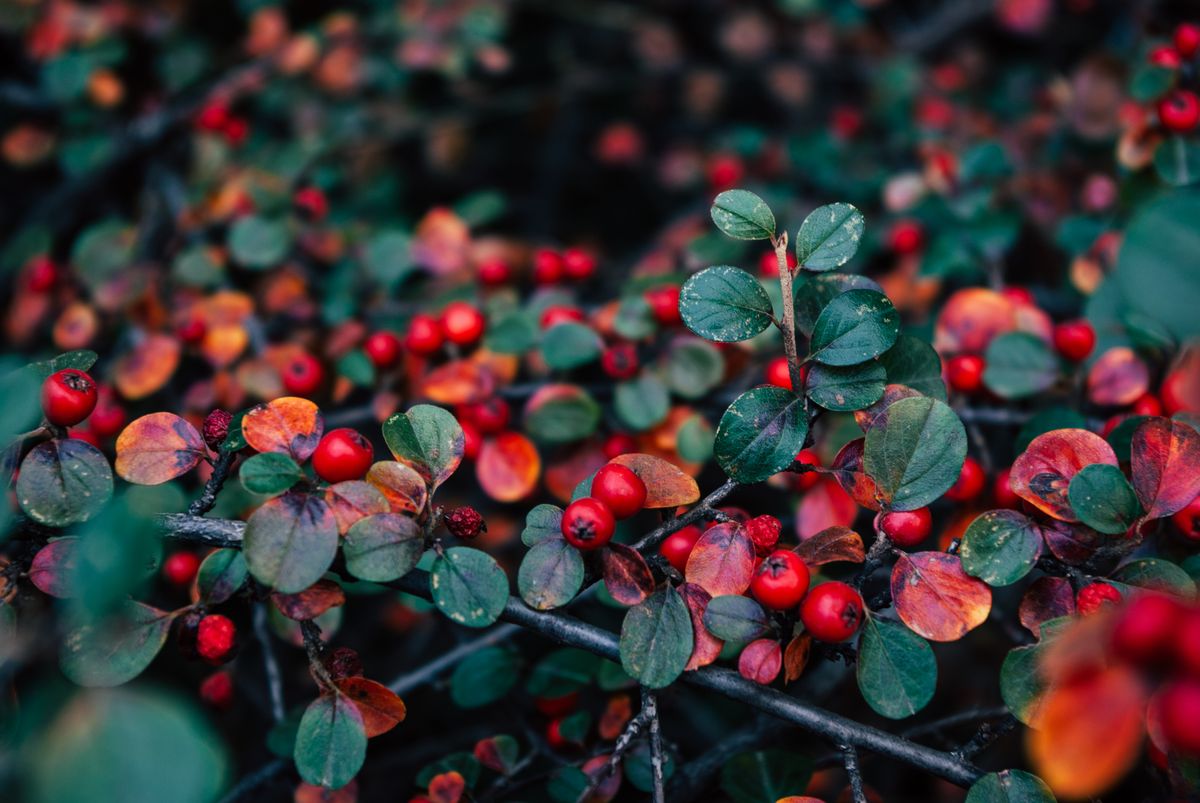
Arctostaphylos uva-ursi It is a low-lying, evergreen dwarf shrub with small, thick, leathery leaves and red, mealy berries. It grows circumpolar – in Northern Europe, Northern Asia, and North America – on poor, acidic soils in heaths, open pine forests, and mountainous regions. In Germany, it is rare and specially protected under the Federal Species Protection Ordinance; the drug product originates from Spain, Italy, and Eastern Europe.
The name is redundant: Arctostaphylos is Greek for bearberry, uva-ursi Latin for the same thing. Why the bear, is uncertain – the berries are mealy and bland, and the idea that bears prefer them is more legend than observation. They are edible for humans, but boring; in Nordic countries, they were dried and ground in times of scarcity.
The leaves have been used medicinally since the Middle Ages. In 13th-century Welsh pharmacopoeias, bearberry is described for urinary tract ailments, and this classification has remained unchanged to this day – a remarkably stable area of application. The plant is occasionally confused with the lingonberry. Vaccinium vitis-idaea, which looks similar and grows in the same location. The difference lies on the underside of the leaves: the lingonberry has dark glandular dots and a rolled-back edge there, while the bearberry's underside is smooth and has a net-like veining.
To useA true urinary tract antiseptic - with narrow limitations
Bearberry occupies a special position among native urinary tract plants. Goldenrod, lovage, and birch flush the urinary tract by increasing urine volume. Bearberry also has an antibacterial effect in the urine itself. The European Medicines Agency lists it as traditional use For the relief of mild, recurrent urinary symptoms in women, after serious conditions have been ruled out. Commission E issued a positive monograph in 1994 for inflammatory diseases of the urinary tract.
The pathway of the active ingredient is well described. Arbutin is a glycoside and, as such, inactive. It is broken down in the intestines and liver and excreted via the kidneys as a hydroquinone conjugate. In the urine, the conjugate is broken down again, and the released hydroquinone has an antibacterial effect on germs in the bladder. The plant thus delivers its active ingredient precisely where it is needed—an elegant mechanism not found in many drugs.
However, this same hydroquinone is also the reason for the strictest usage restrictions contained in an EMA monograph: a maximum of one week at a time and no more than five times a year. Hydroquinone has been shown to be potentially genotoxic and carcinogenic in high doses in animal studies. Whether the amounts produced by normal bearberry use are relevant in humans is unclear – and that is precisely why the EMA has imposed precautionary limits. We believe this is the right decision, and we consider it important not to treat this limit as a mere formality.
An old recommendation worth being aware of, as it's still widely circulated, is that one should alkalize the urine, for example with baking soda, to improve the effectiveness of arbutin. More recent studies have not confirmed this – the breakdown of arbutin in urine also occurs in an acidic environment, and alkalization can even be detrimental in cases of bacterial infections. This recommendation is outdated and no longer appears in current monographs.
IngredientsArbutin, tannins and the correct cold maceration
The main active ingredient is arbutin, comprising six to ten percent, accompanied by methylarbutin. In addition, the leaves contain fifteen to twenty percent tannins of the gallotannin type, as well as flavonoids and iridoids. The tannins are important for two reasons: they make a hot tea very bitter and difficult to drink, and they irritate the stomach – nausea is the most common side effect of bearberry and is almost always due to the tannins.
This leads to the most important preparation tip: Bearberry leaves should be cold-infused, not brewed. Arbutin dissolves readily in cold water, while tannins dissolve much more slowly. A cold infusion over twelve hours therefore extracts the arbutin while leaving a large portion of the tannins in the leaf. This results in a lighter-colored, milder, and significantly more tolerable tea – with the same concentration of active ingredients. This is one of the cases where the preparation method determines tolerability.
The arbutin content is the key indicator of quality; the European Pharmacopoeia requires a minimum content. For finished preparations, the amount of arbutin should be declared – the monograph dose is 400 to 840 milligrams of arbutin daily, and this is the benchmark against which a product can be measured. A practical observation: Urine may turn greenish-brown when taking bearberry. This is harmless and a sign that the active ingredients are being absorbed.
Regarding the plant itself: It is specially protected in Germany and may not be collected. Populations have declined sharply due to nutrient runoff and the loss of nutrient-poor heathland. Anyone needing bearberry leaves must purchase them – the medicinal product comes from cultivated and wild harvesting in Southern Europe. To distinguish it from the lingonberry: Bearberry leaves have a net-like veining pattern on their undersides and lack glandular dots, while lingonberry leaves have dark spots and an undercut edge.
Enhanced combinationsWhen bearberry is the right choice
It is the plant for the first, uncomplicated bladder infection - short, targeted, and no more than five times a year.
It is most effective when taken at the first sign of burning, not on the third day. A delay of one to two days usually negates its benefits.
Let it steep in cold water for twelve hours, then warm it briefly. This extracts the arbutin while leaving most of the stomach-irritating tannins in the leaf.
Here too, it's important to drink plenty of fluids. The antibacterial effect doesn't replace rinsing, it complements it.
Applying heat to the lower abdomen relieves the cramp and is one of the most effective simple measures for bladder problems.
For the period following the infection: Bearberry is limited to one week, goldenrod is not. Flushing can continue as a follow-up treatment.
The monograph states a daily dose of 400 to 840 mg of arbutin. Preparations without specified content cannot be dosed accurately.
What contradicts itselfIt's best to avoid these combinations.
No more than one week at a time and no more than five times a year. This limit is specified in the monograph because of the hydroquinone content and is not a mere formality.
Fever, chills, flank pain, or blood in the urine indicate that the infection has left the bladder. Seek immediate medical attention – no herbal remedy will help.
This product is not intended for use by those under 18. Urinary tract infections in childhood should always be investigated.
Contraindicated. Urinary tract infections during pregnancy also pose a separate risk and always require medical treatment.
When brewed hot, the tea releases a lot of tannins and irritates the stomach. Nausea is the most common side effect – and usually a consequence of the preparation.
The old recommendation to alkalize the urine has not been confirmed by more recent studies and is no longer included in the monographs.
ApplicationPreparation and limits
- cold extractSteep 3 g of leaves in 150 ml of cold water for twelve hours, strain, and warm briefly.
- dosageUp to four portions daily - corresponding to about 10 g of leaves.
- Ready-made preparationCoated tablets or capsules with declared arbutin content; the dosage-safe form.
- tinctureLess common; cold infusion and ready-made preparations are the usual forms.
- One weekThe hard upper limit for an application period.
- Five times a yearThe second upper limit – more often – means: find the cause, do not continue treatment.
- Urine discolorationGreenish-brown urine is harmless and indicates that the active ingredients are being absorbed.
- Cranberry differsBearberry: net-like on the underside, without spots. Cranberry: dark glandular spots, rolled-back edges.
- Do not collectBuying drugs is especially protected in Germany.
- Then goldenrodFor follow-up treatment, because bearberry therapy is only effective for a limited time.
As a home remedyThe cold extraction during the first distillation
Bearberry leaves, cold-infused
- First, check the limits: no pregnancy, no breastfeeding, not under 18 years of age, no fever, no flank pain, no blood in the urine, no kidney disease. And: Have you already taken bearberry five times this year? Then don't take it again.
- Pour 150 ml of cold water over 3 g of dried bearberry leaves - about one heaped teaspoon.
- Cover and let steep at room temperature for twelve hours, stirring occasionally. Preparing it overnight is most practical.
- Strain and briefly warm to drinking temperature - do not boil.
- Eat up to four portions a day, and drink plenty of water. A hot water bottle on the lower abdomen can help relieve cramps.
- Stop after a week at the latest – even if it hasn't improved. If it hasn't, the infection needs medical treatment.
For mild and uncomplicated bladder discomfort in women – burning during urination, frequent urge to urinate – when serious causes have been ruled out. Most effective when started early.
400 to 840 mg of arbutin daily according to the EMA monograph, corresponding to approximately 10 g of leaves. No more than one week at a time, and no more than five times a year. Not suitable for pregnant or breastfeeding women, individuals under 18 years of age, or those with kidney disease.
Ayurveda & TCMWhat the old systems say
Ayurveda
Bearberry is a Nordic plant and not used in Ayurveda. It is used for urinary tract problems. Mutrakrichra - are there Gokshura (Tribulus terrestris), Punarnava and Chandana, Sandalwood, in particular, is described as having cooling and diuretic properties. However, the Ayurvedic system does not recognize an antibacterial principle specifically delivered via urine.
Traditional Chinese Medicine
The Chinese materia medica also lacks this. Arctostaphylos. The corresponding category there is drugs that "clear damp-heat in the lower burner" - for example. Che Qian Zi, Bian Xu and Qu Mai —which are used for burning, painful urination. The description of the symptoms corresponds strikingly closely to what we call cystitis; the remedies are different.
Warning noticesWhen you should be careful
Please note
- At most one week, at most five times a year: This limit is specified in the EMA monograph because of hydroquinone. It is not a mere formality and should not be exceeded.
- Not suitable for use during pregnancy and breastfeeding: Contraindicated. Urinary tract infections during pregnancy always require medical treatment.
- Not for those under 18 years of age: The application is not intended for children and adolescents.
- Fever is the limit: Fever, chills, flank pain or blood in the urine indicate an infection beyond the bladder - seek immediate medical attention.
- Stomach irritation: Nausea is the most common side effect and is usually due to the tannins. The cold infusion is significantly better tolerated.
- Investigate recurring infections: Anyone who needs bearberry several times a year has a problem that needs to be addressed, not repeatedly treated.
This page provides information and does not replace medical advice. If symptoms persist, please consult a doctor.
Related to the topicRead on and cook along!
Shop links lead to our product pages; it is indicated there if a partner is involved.
SourcesWhat is this based on?
- European Medicines Agency, HMPC: European Union herbal monograph on Arctostaphylos uva-ursi (L.) Spreng., folium - traditional use.
- Commission E, Monograph „Uvae ursi folium“, Federal Gazette No. 109 of 15.06.1994.
- Federal Institute for Risk Assessment: Assessments of preparations containing hydroquinone and arbutin.
- Schindler G. et al.: Urinary excretion and metabolism of arbutin after oral administration of Arctostaphylos uvae ursi extract. Journal of Clinical Pharmacology 2002.
- Blaschek W. (ed.): Wichtl - Herbal Drugs and Phytopharmaceuticals, Chapter Uvae ursi folium.


