
OriginThe cucumber herb of the North
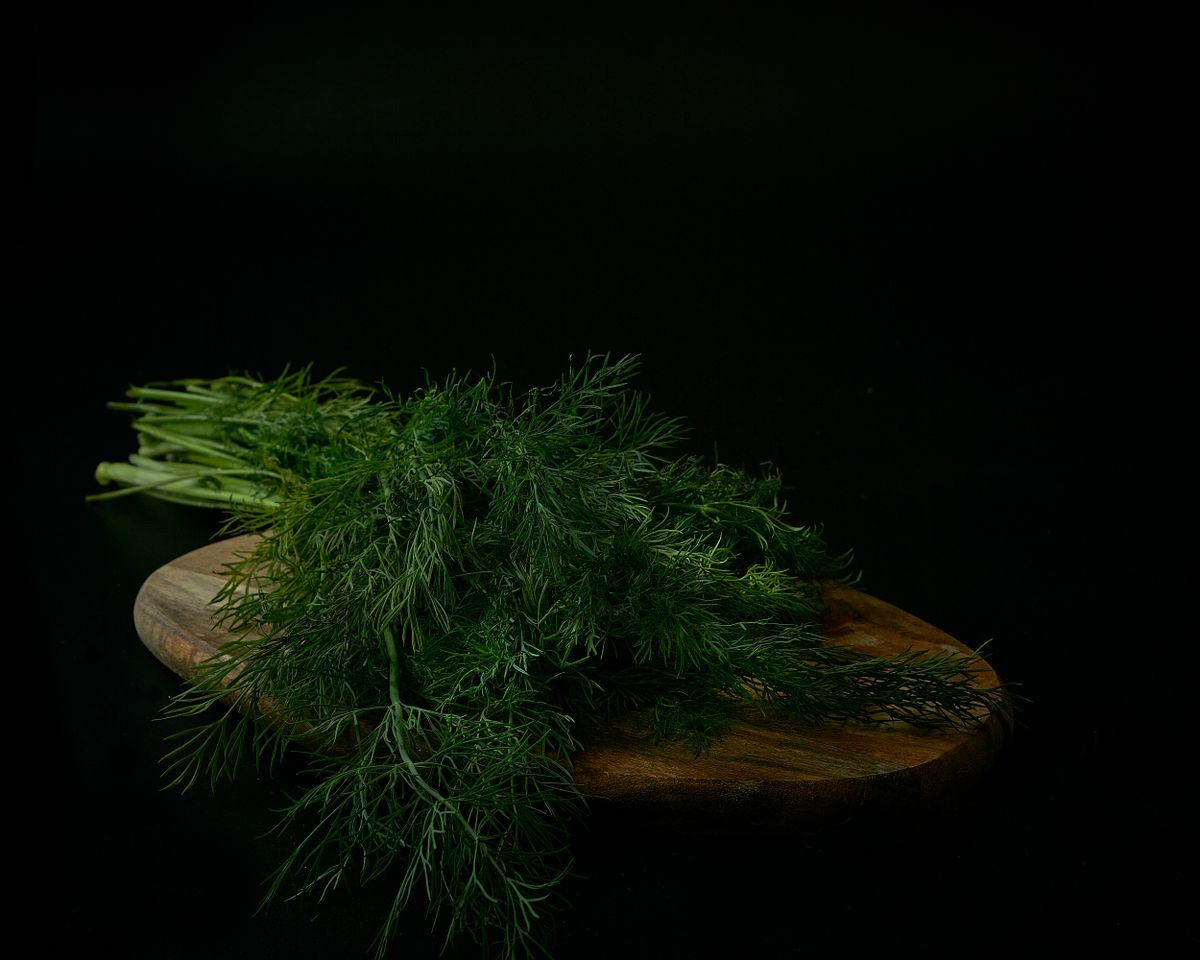
In Old Norse, dill means "to soothe" - and that was precisely its first purpose: as a tea for infants with stomach aches, long before it became a cucumber.
Dill stammt aus Vorderasien und dem Mittelmeerraum; Ägypter, Griechen und Römer nutzten ihn als Gewürz und Beruhigungsmittel. Über die Klöster kam er nach Mittel- und Nordeuropa - und wurde dort heimischer als im Süden. In Skandinavien, Polen, Russland und dem Baltikum ist Dill heute das Küchenkraut schlechthin: zu Fisch, Erdäpfel, Gurken, Suppen, Topfen. Die Deutschen kennen ihn vor allem aus dem Gurkenglas.
The plant is an annual, grows up to one meter tall, and blooms with yellow umbels. In the garden, it self-seeds wherever it falls. There are two harvests: the delicate green shoots ("dill tips") before flowering and the brown, flat fruits ("dill seeds") afterward. Both smell of dill, but differently—the shoots are green and fresh, the seeds warmer and more caraway-like.
To useWhat dill does for you
Dill is a Belly herb for sensitive people. Its seeds have an effect similar to fennel and caraway – only milder: The essential oil, containing carvone and limonene, relaxes the intestinal muscles, relieves bloating, and stimulates digestion. For centuries, dill seed tea was the primary remedy for colic in infants; the English "Gripe Water" is based on it.
The German Commission E has recognized dill seeds as a remedy for digestive problems. In addition, it has a mildly calming effect, which gave the herb its name, and its fresh greens are rich in vitamin C, calcium, and iron – a bunch of dill in a salad is more than just decoration.
Ehrlich gesagt ist Dill vor allem ein Kraut, das Essen leichter macht: Fisch, Gurke, Joghurt, Erdäpfel - alles, was frisch und kühl ist, wird mit Dill runder, ohne schwer zu werden. Große Wirkungen soll man nicht erwarten; die kleinen sind verlässlich.
IngredientsThis is what's in the leaf and seed
The fruits contain three to four percent essential oil with Carvon (the scent of caraway) and Lemons; the leaf oil has a different composition, with Phellandres and Dillether - the substance that gives dill tips their distinctive green scent. That's why you can't swap seeds and leaves.
Fresh dill provides significant amounts of vitamin C, beta-carotene, calcium, iron, and manganese; the seeds also contain calcium like almost no other spice. Flavonoids (quercetin, kaempferol) and coumarins complete the nutritional profile.
Enhanced combinationsWhat makes dill stronger
Dill is a cooling herb: it belongs with everything that is fresh, sour, milky or comes from water.
Tzatziki, cucumber salad, cold cucumber soup: dill and cucumber are the summer couple, yogurt is the mediator.
Gravlax, dill-mustard sauce, marinated fish: dill takes away the fishy taste and brings freshness.
Neue Erdäpfel mit Dillbutter - die einfachste Art, den Sommer zu essen.
Pickles need dill flowers and seeds: they provide aroma and keep the brine clear.
Dill seeds in tummy tea: milder than caraway, sweeter than fennel - the best choice for children.
Green sauce, herb quark, spring soup: the Nordic herbs, all raw, all at the end.
What contradicts itselfIt's best to avoid these combinations.
The aroma of the leaves is fleeting. Always use dill raw and last – cooked, it remains just grass.
Dried dill tastes like nothing. Freezing it (chopped in oil) preserves the aroma.
The Mediterranean resinous herbs overpower dill - two worlds.
Pot roast, ragù, Bolognese: dill belongs to light, cool, fresh dishes.
Dill oil is concentrated; tea and herb are the safer forms.
Cross-reactions with celery, carrot, fennel and mugwort are possible.
To which courtWhere he belongs
- GravlaxMarinate salmon with salt, sugar, pepper and a bunch of dill for 48 hours - slice thinly.
- TzatzikiCucumber, yogurt, garlic, dill, olive oil, salt - the Greek summer.
- PicklesDillblüten, Senfkörner, Knoblauch und Krenblatt ins Glas - zwei Wochen ziehen.
- Dill and mustard sauceSenf, Zucker, Essig, Öl, viel Dill - zu Gravlax und zu Erdäpfel.
- potato saladNordic style: with yogurt, cucumber and dill instead of mayonnaise.
- BorschtA bunch of chopped dill sprinkled over the finished beetroot soup - without it it's not borscht.
- Dill potatoesNeue Erdäpfel, Butter, Salz, Dill - mehr braucht es nicht.
- Fish soupFinnische Lohikeitto: Lachs, Erdapfel, Sahne, Dill.
- Dill seed tea1 teaspoon of crushed seeds, steep for 10 minutes - against bloating.
- Herb butterDill, lemon zest, salt in butter - on fish and bread.
As a home remedyDill seed tea for bloating
Dill seed tea
- Crush 1 teaspoon of dill seeds in a mortar.
- Pour 250 ml of boiling water over it, cover and let it steep for 10 minutes.
- Strain, drink warm – after meals or for stomach aches.
- For infants only after consulting a pediatrician, then highly diluted and given by the spoonful.
Bloating, fullness, mild abdominal cramps, nervous stomach. The gentle alternative to fennel and caraway – also traditionally used by breastfeeding mothers to relieve colic in their babies.
Two to three cups a day. Never take bottled dill oil internally; the accepted dose is about 3 g of fruit daily.
Ayurveda & TCMWhat the old systems say
Ayurveda
As Shatapushpa („One Hundred Flowers“) is a Vata-reducing herb for digestion and women's health: for bloating, colic, and to promote milk production – as a tea and in food. The seeds are chewed after meals.
Traditional Chinese Medicine
Shi Luo Zi, Dill seed is a mild warming remedy: it moves Qi, dispels cold from the stomach, and helps with loss of appetite and flatulence. It doesn't play a major role, but it's there – similar to fennel.
Warning noticesWhen you should be careful
Please note
- Allergy: Cross-reactions in umbellifer allergy (celery, carrot, fennel, mugwort).
- Essential oil: Never diluted internally, externally - can make the skin sensitive to light.
- Pregnancy: Dill in food is safe; avoid high-dose seed preparations, as they are considered to mildly induce labor.
- Infants: Dill tea only after consulting your pediatrician - for colic, there are ready-made preparations with safe dosage.
- Collect: Do not confuse wild dill with poisonous umbellifers (fool's parsley, hemlock) - dill definitely smells like dill.
This page provides information and does not replace medical advice. If symptoms persist, please consult a doctor.
Related to the topicRead on and cook along!
Shop links lead to our product pages; it is indicated there if a partner is involved.
SourcesWhat is this based on?
- Commission E: Monograph Anethi fructus (dill fruits), Federal Gazette 1990 - Digestive problems.
- Blaschek W (ed.): Wichtl - Herbal drugs and phytopharmaceuticals. 6th edition 2016.
- Jana S, Shekhawat GS. Anethum graveolens: An Indian traditional medicinal herb and spice. Pharmacognosy Reviews 2010; 4(8): 179–184.
- USDA FoodData Central: Dill weed, fresh and Spices, dill seed.


