
OriginTwo plants, one name - and a nun in between.
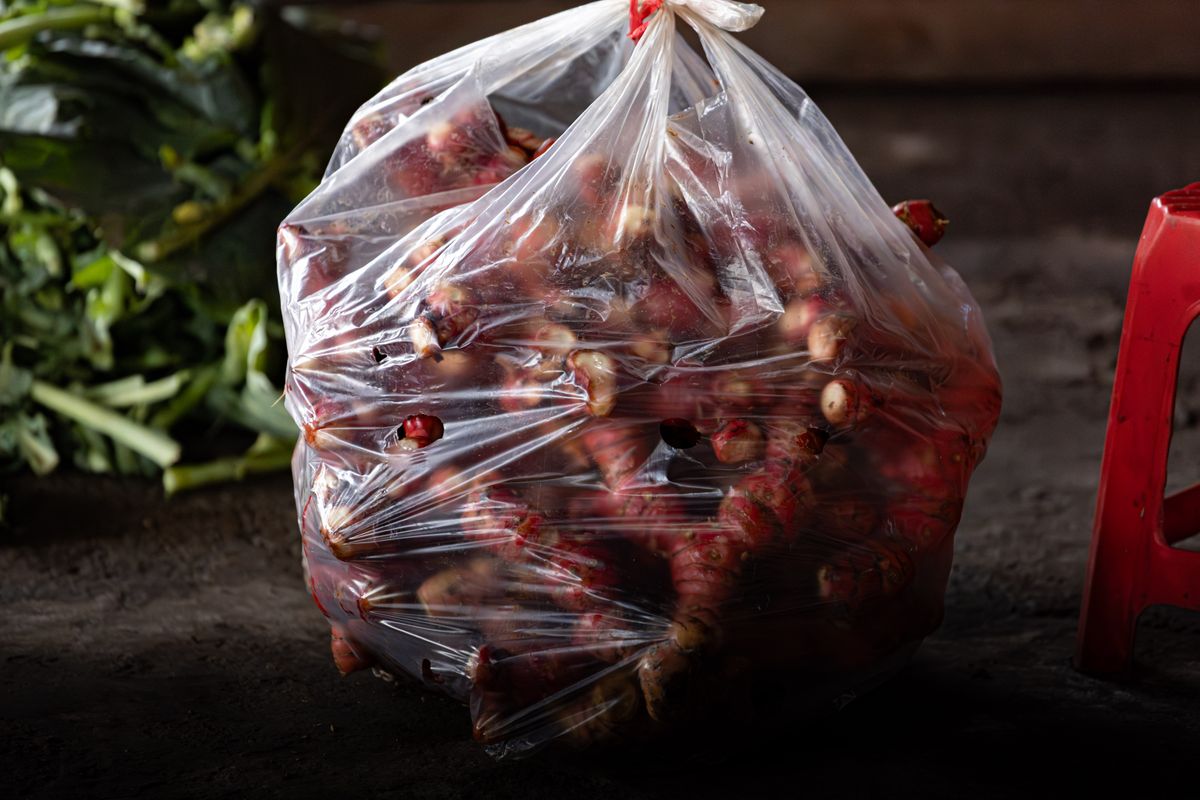
Anyone who reads "galangal" in a Thai recipe and uses the Hildegard root from a health food store is cooking with the wrong plant.
Galangal is a ginger relative from southern China, primarily from Hainan Island and Guangdong Province. It grows as a perennial plant about 1.5 meters tall with narrow leaves and forms a branched, reddish-brown rhizome underground, which is harvested after two to three years. When dried, this rhizome is rock-hard – unlike ginger, it cannot simply be cut but must be grated or ground.
The first thing to distinguish between is the two types of galangal. Lesser or true galangal. Alpinia officinarum The medicinally used variety is sharper and more aromatic, and that is the plant on this page. Greater Galangal Alpinia galanga is milder, bigger, and that's the Kha Thai cuisine, where it's found in Tom Kha Gai and curry pastes. Both are called galangal in German, but their flavors are very different; substituting them will ruin any recipe in either direction.
Galangal arrived in Europe via the Arab trade routes, and in the Middle Ages it was an expensive, prized spice, on par with ginger, cinnamon, and pepper. Hildegard von Bingen dedicated an article to it in her... Physica It has its own chapter and is recommended, among other things, for heartache and weakness – hence the nickname "spice of life" and the entire modern Hildegard marketing strategy. It then almost completely disappeared from European cuisine, except in herbal liqueurs and Russian kvass. In Chinese medicine, however, it is known by the name... Gao Liang Jiang It remains a commonly used drug to this day.
To useWhat is documented – and what dates back to the Middle Ages
Commission E has issued a positive monograph for galangal root, listing its uses as loss of appetite and dyspeptic complaints. This is a classic aromatic-bitter profile: essential oil plus pungent compounds plus bitterness, which together stimulate saliva and gastric juice production and support gastric motility. For this application, galangal is a sensible, well-tolerated option – just as ginger, gentian, or wormwood are in their respective applications.
There is no EMA monograph for galangal. This is a gap, not a ruling – the EMA is processing plants gradually, and galangal simply wasn't up for review yet. Nevertheless, for the purposes of assessment, European recognition is based on the older Commission E monograph and on practical experience, not on clinical studies.
Now to the point where most accounts become inaccurate: heartache. Hildegard von Bingen writes that anyone suffering from heartache should immediately eat enough galangal, and they will feel better. This statement is still quoted today and taken literally in the Hildegard community. We consider this dangerous, for a simple reason: What we recognize today as heartache—angina pectoris, heart attack—could not be described as such in the 12th century. "Heartache" back then could just as easily mean heartburn, stomach pressure, or esophageal spasms, and a pungent, digestive spice is plausible for precisely these complaints. It is ineffective for a genuine heart problem, and reaching for the root instead of calling emergency services wastes precious time.
Modern research is interested in galangal for other reasons. The diarylheptanoids and the flavonol galangin show anti-inflammatory and antioxidant effects in the laboratory, and there are cell biology studies on galangin in cancer research. These are laboratory findings. No practical application can be derived from cell cultures, and we explicitly list these studies here not as benefits, but as the current state of research.
IngredientsSharp, resinous, and with a hint of eucalyptus
Galangal's aroma profile arises from two distinct groups of compounds. Its essential oil, present in concentrations of up to 1.5 percent, contains a high amount of 1,8-cineole—the same compound found in eucalyptus and rosemary—along with α-pinene, eugenol, and sesquiterpenes. This is why galangal, unlike ginger, has this cool, almost medicinal overtone. Anyone smelling them side by side will immediately recognize the difference.
The spiciness comes from diarylheptanoids, a class of compounds that galangal shares with ginger and turmeric—curcumin is chemically a diarylheptanoid, and ginger's gingerols belong to the same group. In galangal, it is primarily galangols and related compounds that are responsible. These are non-volatile, meaning they remain even after prolonged cooking, while the essential oil evaporates. Practically speaking, this means that a long-simmered dish with galangal will end up spicy, but no longer aromatic.
The third group consists of flavonols, most notably galangin, which is named after the plant. Galangin is a well-studied model compound in cell biology and therefore appears in numerous publications – occasionally giving the impression that galangal has been intensively researched clinically. This is not the case; what has been researched is a single molecule in a test tube.
For cooking and use, this leads to a clear rule: Dried galangal is rock-hard and must be freshly grated or ground shortly before use, because the cineole evaporates quickly. Pre-ground galangal powder that has been sitting on the shelf for a while still retains its resinous pungency, but has largely lost its aromatic components. For tea, the powder is steeped in boiling water and covered – without a lid, none of the aroma remains.
Enhanced combinationsWhere galangal has its place
Galangal is not an everyday spice in Central Europe, but it has a few places where it works very well - and a number of misconceptions that persist.
Two related herbs with contrasting profiles: ginger warms and relieves nausea, while galangal provides resinous spiciness and bitterness. A powerful combination when enjoyed together as a tea after a heavy meal.
If the spiciness alone is too much, the carminative umbelliferous fruits soften it and complement it functionally: galangal stimulates, the fruits relax.
In many traditional bitters and herbal liqueurs, galangal is one of the spicy components - along with gentian, wormwood and angelica root.
For Tom Kha Gai and curry pastes you need Alpinia galanga, Use greater galangal – it's milder and more lemony. Use fresh or frozen, not dried, and not the lesser galangal from the health food store.
Historically, galangal was an integral part of medieval spice blends and can still be found in some gingerbread recipes. A pinch is sufficient.
In Russia and Eastern Europe, galangal is traditionally used to flavor kvass and some types of vodka - one of the few European uses that has been preserved throughout.
What contradicts itselfIt's best to avoid these combinations.
The most important point on this page: Hildegard's recommendation for "heartache" most likely referred to stomach problems, according to today's understanding. For chest pain, pressure, radiating pain to the arm or jaw, shortness of breath, or cold sweats: call emergency services (112), not galangal.
Alpinia officinarum and Alpinia galanga They are not interchangeable. The lesser galangal in Tom Kha makes the soup spicy and resinous instead of fresh and lemony.
Spicy substances irritate the stomach lining. In cases of inflamed mucous membranes, reflux, or ulcers, a strong aromatic is the wrong approach.
Two to four grams daily is the monograph dose. Significantly more will cause heartburn without providing any additional benefit.
It's safe to use as a spice in food. However, there's a lack of data on its use in medicinal amounts during pregnancy and breastfeeding – so it's best to avoid it.
Hildegard medicine is a fascinating work from a cultural and historical perspective, but it is not a medical textbook. Quotations from the 12th century do not replace a diagnosis.
To which courtWhere the sharp rootstock fits
- Digestive teaA pinch of freshly grated galangal per cup, poured with boiling water and left to steep, covered, for ten minutes.
- stomach bittersIn homemade herbal bitters together with gentian, wormwood and angelica root.
- GingerbreadAs a historical component in gingerbread spice - a pinch on a baking sheet.
- Meat braised dishesDuring long braising processes, the spiciness remains, while the aroma dissipates. Therefore, add galangal only in the second half.
- KvassThe traditional Eastern European use: a piece of root in the fermenting bread drink.
- spice mixGround with ginger, cinnamon and cardamom to create a warming winter blend.
- Tom Kha GaiAttention, this is where you need greater galangal - fresh or frozen from the Asian market, not the dried apothecary root.
- Curry pasteAlso, use greater galangal, crushed in a mortar with lemongrass, chili and shallots.
- Spiced wineIt is regularly mentioned in medieval recipes for spiced wine - along with cinnamon, ginger and grains of paradise.
- Pure galangal powderHildegard's method: let a pinch of powder dissolve on the tongue. It acts as a bitter and pungent stimulus, not on the heart.
As a home remedyDigestive tea - and what it is not
Galangal tea after meals
- First, a word of caution: This tea is for bloating, loss of appetite, and sluggish digestion. It is not suitable for chest pain, pressure behind the breastbone radiating to other areas, shortness of breath, or cold sweats – in these cases, call emergency services (112).
- Grate a piece of dried galangal root about two centimeters in size finely on a nutmeg grater; this yields a good pinch to half a teaspoon of powder.
- Pour a cup of boiling water over it and be sure to let it steep covered for ten minutes - without a lid, the cineole will disappear with the steam.
- Strain or let the powder settle and drink slowly, after meals or when the stomach is sluggish.
- If you find the spiciness too strong, mix in equal parts fennel and caraway; this softens and complements it at the same time.
- One to two cups a day are sufficient. If there is no improvement after one to two weeks, the tea is not the answer – then the cause needs to be investigated.
For loss of appetite, bloating, and sluggish digestion – this is the area of application for which Commission E has given galangal a positive assessment. It is not recommended for heart problems, heartburn, or inflamed gastric mucosa.
2 to 4 g of rhizome daily. Not suitable for use in cases of gastritis, reflux, or stomach ulcers. During pregnancy and breastfeeding, use only as a culinary spice, not in medicinal quantities.
Ayurveda & TCMWhat the old systems say
Ayurveda
Galangal is known in Ayurveda under the name Kulanjan known, where mostly the greater galangal is found. Alpinia galanga This refers to something that is considered sharp, bitter, and warming., Kapha- and vata-lowering, and is associated with digestion and the respiratory system - as dipana For digestive fire and for coughs with thick mucus. The close relationship to ginger, which plays a central role in Ayurveda, is also evident in its classification.
Traditional Chinese Medicine
In Chinese medicine, galangal is an established drug: Gao Liang Jiang, Named after the Gaoliang region in present-day Guangdong, it is considered pungent and hot, associated with the spleen and stomach, and its function is to "dispel cold and relieve pain"—used for cold-induced stomach pain, vomiting, and diarrhea. Thus, Traditional Chinese Medicine (TCM) addresses the same application as Commission E, albeit in different terms: a warming remedy for a sluggish, cramped stomach.
Warning noticesWhen you should be careful
Please note
- Heart problems are an emergency: Hildegard's "heartache," as understood today, most likely referred to stomach problems. Chest pain radiating to other areas, shortness of breath, nausea, and cold sweats are signs of a heart attack – call emergency services (112), not a root cause.
- Two different types: Alpinia officinarum is the pharmacy and Hildegard plant, Alpinia galanga Those of Thai cuisine. They are not interchangeable.
- Not suitable for those with an irritated stomach: Spicy substances irritate the mucous membranes. Galangal is unsuitable for gastritis, reflux, or stomach ulcers.
- Adhere to the dosage: 2 to 4 grams daily. More only causes heartburn, no additional benefit.
- Pregnancy and breastfeeding: It is unproblematic as a spice, but cannot be used in medicinal quantities due to a lack of data.
- Laboratory findings are not a valid application: Cell culture studies on galangin say nothing about the effects of a tea. Anyone offered galangal as a cancer treatment based on such studies should refuse the offer.
This page provides information and does not replace medical advice. If symptoms persist, please consult a doctor.
Related to the topicRead on and cook along!
Shop links lead to our product pages; it is indicated there if a partner is involved.
SourcesWhat is this based on?
- Commission E, Monograph „Galangae rhizoma“, Federal Gazette No. 173 of 18.09.1986.
- Chinese Pharmacopoeia Commission: Pharmacopoeia of the People's Republic of China, entry Gao Liang Jiang (Alpiniae officinarum rhizoma).
- Chudiwal A. et al.: Alpinia galanga and Alpinia officinarum - phytochemistry and pharmacology. Indian Journal of Natural Products and Resources 2010.
- Hildegard von Bingen: Physica, Book I - Chapter on Galangal (historical source, not a medical recommendation).
- Blaschek W. (ed.): Wichtl - Herbal Drugs and Phytopharmaceuticals, Chapter Galangae rhizoma.


