
Cassava (Manihot esculenta)
OriginThe root that feeds the tropics
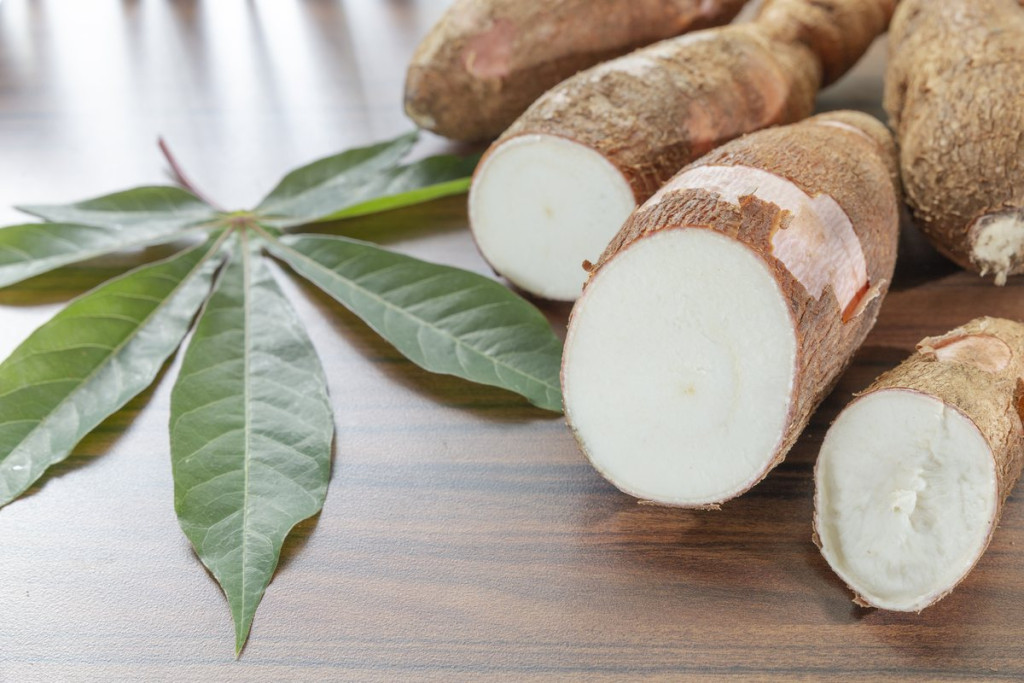
Cassava grows where hardly anything else thrives - on barren soils, in heat and long periods of drought.
Cassava is a shrub that grows up to three meters tall; its thick, brown-barked storage roots are eaten. Cassava was domesticated on the southern edge of the Amazon basin long before Europeans arrived in the Americas. Indigenous peoples made the bitter varieties edible by grating, pressing, and roasting them – this process resulted in cassava flour. Farinha.
Portuguese traders brought cassava to West Africa in the 16th century; later it spread to Asia. Today, Nigeria is the largest producer. In Germany, fresh cassava can be found in Asian and African grocery stores, usually coated with wax, along with frozen cassava, cassava flour, and tapioca – the almost pure starch from the tuber.
To useWhat cassava does for you
Cassava is primarily a Energy supplier: 100 g rohe Knolle enthalten rund 160 kcal und etwa 38 g Kohlenhydrate, überwiegend Stärke. Das ist fast doppelt so viel wie bei der Erdapfel. Dazu kommen rund 20 mg Vitamin C, approximately 270 mg potassium, It contains some folate and just under 2g of fiber. However, the root provides hardly any protein – only about 1.4g per 100g.
Because cassava is naturally gluten-free ist, sind Maniokmehl und Tapiokastärke bei Zöliakie beliebte Zutaten für Brot, Fladen und Gebäck. Abgekühlt bildet er wie Erdäpfel resistant starch. There is no reliable evidence for a healing effect.
The crucial question is the preparation. Cassava contains the cyanogenic glycosides linamarin and lotaustralin. Hydrogen cyanide is produced from these. Peeling, chopping, soaking, and thorough cooking significantly reduce the cyanogenic glycoside content because the glycosides leach into the water and the hydrocyanic acid is released during heating. In Africa, where cassava is consistently poorly processed and consumed in a diet lacking sufficient protein, neurological disorders occur. Konzo on - a sudden, permanent paralysis of the legs.
IngredientsThis is what's in cassava
The tuber consists of approximately 60% water and about one-third starch. It contains little protein and fat, some sugar, fiber, vitamin C, folate, vitamins B1 and B6, potassium, magnesium, manganese and calcium, as well as linamarin, lotaustralin and the enzyme linamarase.
One can roughly distinguish sweetness Varieties with few glycosides, which are mainly located in the peel, and bitter Varieties that also contain a lot of it in their meat and require complex processing. Tapioca is almost pure starch and contains hardly any vitamins or minerals.
Enhanced combinationsWhat makes cassava stronger
Cassava provides energy - what's missing is provided by the other ingredients on the plate.
It compensates for protein deficiency - and also protects against Konzo.
It also provides folate, carotene, and iron.
Classic in curries and stews.
Freshness for fried cassava.
Mojo de Yuca from the Caribbean.
Combines well with buckwheat or millet.
What contradicts itselfIt's best to avoid these combinations.
Hydrocyanic acid - not even in smoothies.
The dissolved glycosides would otherwise end up in the food.
Always cook until the tuber is soft.
Low protein levels – a deficiency is imminent.
Children are more sensitive to hydrogen cyanide.
Discard any spoiled tubers.
In the kitchenWhere he belongs
- Yuca fritaBoiled and then fried, with lime.
- Yucca MojoWith garlic and citrus sauce.
- Pão de queijoBrazilian cheese balls made from tapioca starch.
- FarofaRoasted cassava flour with beans.
- FufuWest African porridge for soups.
- Cassava curryWith coconut milk and vegetables.
- Tapioca pearlsIn pudding or bubble tea.
- Cassava stewMit Bohnen und Paradeiser.
- Cassava pureeWie Erdapfelpüree mit Butter.
- Gluten-free flatbreadsMade from cassava flour.
As a home remedySafely prepare cassava
Cooking cassava correctly
- Cut off the ends, divide the tuber into 5 cm long pieces and peel off the brown rind along with the pink inner layer in a thick layer.
- Halve the pieces lengthwise, cut out the fibrous middle strand and rinse thoroughly.
- Soak in plenty of cold water for several hours or overnight, changing the water once or twice.
- Boil uncovered in fresh water for 20 to 30 minutes, until the pieces are soft and slightly translucent.
- Pour off all the cooking water and only then process the cassava further.
For a safe, filling, and gluten-free side dish. Peeling, soaking, and cooking without a lid significantly reduces the levels of cyanogenic glycosides and hydrocyanic acid.
Als Beilage wie Erdäpfel. Nur Ware aus dem Handel verwenden, im Zweifel lieber länger kochen. Bittere Knollen oder solche mit dunklen Verfärbungen nicht verwenden.
Ayurveda & TCMWhat the old systems say
Ayurveda
Cassava originates from America and is not described in classical Ayurveda. According to current understanding, the cooked tuber is considered sweet, heavy, and nourishing – balancing for Vata, but used sparingly for Kapha and with warming spices such as ginger.
Traditional Chinese Medicine
Cassava is not mentioned in the classical texts of Traditional Chinese Medicine (TCM). In Western TCM nutritional theory, it is usually classified, like other starchy tubers, as sweet and neutral, nourishing the digestive system – always when thoroughly cooked.
Warning noticesWhen you should be careful
Please note
- Hydrocyanic acid: Never eat cassava raw; peel, soak, cook thoroughly and discard the cooking water.
- Bitter varieties: Do not use very bitter-tasting tubers - they contain particularly high levels of cyanogenic glycosides.
- Children: Children are more sensitive; only use well-cooked commercially available cassava in normal quantities.
- Unbalanced diet: Cassava provides very little protein - always combine it with legumes, nuts, eggs or fish.
- Signs of poisoning: Dizziness, nausea or shortness of breath after eating is an emergency - call the poison control center or 112.
- Storage: Use fresh tubers quickly or freeze them after peeling.
This page provides information and does not replace medical advice. If symptoms persist, please consult a doctor.
Related to the topicRead on and cook along!
Shop links lead to our product pages; it is indicated there if a partner is involved.
SourcesWhat is this based on?
- Federal Institute for Risk Assessment (BfR): Acute food poisoning: What are the possible causes, and how can they be avoided? FAQ dated August 18, 2025.
- EFSA Panel on Contaminants in the Food Chain (CONTAM). Evaluation of the health risks related to the presence of cyanogenic glycosides in foods other than raw apricot kernels. EFSA Journal 2019; 17(4): 5662.
- Commission Regulation (EU) 2022/1364 amending Regulation (EC) No 1881/2006 as regards maximum levels of hydrocyanic acid in foodstuffs.
- Nzwalo H, Cliff J. Konzo: from poverty, cassava, and cyanogen intake to toxico-nutritional neurological disease. PLoS Neglected Tropical Diseases 2011; 5(6):e1051.
- Montagnac JA, Davis CR, Tanumihardjo SA. Nutritional value of cassava for use as a staple food and recent advances for improvement. Comprehensive Reviews in Food Science and Food Safety 2009; 8(3): 181–194.
- USDA FoodData Central: Cassava, raw.


