
Beans (Phaseolus vulgaris)
OriginInvented twice
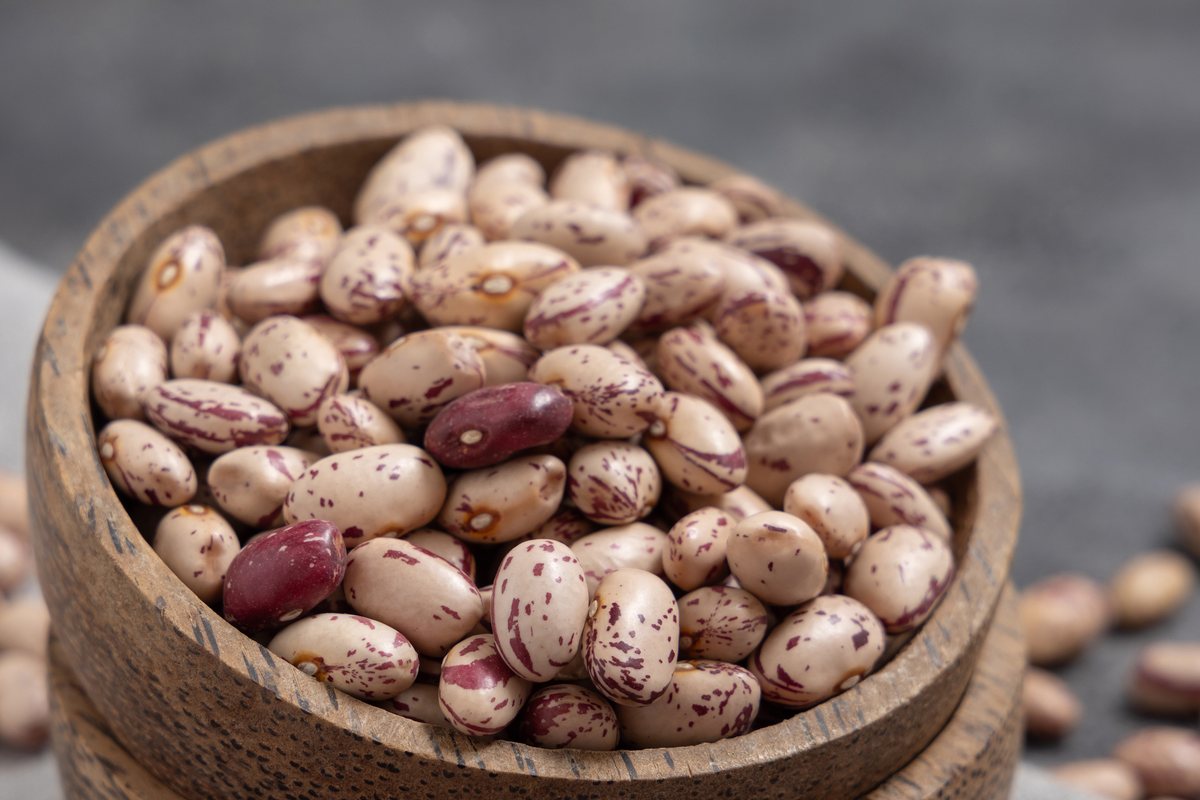
The common bean was domesticated twice independently - once in Mexico and once in the Andes.
The wild bean grows from Mexico to Argentina. Around 8,000 years ago, it was cultivated in Central America and independently in the Andes; together with maize and squash, it formed the "Three Sisters" of indigenous agriculture. Maize and beans together provide a complete protein – a combination that remains the foundation of Mexican cuisine to this day.
Beans arrived in Europe in the 16th century and displaced the broad bean (fava bean), a completely different species, which had been common until then. Today there are hundreds of varieties: kidney beans, pinto beans, black beans, white beans, borlotti, cannellini – and the green bush and pole beans, where the entire young pod is eaten.
To useWhat beans can do for you
Dried beans provide approximately 22 percent protein, many many Dietary fiber, Folate, iron, magnesium, potassium and polyphenols - dark varieties such as kidney and black beans contain particularly many anthocyanins in the skin.
Meta-analyses have shown that legumes lower LDL cholesterol, blood pressure, and the post-meal rise in blood sugar. In a long-term study of older adults in Japan, Sweden, Greece, and Australia, legume consumption was the strongest dietary factor for a longer life—each 20g consumed daily reduced the risk of death by approximately 8 percent. A correlation, not proof, but a remarkably consistent one.
The empty Bean pods Bean pods are an old medicinal drug: Commission E has recognized bean pod tea as a supportive treatment for urinary problems; traditionally, they are used as a mild diuretic.
IngredientsThis is what's in beans
Beans contain protein, Stärke mit hohem Anteil resistenter Stärke, lösliche und unlösliche Ballaststoffe, Folat, Eisen, Magnesium, Kalium, Zink und Polyphenole. Fisolen sind eher ein Gemüse: wenig Kalorien, Vitamin C, Vitamin K und Folat.
All raw beans contain Phasin (Phytohaemagglutinin), a lectin that causes red blood cells to clump together and triggers severe vomiting and diarrhea even in small amounts. Kidney beans contain particularly high levels. Phasin is only destroyed by at least ten minutes of vigorous boiling – slow cookers and low temperatures are insufficient and can even increase its toxicity.
Enhanced combinationsWhat makes beans stronger
Bohnen mögen Mais, Paradeiser, Kräuter und Zeit - und sie brauchen immer richtiges Kochen.
Beans with corn or rice provide a complete protein - Chili, Gallo Pinto, Rice and Beans.
Savory isn't called that by accident - it's considered anti-flatulence and belongs to the green bean family.
Vitamin C improves iron absorption.
Tuscan white beans with sage, garlic and olive oil.
Soak overnight, drain, boil vigorously in fresh water for at least 10 minutes, then cook until soft.
Bean salad with vinegar and red onion.
What contradicts itselfIt's best to avoid these combinations.
Phasin in raw beans causes severe gastrointestinal poisoning.
Low temperatures do not destroy phasin - boil beans vigorously for 10 minutes beforehand.
Soaking and changing the water reduces bloating caused by sugars.
Moderate purine content.
In cases of glucose-6-phosphate dehydrogenase deficiency, broad beans (fava beans) cause severe anemia - garden beans do not.
Very old beans will no longer soften.
In the kitchenWhere they belong
- Chili sin CarneKidneybohnen, Mais, Paradeiser, Kreuzkümmel.
- Fisolen mit BohnenkrautBlanched, tossed in butter.
- Fagioli all'uccellettoWeiße Bohnen mit Salbei und Paradeiser.
- Frijoles negrosBlack beans, Cuban style with rice.
- Bean saladGreen and white beans with vinegar and onion.
- MinestroneWith borlotti beans and vegetables.
- Bean dipPureed white beans with rosemary and garlic.
- RajmaNorth Indian kidney bean curry.
- Baked BeansWeiße Bohnen in Paradeisersauce, selbst gemacht.
- Green bean stewNorth German winter stew.
As a home remedyBean pod tea
Tea made from bean pods
- Crush dried bean pods without seeds (from a pharmacy or dried yourself).
- Pour 2.5 g (about two teaspoons) with 150 ml of boiling water.
- Cover and let steep for 10 to 15 minutes, then strain.
- Drink plenty of water throughout the day.
For supportive flushing in cases of mild urinary discomfort, as described by Commission E. Traditionally also used for water retention.
Two to three cups a day. Use only dried beans, not raw fresh green beans. Do not consume if you have water retention due to heart or kidney failure. Burning during urination accompanied by fever or blood in the urine requires medical attention.
Ayurveda & TCMWhat the old systems say
Ayurveda
The kidney bean (RajmashaIn Ayurveda, it is considered heavy, sweet, astringent, and cooling—difficult to digest and increasing Vata. It is soaked, cooked for a long time, and seasoned with ginger, asafoetida, and cumin; mung beans are considered the lightest alternative.
Traditional Chinese Medicine
Traditional Chinese Medicine (TCM) primarily uses the small red adzuki bean (Chi Xiao DouSweet-sour and neutral in taste, it is said to drain excess fluids, reduce swelling, and promote urination. The common bean is similarly classified as strengthening the spleen and draining excess fluids.
Warning noticesWhen you should be careful
Please note
- Poisonous when raw: All beans – including green ones – must be cooked thoroughly.
- Slow cooker: Boil dried beans vigorously for 10 minutes beforehand.
- Flatulence: Soak, change water, add savory or caraway.
- G6PD deficiency: Avoid broad beans (fava beans) - do not confuse them with garden beans.
- Bean pod tea: not for edema caused by heart or kidney disease.
This page provides information and does not replace medical advice. If symptoms persist, please consult a doctor.
Related to the topicRead on and cook along!
Shop links lead to our product pages; it is indicated there if a partner is involved.
SourcesWhat is this based on?
- Darmadi-Blackberry I et al. Legumes: the most important dietary predictor of survival in older people of different ethnicities. Asia Pacific Journal of Clinical Nutrition 2004; 13(2): 217–220.
- Ha V et al. Effect of dietary pulse intake on established therapeutic lipid targets for cardiovascular risk reduction. CMAJ 2014; 186(8): E252–E262.
- Federal Institute for Risk Assessment: Raw beans are poisonous - always cook legumes thoroughly. Consumer information.
- Commission E: Monograph Phaseoli pericarpium (bean pods), Federal Gazette.
- USDA FoodData Central: Beans, kidney, all types, mature seeds, raw.


