
OriginThe root that goes into the nose
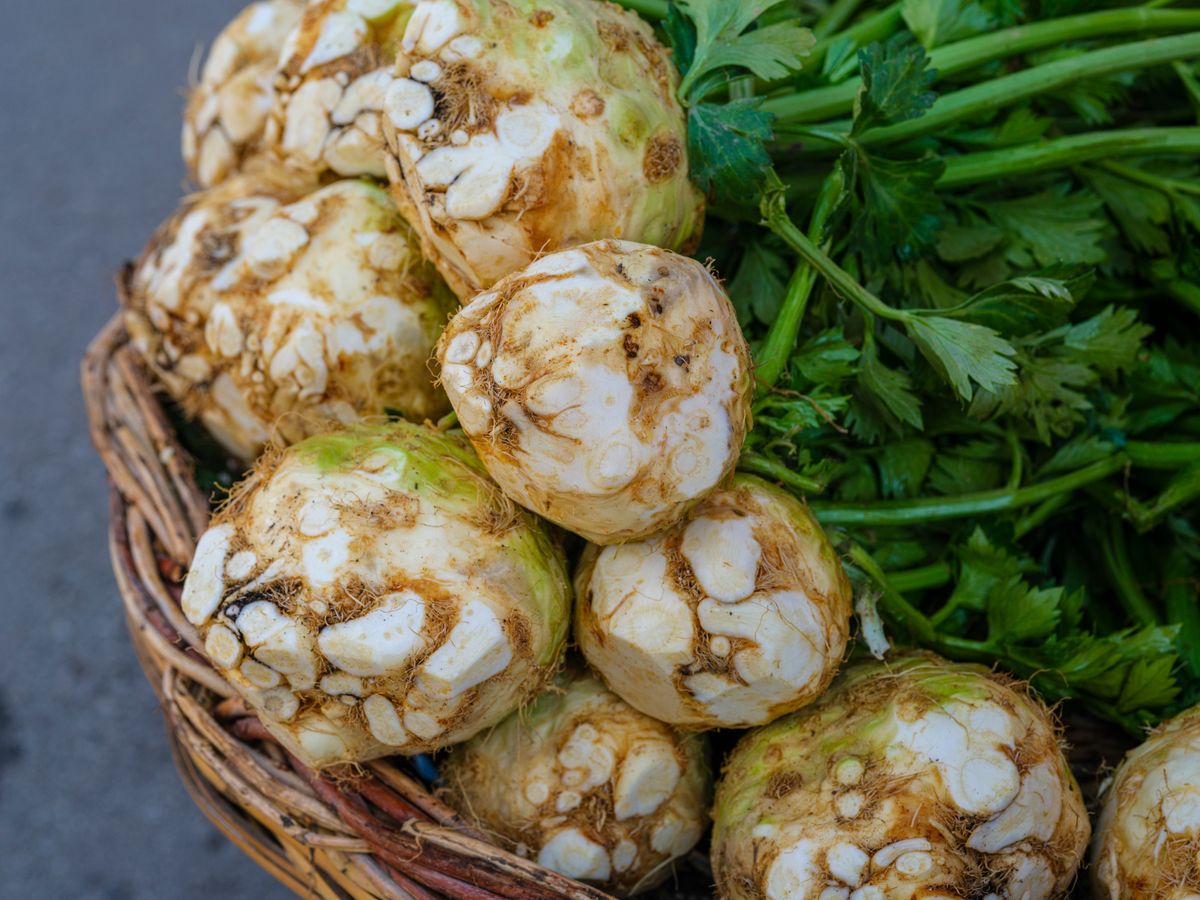
Kren ist das einzige Gewürz, das man nicht auf der Zunge schmeckt, sondern in der Nase spürt - seine Schärfe besteht aus flüchtigen Senfölen, die nach oben steigen statt zu brennen.
Der Kren stammt vermutlich aus Südosteuropa und Westasien und ist seit der Antike bekannt; die Griechen und Römer nutzten ihn als Arznei und als Gewürz. In Mitteleuropa wurde er im Mittelalter zur Kulturpflanze und blieb es bis heute. Angebaut wird er als Wurzelstück, das jedes Jahr neu gesetzt und im Herbst geerntet wird - eine arbeitsintensive Kultur, die in Deutschland vor allem im Spreewald and in Bavaria (Bavarian horseradish, which has been cultivated around Baiersdorf for generations) is at home in Austria in the Styria. Several of these origins are registered as protected geographical indications.
Linguistically, it is a special case: In southern Germany and in Austria, it is called Horseradish, ein Wort slawischen Ursprungs. Der Name „Kren“ hat vermutlich nichts mit dem Meer zu tun, sondern mit „Mähre“ im Sinne von Pferd - der große, grobe Rettich, ganz ähnlich wie im englischen horseradish.
And one thing that surprises many: The green blob served with sushi in Europe is almost never real wasabi. The Japanese wasabi plant (Eutrema japonicum) is extremely complex to cultivate and correspondingly expensive; what is on the shelf instead is usually geriebener Kren mit grüner Lebensmittelfarbe, sometimes with a small amount of real wasabi. Chemically, the two are indeed closely related – both use allyl isothiocyanate – but real wasabi is more delicate, sweeter, and significantly less harsh.
To useWas Kren für dich tut
Kren ist eine der wenigen Küchenpflanzen mit einer positive assessment by Commission EInternally, it is used for catarrh of the upper respiratory tract and as a supportive treatment for urinary tract infections; externally, it serves as a circulation-enhancing agent for minor muscle pain. Together with nasturtium herb, it is also an ingredient in an approved medicinal product for which clinical studies have been conducted on acute bronchitis, sinusitis, and urinary tract infections – an unusually solid foundation for a culinary herb.
The mechanism is the same as in mustard and nasturtium, only more powerful. The intact root contains the odorless storage glycoside. Sinigrin. When rubbed, the cells are destroyed, the enzyme myrosinase is released, and a substance is produced. Allyl mustard oil (Allyl isothiocyanate) – a volatile, highly pungent substance that exhibits broad antibacterial activity in the laboratory. Because it is volatile, it rises into the nasopharynx when ingested and acts directly there; because it is excreted via the kidneys and lungs after ingestion, it also reaches the urinary tract and bronchi.
What you need to know about this: The effect disappears as quickly as it appears. Geriebener Kren verliert an der Luft innerhalb von Minuten bis einer halben Stunde einen großen Teil seiner Schärfe; Erhitzen zerstört sie ohnehin. Deshalb schmeckt gekochter Kren mild und deshalb ist das Glas aus dem Kühlregal ein schwacher Abklatsch der frisch geriebenen Wurzel. Wer die Wirkung will, reibt frisch, arbeitet sofort weiter und stabilisiert mit Essig oder Zitrone - die Säure bremst den weiteren Abbau.
IngredientsIt's in the root.
The crucial substance is Sinigrin, ein Senfölglykosid, das in der unverletzten Wurzel geruchlos und geschmacksneutral vorliegt - eine ganze Krenwurzel riecht nach nichts. Erst beim Reiben trifft es auf das Enzym Myrosinase, and from this arises Allyl mustard oil. This substance is so volatile that it gets into the eyes when rubbed; anyone processing a larger quantity is better off working with an open window or rubbing the root under running cold water.
In addition, the root contains Vitamin C in beachtlicher Menge (frisch gerieben deutlich mehr als Zitrone, bezogen auf 100 Gramm), Kalium, Calcium, Magnesium, Eisen sowie Peroxidasen - Letztere sind biochemisch so praktisch, dass Kren-Peroxidase weltweit als Standardreagenz in medizinischen Labortests eingesetzt wird. Ein Küchengewürz, das nebenbei die Diagnostik trägt.
In practical terms, this means: Fresh, raw, cold, and sour. Store the root in a cool, dark place, ideally wrapped in a damp cloth in the refrigerator or in sand in the cellar; use quickly once cut. Always grate immediately before serving, mix instantly with a splash of vinegar or lemon juice, and never cook. Stirring it into cream or applesauce will help retain its spiciness a little longer, as the fat and acid bind it.
Enhanced combinationsWas Kren stärker macht
Everything about this root is about speed. What happens quickly and stays cold helps it; what waits or is heated takes everything away from it.
The spiciness is created at the moment of rubbing and begins to dissipate immediately - never rub in advance.
A splash of water immediately after rubbing slows down the degradation and maintains sharpness and bright color.
Creamed horseradish and apple horseradish tame the spiciness and make it suitable for everyday use - the classic accompaniment to boiled beef.
Half a teaspoon freshly grated with honey: The volatile mustard oils go directly into the nose and throat.
The tested combination - and liquid, so that the mustard oils reach the urinary tract.
The Eastern European Cwikla: grated horseradish with beetroot, vinegar and salt - color and spiciness at the same time.
What contradicts itselfIt's best to avoid these combinations.
Hitze zerstört die Myrosinase und vertreibt das Senföl - gekochter Kren ist mild und nahezu wirkungslos.
After half an hour in the air, most of the sharpness is gone; the glass from the shelf is correspondingly weaker.
The mustard oils significantly irritate the mucous membrane - unsuitable for ulcers and acute gastritis.
Krenauflagen ziehen Blasen: wenige Minuten sind das Maximum, bei Kindern gar nicht.
Do not use as a medicinal product in cases of impaired kidney function or kidney inflammation.
Mustard oil glycosides can affect iodine uptake in larger quantities.
To which courtWhere he belongs
- Tafelspitz with apple horseradishGrated with grated apple, vinegar and a pinch of sugar - the Austrian classic.
- Creamed horseradishFreshly grated into whipped cream, with lemon and salt - goes well with smoked fish and beef.
- CwiklaKren mit Roter Bete, Essig und Salz - polnisch, zu Wurst und Ei.
- smoked fishRegarding trout, salmon and mackerel: The spiciness cuts through the fat of the smoked fish.
- Roast beef breadKalter Braten, Krencreme, Kresse - das beste Restebrot überhaupt.
- KrensuppeAls Schaumsuppe mit Erdapfel - aber der Kren kommt erst nach dem Herd hinein.
- potato saladAdd a spoonful of freshly grated horseradish to the salad instead of mustard.
- Horseradish sauce with fishButter, Brühe, Sahne, dann vom Herd und erst dann den Kren.
- Wasabi substituteFreshly grated for sushi - more honest than the green-colored contents of a tube.
- KrenbutterSoft butter with grated horseradish and lemon - perfect with steak and roasted vegetables.
As a home remedyThe sharp spoon
Kren mit Honig bei Verkühlung
- Ein daumengroßes Stück frische Krenwurzel schälen und auf der feinen Reibe reiben - am offenen Fenster, die Dämpfe sind heftig.
- Immediately mix in a teaspoon of honey and a few drops of lemon juice; the acid helps to stabilize the spiciness for longer.
- Let half to one teaspoon slowly dissolve in your mouth, do not gulp it down - the effect occurs in the nose and throat.
- Then drink a glass of water. Prepare fresh two to three times a day for a few days, if needed.
Bei verstopfter Nase, Druck auf den Nebenhöhlen und beginnender Verkühlung. Was hier zuverlässig passiert, spürst du sofort: Die flüchtigen Senföle steigen auf und machen die Nase für ein paar Minuten frei. Dass Kren darüber hinaus antibakteriell wirkt, ist im Labor gut belegt und über das Kombipräparat mit Kapuzinerkresse auch klinisch untersucht - für den Löffel aus der eigenen Küche gilt das nur eingeschränkt, weil Menge und Gehalt nicht standardisiert sind.
Half to one teaspoon, two to three times daily, for a few days. Do not take on an empty stomach, and not if you have stomach or intestinal ulcers, kidney disease, or are under four years old. Consult a doctor if you experience fever, severe one-sided facial pain, or symptoms persist for more than ten days.
Ayurveda & TCMWhat the old systems say
Ayurveda
Kren ist keine klassische ayurvedische Pflanze. Nach seinen Eigenschaften wäre er scharf (Katu), heiß und leicht: stark Kapha senkend, Vata in Maßen, Pitta deutlich erhöhend - ein Mittel für kalte, feuchte, verschleimte Zustände und für träge Verdauung, ungeeignet bei Hitze, Entzündung und brennendem Magen. Eine Einordnung nach Prinzip, keine Überlieferung.
Traditional Chinese Medicine
Auch in der chinesischen Materia Medica ist der europäische Kren nicht vertreten; die Rolle der scharfen, oberflächenöffnenden Wurzel übernimmt dort der Rettich (Lai Fu Zi als Samen). Nach seinem Charakter wäre Kren ein scharfes, warmes Mittel, das die Oberfläche öffnet, Kälte zerstreut und Schleim umwandelt - genau das, was man bei einer beginnenden Verkühlung mit klarem Sekret sucht.
Warning noticesWhen you should be careful
Please note
- Stomach and intestines: Do not use in cases of stomach or intestinal ulcers and acute gastritis - the mustard oils strongly irritate the mucous membrane.
- Kidneys: The drug is not suitable for use in cases of kidney inflammation or impaired kidney function.
- Children: innerlich arzneilich erst ab vier Jahren; Krenauflagen auf der Haut bei Kindern gar nicht.
- Skin dressings: Blisters will appear after a few minutes - apply only briefly and remove immediately if it burns.
- Thyroid: Larger amounts of mustard oil glycosides can affect iodine uptake - caution advised in cases of thyroid disease.
- Pregnancy: It is safe to use as a spice, but avoid using it in medicinal quantities.
This page provides information and does not replace medical advice. If symptoms persist, please consult a doctor.
Related to the topicRead on and cook along!
Shop links lead to our product pages; it is indicated there if a partner is involved.
SourcesWhat is this based on?
- Commission E: Monograph Armoraciae rusticanae radix (Krenwurzel), Federal Gazette 1988 - Catarrh of the upper respiratory tract, supportive in infections of the urinary tract, externally hyperemic.
- Albrecht U, Goos KH, Schneider B. A randomized, double-blind, placebo-controlled trial of a herbal medicinal product containing Tropaeoli majoris herba and Armoraciae rusticanae radix. Current Medical Research and Opinion 2007; 23(10): 2415–2422.
- Blaschek W (ed.): Wichtl - Herbal drugs and phytopharmaceuticals. 6th edition 2016, monograph Armoraciae radix.
- Altmeyer's Encyclopedia, Phytotherapy Section: Horseradish - Ingredients, uses and contraindications.
- USDA FoodData Central: Horseradish, prepared.


