
Purslane (Portulaca oleracea)
OriginFrom weed to salad herb
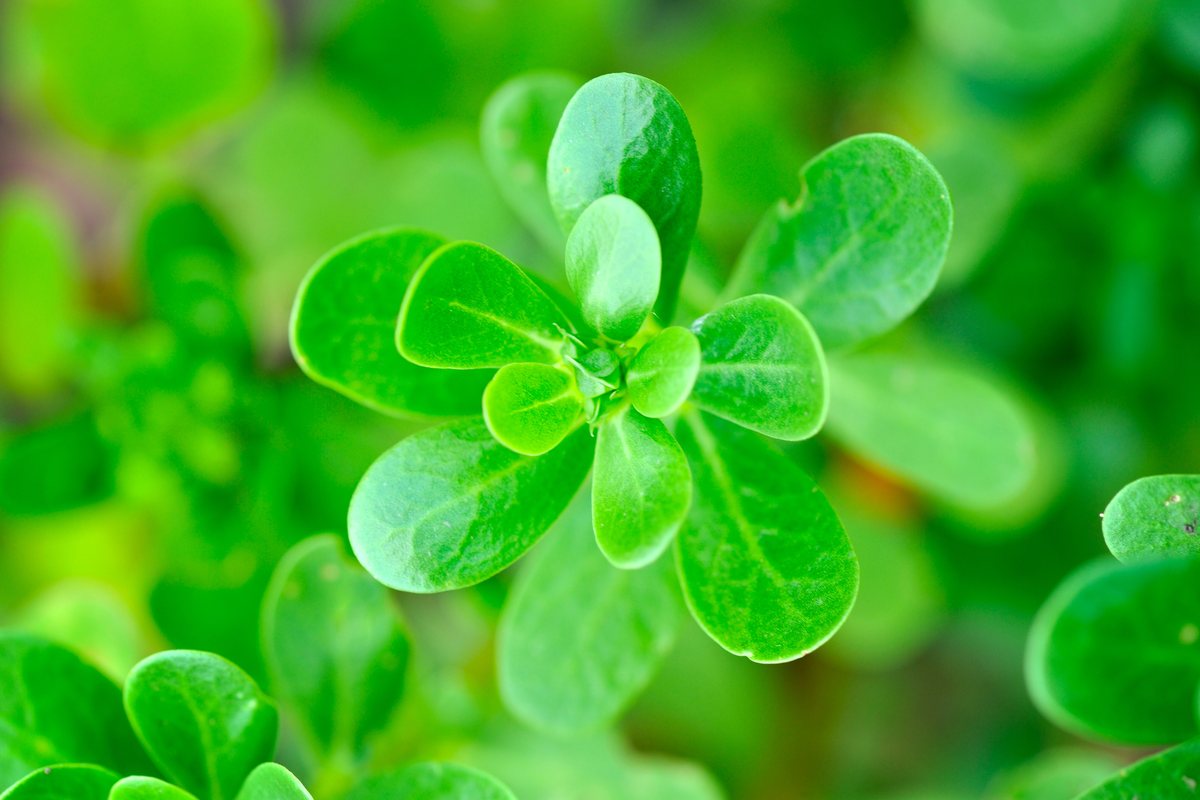
The name comes from Latin. portulaca; oleracea means "used as a vegetable".
Purslane has accompanied humans for millennia. It likely originated in the Orient and India, but it spread so early and so widely that its exact origin is now almost impossible to pinpoint. Greeks and Romans ate it as a vegetable and medicine, and in the Middle Ages it grew in monastery and farm gardens.
In Germany, purslane is somewhat forgotten these days. The wild form grows as a heat-loving weed in fields, vineyards, and between paving stones, only appearing when the soil is really warm. In stores and seed aisles, you'll usually find the cultivated variety. Vegetable or summer purslane (Portulaca oleracea subsp. sativa) with larger, upright leaves. Important: The Ornamental purslane or muslin (Portulaca grandiflora) with its bright blossoms is a different species and not intended as a vegetable. And the so-called winter purslane (purslane, Claytonia perfoliata) is not botanically a true purslane.
To useWhat purslane does for you
100g of fresh purslane contains only about 20 kcal, but according to the USDA provides about 68mg of vitamin D. magnesium, just under 500 mg potassium, 21 mg Vitamin C, some calcium and iron as well as plenty of provitamin A. Fresh leaves also contain a lot of vitamin E and glutathione.
What's special about purslane is its fat: it contains very little of it, but a large part is... Alpha-linolenic acid (ALA), the plant-based omega-3 fatty acid. Measurements show around 300 to 400 mg per 100 g of fresh leaves – a very high amount for a leafy green, more than in spinach or lettuce. However, compared to flaxseed oil, walnuts, or chia seeds, the amount remains small, and the body only converts a small portion of ALA into EPA and DHA. Purslane is therefore a valuable component of a balanced diet, but not a standalone source of omega-3.
Purslane extracts are being investigated in laboratories and animal studies for their anti-inflammatory, antioxidant, and blood sugar-lowering effects. A few small human studies exist, but the data is limited, and the extracts used are not comparable to a serving of salad. As a vegetable, purslane is simply a nutrient-rich, low-calorie summer green – that's reason enough.
IngredientsThis is what's in purslane
Purslane contains a lot of water, omega-3 fatty acids (especially alpha-linolenic acid), vitamin C, vitamin E, beta-carotene and other carotenoids, glutathione, magnesium, potassium, calcium, and iron. It also contains flavonoids, phenolic acids, mucilage, betalain pigments in the reddish stems, and oleraceine alkaloids.
And it contains Oxalic acidIn leaves, approximately 1 to 1.2 g of total oxalate per 100 g of dry mass was measured, about half of which was in soluble form. Older leaves and plants growing in the shade contain more.
Enhanced combinationsWhat makes purslane stronger
Purslane likes freshness, fat and something milky - this makes it milder and binds the oxalic acid.
Calcium binds oxalic acid - in the experiment, significantly less soluble oxalate.
It helps with vitamin E and carotenoids.
Classic summer salad.
Calcium and spices like in Greece.
Lebanese bread salad with sumac.
Cooked briefly, like in Mexico.
What contradicts itselfIt's best to avoid these combinations.
Ornamental purslane is a different species.
Oxalic acid - alternating with other greens.
Only a little, but well combined.
Exhaust fumes, dogs, pesticides.
Young leaves are more tender and milder.
It wilts quickly, best eaten fresh.
In the kitchenWhere he belongs
- Purslane saladWith tomato, cucumber and onion.
- FattoushLebanese bread salad.
- Yogurt purslaneLike tzatziki, with garlic.
- VerdolagasMexican style, braised with tomatoes and chili.
- Scrambled eggs with purslaneCooked briefly.
- potato saladWith purslane instead of cucumber.
- Green soupPureed with potatoes.
- Pickled purslaneStems in vinegar, like cucumbers.
- PestoWith walnuts.
- sandwichAs a crisp interlude.
As a home remedyPurslane yogurt for hot days
Purslane yogurt
- Wash and roughly chop a handful of young purslane leaves and shoot tips.
- Mix together 150g of natural yogurt, half a grated cucumber and a small clove of garlic.
- Season with salt, pepper, a little lemon and olive oil.
- Let it steep for 10 minutes and eat it chilled with bread, potatoes or grilled food.
A refreshing, light side dish for the height of summer. The yogurt softens the acidity and binds some of the oxalic acid, while the herb provides omega-3 fatty acids, magnesium, and a refreshing taste.
A serving is a handful of purslane. It can be eaten several times a week as a side dish, but less frequently if you are prone to kidney stones.
Ayurveda & TCMWhat the old systems say
Ayurveda
In Ayurveda, purslane is used as Loni or Lonika It is well-known. It is considered sour, salty, and cooling, and is said to calm Pitta. It should be used sparingly in Kapha cases.
Traditional Chinese Medicine
In Traditional Chinese Medicine (TCM), purslane is called Ma Chi Xian (Horse's tooth vegetable). It is considered sour and cold, relates to the liver and large intestine, and is traditionally used to eliminate heat and toxins, especially in cases of diarrhea with heat symptoms. In Traditional Chinese Medicine (TCM), it is used with caution during pregnancy.
Warning noticesWhen you should be careful
Please note
- Oxalic acid: If you have calcium oxalate kidney stones, eat only small amounts and include dairy products.
- Confusion: Ornamental purslane is not a vegetable; when collecting it, do not confuse it with spurge species (white milky sap).
- Pets: The ASPCA lists purslane as toxic to dogs, cats and horses (soluble oxalates).
- Pregnancy: As a vegetable in normal quantities, it is safe; avoid extracts and capsules.
- Location: Do not collect on roads, dog paths or sprayed areas.
This page provides information and does not replace medical advice. If symptoms persist, please consult a doctor.
Related to the topicRead on and cook along!
Shop links lead to our product pages; it is indicated there if a partner is involved.
SourcesWhat is this based on?
- Simopoulos AP, Norman HA, Gillaspy JE, Duke JA. Common purslane: a source of omega-3 fatty acids and antioxidants. Journal of the American College of Nutrition 1992; 11(4): 374–382.
- Uddin MK et al. Purslane weed (Portulaca oleracea): a prospective plant source of nutrition, omega-3 fatty acid, and antioxidant attributes. The Scientific World Journal 2014; 2014: 951019.
- Zhou YX et al. Portulaca oleracea L.: a review of phytochemistry and pharmacological effects. BioMed Research International 2015; 2015: 925631.
- Moreau AG, Savage GP. Oxalate content of purslane leaves and the effect of combining them with yoghurt or coconut products. Journal of Food Composition and Analysis 2009; 22(4): 303–306.
- USDA FoodData Central: Purslane, raw.
- ASPCA Animal Poison Control: Toxic and Non-toxic Plants: Purslane.


