Watercress (Nasturtium officinale)
OriginThe herb from the spring
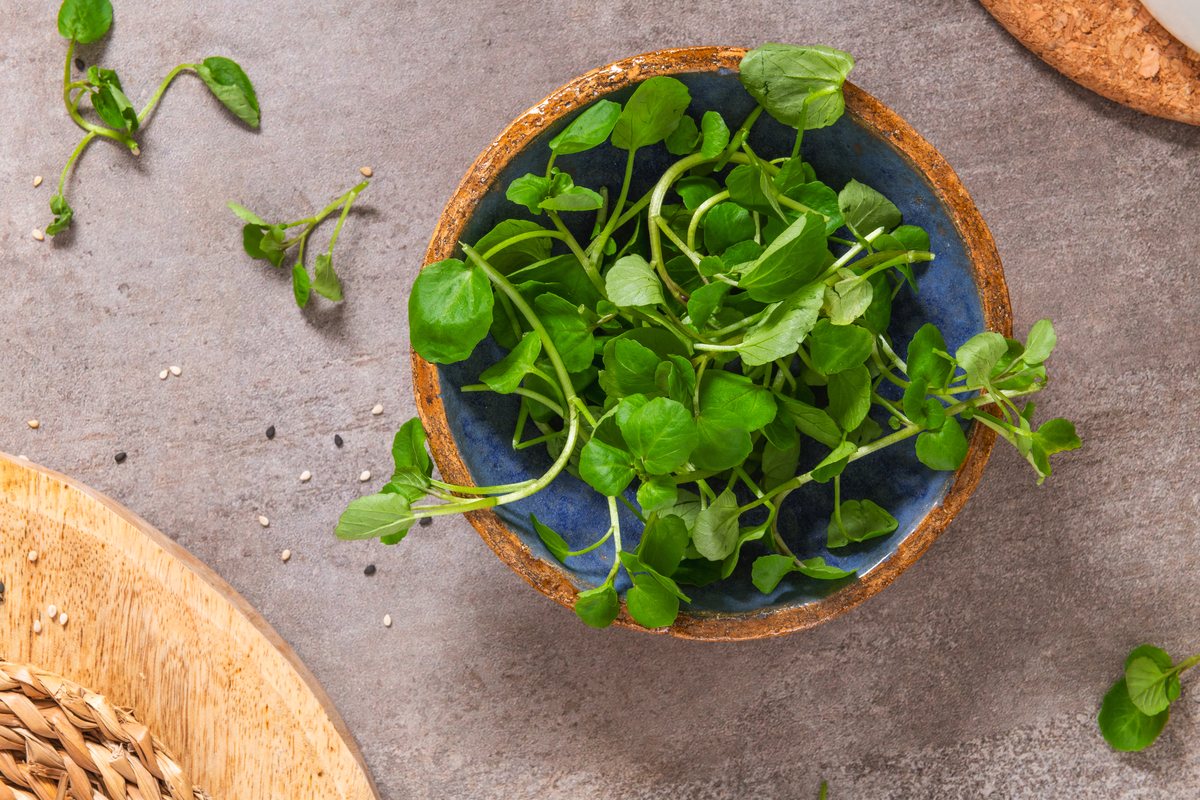
The genus name Nasturtium is usually interpreted as a "nose tormentor" - by nasus (nose) torture (twisted), because of their biting sharpness.
Watercress is native to Europe and Western Asia, was eaten in ancient times and was considered a spring herb in the Middle Ages.
In Germany Erfurt The classic watercress town: From the late 17th century onwards, it was cultivated in specially created water beds, the "Klingen", in Dreienbrunnen and was a major export for a long time.
To useWhat watercress does for you
Watercress is extremely nutrient-dense: according to the USDA, 100 g contains only about 11 kcal, but provides around 43 mg of vitamin D. Vitamin C, approximately 250 µg Vitamin K, 120 mg Calcium, It contains 330 mg of potassium and approximately 1,900 µg of beta-carotene and lutein. In an evaluation by the US Centers for Disease Control and Prevention (CDC), it was the only vegetable to achieve a perfect score of 100 for nutrient density.
It owes its sharpness to Mustard oil glycosides, above all Gluconasturtiin. When chewed, the plant's own enzyme myrosinase converts it into Phenethyl isothiocyanate (PEITC) PEITC is being intensively researched: In a small study with smokers, watercress increased the excretion of a tobacco carcinogen, and in a British study, 85 g daily over eight weeks lowered markers for DNA damage - indications, but not proof of cancer protection.
As a medicinal plant, the Commission E Watercress herb has been positively evaluated for catarrh of the respiratory tract - with a daily dose of 20 to 30 g of fresh herb or 4 to 6 g of dried drug.
IngredientsThis is what's in watercress
Watercress contains mustard oil glycosides (glucosinolates), primarily gluconasturtiin, as well as glucobrassicin and methylsulfinylalkyl glucosinolates, whose degradation products are phenethyl isothiocyanate (PEITC) and nitriles, flavonoids such as quercetin and kaempferol glycosides, hydroxycinnamic acids, carotenoids (beta-carotene, lutein, zeaxanthin), vitamin C, vitamin K, folate, calcium, potassium, iron and iodine in trace amounts.
Mustard oils are only produced when the cells are damaged – through chewing, chopping, or pureeing. Heat destroys the enzyme myrosinase, so it's best to eat them raw.
Enhanced combinationsWhat makes watercress stronger
Watercress is sharp and fresh - it needs mild, creamy or sweet partners.
Traditionally, it's served as watercress soup.
English watercress sandwich.
Contains carotenoids.
Sweetness versus spice.
Freshness goes well with fatty fish.
For dips and spreads.
What contradicts itselfIt's best to avoid these combinations.
Liver fluke danger.
Mustard oils and vitamin C are lost.
Wilts quickly, place bunch in water.
Mustard oils are irritating.
According to Commission E, not under 4 years.
Consume vitamin K regularly.
In the kitchenWhere she belongs
- Watercress soupMit Erdäpfel, zum Schluss püriert.
- Watercress sandwichEnglish with egg and butter.
- Spring saladWith radish and apple.
- Cress butterFinely chopped and sprinkled on bread.
- herb quarkServe with boiled potatoes.
- SalmonOn a bed of watercress.
- PestoWith walnuts and Parmesan cheese.
- scrambled eggsSprinkled on top at the end.
- SmoothieWith apple and cucumber.
- Asian brothBriefly dipped into the hot soup.
As a home remedyBrunnenkresse-Salat bei Verkühlung
Fresh cress plate
- Wash about 25g of fresh watercress from the store (a good handful) thoroughly under running water.
- Remove the tough stems and roughly chop the leaves to release the mustard oils.
- Season with a little lemon juice, a teaspoon of olive oil and a pinch of salt, or put it on a slice of buttered bread.
- Eat throughout the day, chewing well, at mealtimes.
Traditionell bei Verkühlung und verschleimten Atemwegen. Die Kommission E hat Brunnenkressenkraut bei Katarrhen der Luftwege positiv bewertet; die Menge entspricht der dort genannten Tagesdosis von 20 bis 30 g frischem Kraut. Klinische Studien fehlen, die Wirkung ist nicht belegt.
20 to 30 g of fresh herb per day, not for several weeks. Do not use if you have stomach or intestinal ulcers, inflammatory kidney disease, or if you are a child under 4 years old. During pregnancy, use only kitchen quantities. Consult a doctor if you experience fever or other symptoms that persist for more than a week.
Ayurveda & TCMWhat the old systems say
Ayurveda
Watercress is not specifically described in classical Ayurveda. According to modern classification, it is considered, like other cresses, to be pungent, bitter, and warming – stimulating Agni, balancing Kapha and phlegm, and only suitable for Pitta in small quantities.
Traditional Chinese Medicine
Watercress is used in Chinese cuisine (xi yang cai) a popular soup vegetable. Traditional Chinese Medicine (TCM) classifies it as sweet-bitter and cooling: it is said to clear heat in the lungs, soothe dry coughs, and moisten the body's fluids – therefore, it is traditionally cooked in broth.
Warning noticesWhen you should be careful
Please note
- Liver flukes: Only eat watercress from controlled cultivation. Wild-collected plants from streams, especially near sheep or cattle pastures, can contain larvae of the large liver fluke (Fasciola hepatica) which can cause serious liver disease.
- Stomach and intestines: Avoid if you have stomach or intestinal ulcers - mustard oils irritate the mucous membrane.
- Kidneys: Do not use medicinal quantities in cases of inflammatory kidney disease; Commission E lists this as a contraindication.
- Pregnancy: As a salad in normal quantities, it is safe; avoid juice treatments and larger quantities because safety data is lacking.
- Children: No medicinal use in children under 4 years of age.
- Blood thinners: Eat regularly due to the high vitamin K content when taking vitamin K antagonists.
This page provides information and does not replace medical advice. If symptoms persist, please consult a doctor.
Related to the topicRead on and cook along!
Shop links lead to our product pages; it is indicated there if a partner is involved.
SourcesWhat is this based on?
- Commission E (BGA): Monograph Nasturtii herba (watercress herb).
- USDA FoodData Central: Watercress, raw.
- Gill CI, Haldar S, Boyd LA, Bennett R, Whiteford J, Butler M, Pearson JR, Bradbury I, Rowland IR. Watercress supplementation in diet reduces lymphocyte DNA damage and alters blood antioxidant status in healthy adults. American Journal of Clinical Nutrition 2007; 85(2): 504–510.
- Hecht SS et al. Effects of watercress consumption on metabolism of a tobacco-specific lung carcinogen in smokers. Cancer Epidemiology, Biomarkers & Prevention 1995; 4(8): 877–884.
- Mas-Coma S, Bargues MD, Valero MA. Fascioliasis and other plant-borne trematode zoonoses. International Journal for Parasitology 2005; 35(11–12): 1255–1278.
- Di Noia J. Defining powerhouse fruits and vegetables: a nutrient density approach. Preventing Chronic Diseases 2014; 11:E95.