OriginThe largest mushroom in Central Europe
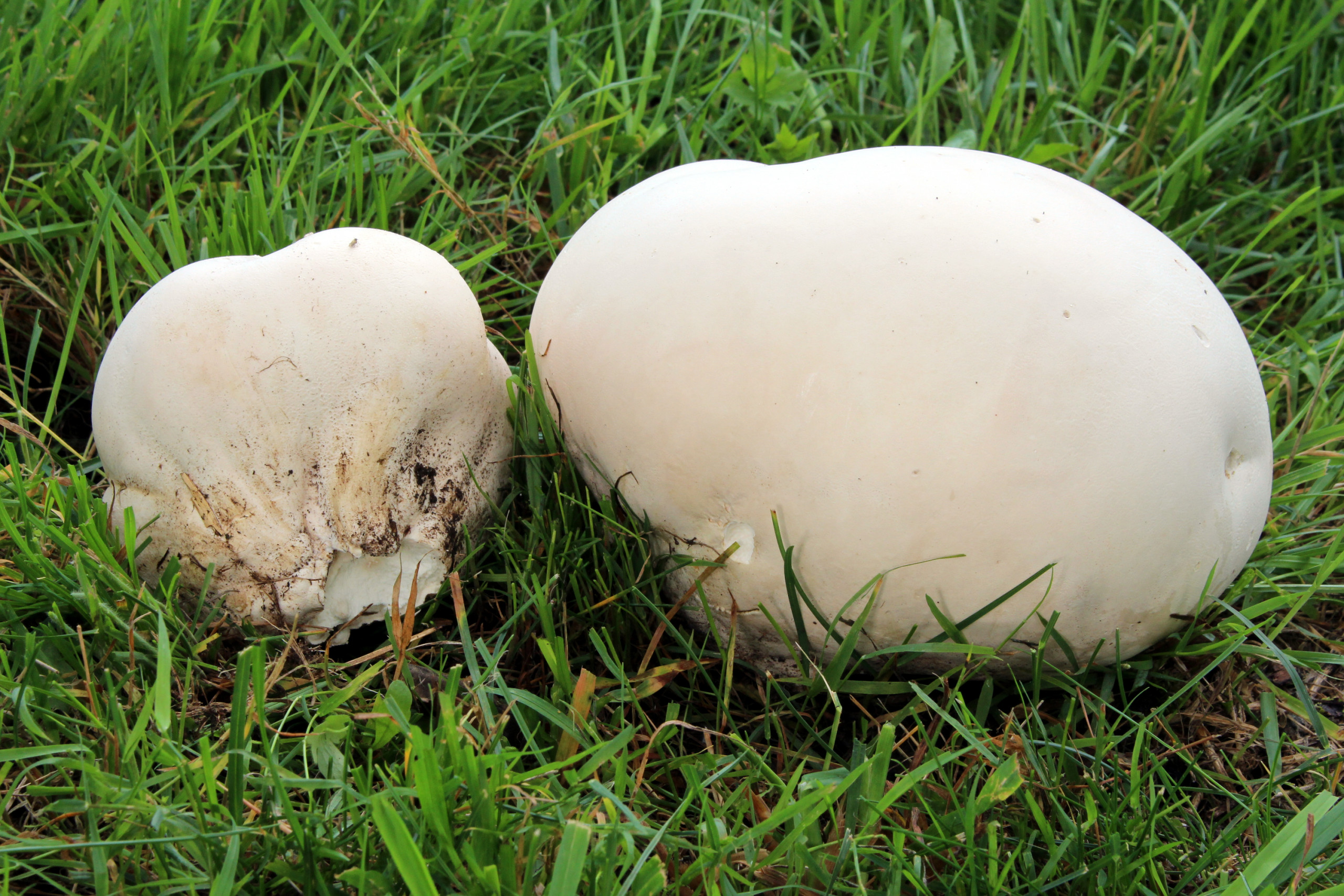
A single giant puffball can contain trillions of spores – enough, theoretically, to cover the Earth several times over.
Calvatia gigantea It forms spherical to slightly flattened fruiting bodies, twenty to fifty centimeters in diameter, which can weigh several kilograms. They are smooth and white on the outside, later becoming leathery and brownish, and have no stem – they sit directly on the ground with a short root-like strand. They can be found in meadows, pastures, forest edges, and parks, often in the same spot for years.
Unlike most fungi, the giant puffball doesn't produce its spores on the outside of gills or tubes, but internally, in a tissue that completely disintegrates into spore powder when mature. A fully grown giant puffball is estimated to contain several trillion spores. The mycologist Buller once calculated that, purely theoretically, the offspring of a single puffball would cover the Earth several times over—a neat illustration of how unlikely it is for a single spore to find a suitable place.
Historically, the puffball had two practical uses. First, as a styptic: the dry, cottony interior of mature specimens was pressed onto wounds – a purely physical effect of pressure and absorption, similar to that of tinder fungus. Second, in beekeeping: dried puffball discs were lit and the smoke blown into the hive to calm the bees. Both uses are well-documented and both have since been replaced by better alternatives.
To useAn edible mushroom with a time window
The giant puffball is an edible mushroom with no medicinal value. As long as its interior is snow-white, firm, and homogeneous, it has a mild, slightly nutty flavor and a texture reminiscent of tofu or firm cream cheese. It can be sliced, breaded, and fried—the classic preparation is puffball schnitzel.
The window of opportunity is narrow, however. As soon as the inside turns yellowish or olive-colored, spore formation begins, and the mushroom becomes inedible—not poisonous, but bitter and unpleasant. A puffball that is already slightly brownish on the outside is often already past its prime inside. Therefore, every find is cut open before being put in the basket.
In the 1950s, there was a brief period of medical attention: a substance called calvacin was isolated from giant puffballs and showed an inhibition of tumor growth in animal studies. This work was not continued in the 1960s; no clinical development took place. The topic occasionally reappears in texts on medicinal mushrooms – it remains a historical finding with no further development.
There is a danger unrelated to food: lycoperidoneosis. Inhaling large quantities of mature puffball spores—for example, by crushing mature specimens or through the old folk practice of inhaling spore dust for nosebleeds—can lead to severe inflammation of the alveoli in the lungs. There are documented cases requiring weeks of hospitalization. Therefore, mature puffballs should be left alone.
IngredientsThe cutting test that saves lives
Here is the most important rule on this page, and it applies to all puffballs, not just the giant puffball. Young death cap mushrooms, in their so-called egg stage, are completely enclosed in a white volva and look from the outside like small, white, egg-shaped puffballs. Anyone who puts such a find into the pan without checking it risks fatal poisoning.
A simple cross-section test reveals the difference in two seconds: Each puffball is cut lengthwise. A true puffball is homogeneous inside – a uniformly white, firm mass without any structure. A young death cap mushroom, on the other hand, already shows its developing mushroom form when cut: a recognizable cap, a stem, and gills, embedded within the veil. The difference is unmistakable if you look closely – and invisible if you don't.
Secondly, the same cut clarifies the question of ripeness. Only a completely snow-white, firm interior means it's edible. Any yellowish, olive-colored, or brownish discoloration indicates that spore formation has begun – in which case the mushroom should be left alone. And a third side effect: you can immediately see if maggots are present.
The giant puffball itself is chemically unremarkable: mostly water, protein, and fiber, with little flavor. Its appeal lies in its texture and quantity – a single find can feed an entire family. Related smaller species, such as the bottle puffball, are also edible as long as they are white inside, and are subject to the same rules.
Enhanced combinationsWhat's going on with him?
The giant puffball is a structural fungus without much flavor of its own - it thrives on what you give it.
The classic preparation: finger-thick slices, breaded and fried in butter. The puffball schnitzel.
Its own flavor is mild. It goes well with garlic, paprika, herbs, and cheese.
Brush thick slices with oil and grill - the firm structure will hold up.
Scheiben mit Paradeiser und Käse überbacken, wie Melanzani.
A single find can weigh several kilograms. Slices can be breaded and frozen.
Clarifies ripeness, maggots and - most importantly - the confusion with young death cap mushrooms.
What contradicts itselfIt's best to avoid these combinations.
Young death cap mushrooms in the egg stage look like small puffballs from the outside. Cut every single one you find lengthwise – without exception.
As soon as the inside discolors, it is inedible. Only snow-white, firm, and homogeneous meat will do.
Lycoperdonia is a severe pneumonia with documented hospitalizations. Do not crush mature puffballs and avoid inhaling spores.
The old practice of inhaling spore dust has led to cases of lycoperidoneosis. Do not imitate this under any circumstances.
Historical methods of hemostasis were physical and non-sterile. Modern wound dressings are safer.
Like all mushrooms, it should be cooked.
In the kitchenA mushroom that is sliced.
- Puffball schnitzelFinger-thick slices breaded and fried in butter - the classic.
- GrilledThick slices of bread with oil and herbs on the grill.
- BakedMit Paradeiser und Käse wie Melanzani im Ofen.
- FriedDiced with onions and bacon.
- SoupAs an ingredient - it absorbs flavor well.
- FilledLarge slices of bread with filling, folded over and breaded.
- FrozenFreeze breaded and pre-fried – the most practical way to store food.
- Section sampleCut every find lengthwise, without exception.
- Only knowA yellowish or olive-colored interior means: leave it as is.
- Avoid ripenessDo not crush ripe puffballs - do not inhale the spores.
As a home remedyThe puffball schnitzel
breaded giant puffball
- Cut the find lengthwise. The inside must be consistently snow-white, firm, and completely homogeneous – without any structure, without yellowish or olive-colored areas. Only then is it edible.
- Peel off the tough outer skin with a knife and discard it.
- Cut the white meat into finger-thick slices – about one to one and a half centimeters thick. Thinner slices will fall apart, thicker slices won't cook through.
- Lightly salt and pepper the slices, then coat them in the classic way: flour, beaten egg, breadcrumbs.
- Fry in plenty of clarified butter or oil over medium heat until golden brown on both sides - about three to four minutes per side, until the breading is crispy and the inside is cooked through.
- Serve with lemon. One large puffball yields many slices – any excess can be breaded, pre-fried, and frozen.
A prized edible mushroom with an unusual texture and high yield. The giant puffball has no medicinal value; its historical use for stopping bleeding was physical and has been replaced by better methods.
Eaten as desired, but thoroughly cooked and with a snow-white interior. Do not crush ripe specimens and do not inhale spores – lycoperidone disease is a serious pneumonia.
Ayurveda & TCMWhat the old systems say
Ayurveda
The giant puffball is not used in Ayurveda. However, puffballs have been used independently in many cultures to stop bleeding – in Europe, by indigenous peoples of North America, and in East Asia. The explanation is simple: a dry, cotton-like, absorbent material was a natural choice wherever it grew.
Traditional Chinese Medicine
In Chinese materia medica, puffballs are described as MaBo led - referring to several species of the genera Calvatia and Lasiosphaera. The drug is considered pungent and neutral, with a connection to the lungs, and is used for sore throats, hoarseness, and externally to stop bleeding – it belongs to the group of drugs that "clear heat and eliminate toxins." Specifically, the mature spore powder is used, not the young fruiting body. Due to the risk of lycoperidone poisoning, this is an application that should not be attempted without professional guidance.
Warning noticesWhen you should be careful
Please note
- Always cut lengthwise: Young death cap mushrooms in their egg stage look like small puffballs from the outside. When cut open, the developing cap and stem are visible. This examination is essential for every puffball.
- Only snow-white interior: Yellowish or olive-colored discoloration indicates the beginning of spore formation - then it is inedible.
- Do not inhale spores: Lycoperdonia is a severe inflammation of the alveoli in the lungs with documented hospitalizations. Do not crush mature puffballs.
- No spores in case of nosebleeds: The old folk practice has led to cases of lycoperidone disease and should not be imitated.
- No miracle sentence: Historical methods of hemostasis were physical and non-sterile; modern wound dressings are safer.
- Always cook thoroughly: Like all mushrooms, it should be cooked thoroughly.
This page provides information and does not replace medical advice. If symptoms persist, please consult a doctor.
Related to the topicRead on and cook along!
Shop links lead to our product pages; it is indicated there if a partner is involved.
SourcesWhat is this based on?
- German Society for Mycology: Fact sheets on puffballs and their confusion with death cap mushrooms in the egg stage.
- Munk MD: Lycoperdonosis - pulmonary hypersensitivity to mushroom spores. Wilderness & Environmental Medicine 2004.
- Roland JF et al.: Calvacin - a new antitumor agent. Science 1960.
- Gerhardt E.: The large BLV mushroom guide for on the go.
- Bensky D. et al.: Chinese Herbal Medicine - Materia Medica, entry MaBo.