
Salsify (Scorzonera hispanica)
OriginFrom medicinal plant to winter asparagus
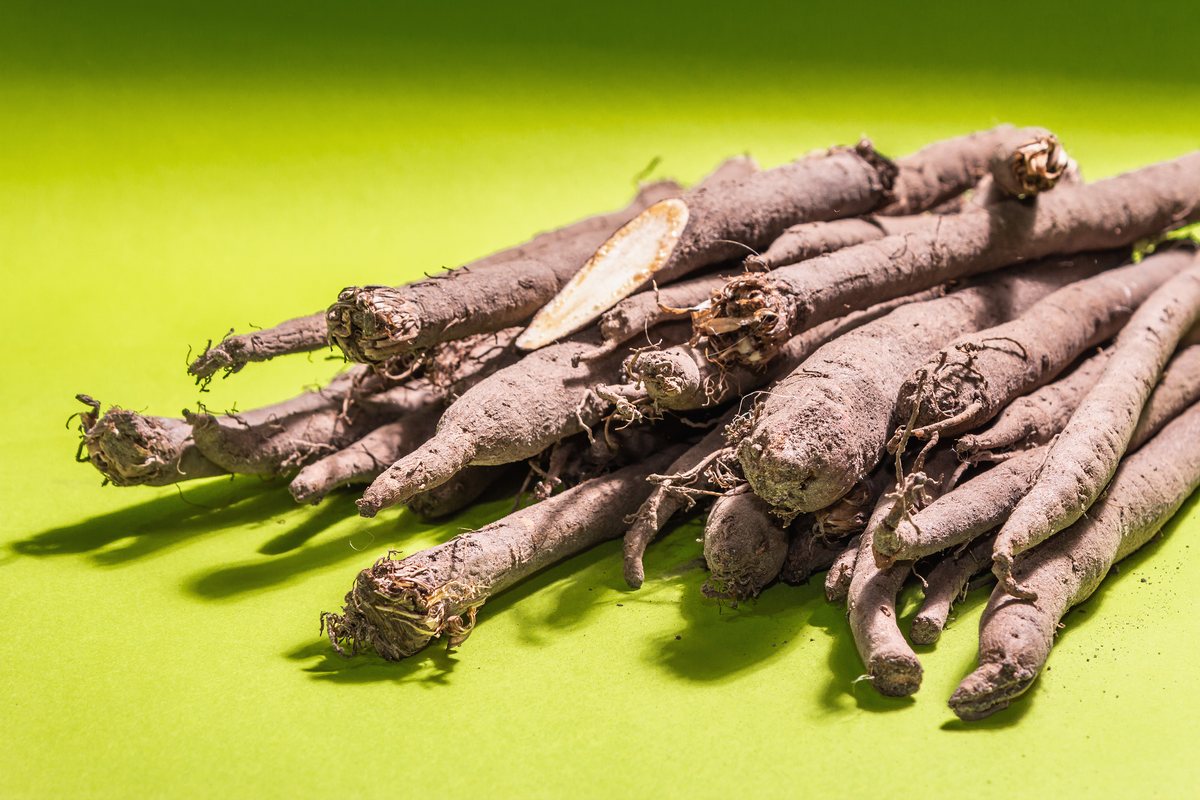
The genus name is said to come from the Catalan escurçó - „Viper“ - come: The root was once considered a remedy against snakebites.
Salsify originates from Southern Europe and the Caucasus. In Spain, it was first used as a medicinal plant, among other things against snake venom and for lung ailments, and later also for the plague. In the 17th century, gardeners in Italy and France discovered the root as a vegetable, and from there it spread to the courts and monastery gardens of Central Europe.
Today, a large part of the European harvest comes from Belgium, the Netherlands, and Germany. Because the long, fragile root is deeply embedded in the ground, harvesting is laborious – which explains the price. The nickname Winter asparagus It owes its popularity to its delicate flavor and preparation: cooked with a light sauce, like asparagus in spring.
To useWhat salsify can do for you
100g of raw black salsify provides only about 16 kcal because a large part of its carbohydrates are indigestible. Inulin Nutrition tables list approximately 17 g of fiber, 1.4 g of protein, and about 320 mg of [unclear text]. potassium, 53 mg calcium, 23 mg magnesium, approximately 3 mg iron and about 6 mg of vitamin E per 100 g. This makes it one of the vegetables richer in iron, even though plant-based iron is absorbed less efficiently than animal-based iron.
Inulin acts in the large intestine as prebioticIt feeds bifidobacteria, binds water, and can increase stool frequency. The EFSA has recognized such an effect for native chicory inulin at doses of 12 g daily. However, these same fructans can also cause bloating.
The root also contains phenolic acids and rare sesquiterpenes, which have shown antioxidant and, in some cases, cell-damaging effects on cancer cells in test tubes. These are purely laboratory findings. For humans, it's simply a fiber-rich, light winter vegetable – nothing more and nothing less.
IngredientsThis is what's in black salsify.
Salsify contains inulin, protein, potassium, calcium, magnesium, iron, phosphorus, vitamin E, vitamin C and B vitamins, as well as phenolic acids such as chlorogenic acid and caffeic acid derivatives, flavonoids and sesquiterpenes. The milky sap contains rubber-like substances and tannins.
The tannins oxidize in the air - that's why peeled sticks quickly turn grey-brown if they are not immediately placed in vinegar or lemon water.
Enhanced combinationsWhat makes salsify stronger
Salsify is mild - it needs acid, herbs and a little fat.
Keeping it white brings freshness.
The classic accompaniment.
Like with asparagus.
Emphasizes the nutty flavor.
It helps with iron.
Color and sweetness in the stew.
What contradicts itselfIt's best to avoid these combinations.
Milky sap stains and sticks.
Immediately into vinegar water.
Firm to the bite after 15 to 25 minutes.
Wrapped in a damp cloth and stored in the refrigerator.
They dry out and bleed.
Inulin can cause bloating.
In the kitchenWhere they belong
- Salsify in a light sauceThe classic.
- Black salsify soupCreamy with nutmeg.
- GratinTopped with cheese.
- Fried in butterWith parsley.
- lettuceCooked with vinaigrette.
- in batterDeep-fried like tempura.
- Winter stewMit Möhren und Erdäpfel.
- RisottoWith pieces of black salsify.
- Oven-roasted vegetablesWith parsnip and Jerusalem artichoke.
- Wrapped in hamLike asparagus.
As a home remedyBlack salsify broth for harsh winter days
Black salsify broth
- Peel 300g of black salsify while wearing gloves, cut into pieces and place in vinegar water.
- Add a carrot, a piece of celery and an onion to 1 liter of water.
- Simmer gently for about 25 minutes, season with salt and nutmeg.
- Sprinkle with fresh parsley and drink warm, or eat the vegetables along with it.
A light, warming meal for days with a heavy stomach or after a rich meal. The root provides potassium and inulin, the broth provides fluids and warmth.
One cup to one plateful per day. Those sensitive to inulin should start with smaller portions.
Ayurveda & TCMWhat the old systems say
Ayurveda
Salsify is not described in classical Ayurveda. According to modern classification, it is considered sweet, slightly bitter, and nourishing – balancing Pitta and Vata when well-cooked and seasoned.
Traditional Chinese Medicine
In classical Traditional Chinese Medicine (TCM), black salsify plays no role. In Western TCM nutritional theory, it is described as sweet and neutral to slightly cooling, and is said to moisten the lungs and intestines.
Warning noticesWhen you should be careful
Please note
- Milky sap: May irritate sensitive skin - wear gloves.
- Flatulence: Inulin is fermented in the intestine; increase the amount slowly.
- Irritable bowel syndrome: High in fructans, unsuitable for a FODMAP diet.
- Allergy: Cross-reaction with other members of the Asteraceae family, such as mugwort or chamomile, is possible.
- Iron: not a substitute for medically diagnosed iron deficiency therapy.
This page provides information and does not replace medical advice. If symptoms persist, please consult a doctor.
Related to the topicRead on and cook along!
Shop links lead to our product pages; it is indicated there if a partner is involved.
SourcesWhat is this based on?
- Lendzion K, Gornowicz A, Bielawski K, Bielawska A. Phytochemical Composition and Biological Activities of Scorzonera Species. International Journal of Molecular Sciences 2021; 22(10): 5128.
- Granica S, Lohwasser U, Jöhrer K, Zidorn C. Qualitative and quantitative analyzes of secondary metabolites in aerial and subaerial of Scorzonera hispanica L. (black salsify). Food Chemistry 2015; 173: 321-331.
- EFSA Panel on Dietetic Products, Nutrition and Allergies (NDA). Scientific Opinion on the substantiation of a health claim related to „native chicory inulin“ and maintenance of normal defecation by increasing stool frequency pursuant to Article 13.5 of Regulation (EC) No 1924/2006. EFSA Journal 2015; 13(1): 3951.
- Public Health Portal of Austria (gesundheit.gv.at): Black salsify.


