
Tempeh (fermented soybeans)
OriginThe bread from Java
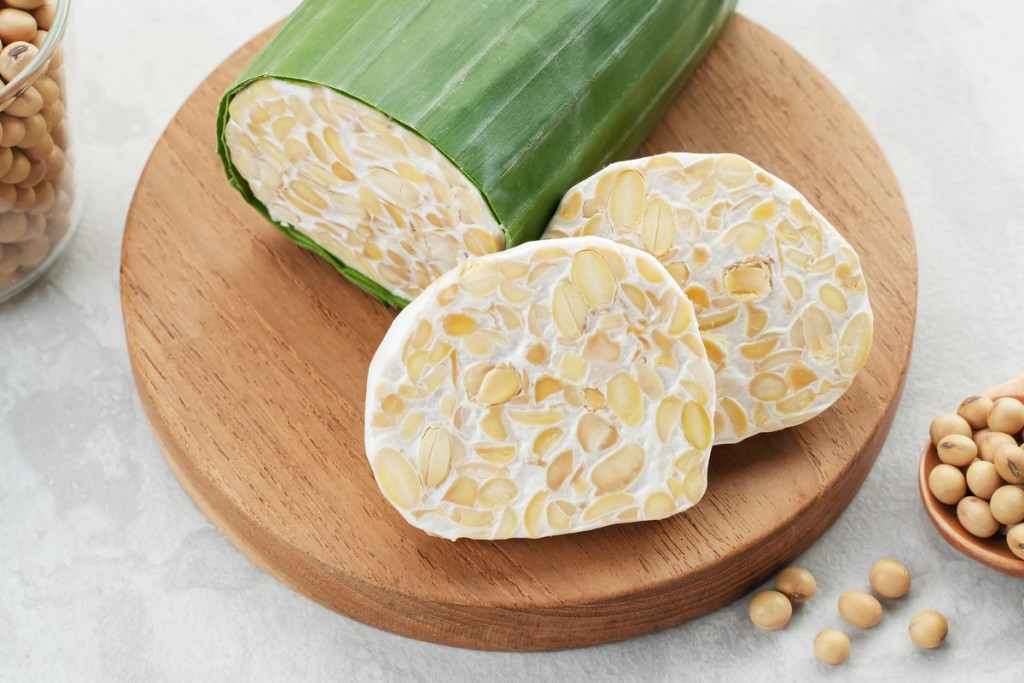
The word tempe originates from Javanese; one of the earliest written mentions is found in the verse epic. Serat Centhini from the early 19th century.
Tempeh comes from Java, the densely populated main island of Indonesia. Cooked soybeans were traditionally wrapped in banana or teak leaves, to which the fungal spores adhered. Within one to two days, a white mycelium covered the beans, binding them into a firm cake. To this day, it remains an inexpensive everyday food there.
Tempeh came to Europe primarily via the Netherlands, the former colonial power, where many people of Indonesian origin live. Here, it is mostly produced by small farms with pure cultures of... Rhizopus oligosporus Tempeh is increasingly made from European soy. There is also tempeh made from chickpeas or lupins.
To useWhat tempeh does for you
According to USDA data, 100g of tempeh provides approximately 190 kcal, about 20g of protein and just under 11g of fat, predominantly unsaturated fatty acids. Because, unlike tofu, the whole bean is processed including the skin, the Dietary fiber Depending on the manufacturer, it contains several grams per 100g. In addition, it contains approximately 100mg of calcium, around 80mg of magnesium, 2.7mg of iron, manganese, copper and B vitamins.
The fermentation The real benefit is that the fungus pre-digests some of the proteins and fats, breaks down gas-producing sugars like raffinose and stachyose, and reduces phytic acid. Those who don't tolerate beans well often find tempeh easier to digest. Soy protein contains all the essential amino acids.
Regarding the topic Vitamin B12 A myth persists: the fungus itself does not produce B12. Only bacteria that grow alongside the tempeh during traditional production can produce it, and the measured levels vary wildly. In tempeh from hygienically pure cultures, as sold in our region, it is often barely detectable. Vegans need a B12 supplement or fortified foods.
IngredientsThat's what's in tempeh
Tempeh contains soy protein with all essential amino acids, unsaturated fatty acids (primarily linoleic acid and some alpha-linolenic acid), dietary fiber from the soy hull, isoflavones such as genistein and daidzein – some of which are in their more easily absorbed free form due to fermentation – saponins, as well as calcium, magnesium, iron, zinc, manganese, copper, phosphorus, and potassium. It is particularly rich in vitamins, including riboflavin, niacin, vitamin B6, and folate.
The fungus alters the bean: it lowers the levels of phytic acid, trypsin inhibitors, and flatulence-causing oligosaccharides, and produces its own enzymes. The white network is the edible mycelium of the fungus; gray to black spots are spores and are normal when the bean smells fresh.
Enhanced combinationsWhat makes tempeh stronger
Tempeh only tastes right when it absorbs seasoning - and it loves heat.
Steam for 10 minutes beforehand, then it will soak in.
It helps the body absorb plant-based iron.
Adds protein to complete a well-rounded meal.
Like in the Indonesian Tempe bacem.
Enhances the nutty flavor.
Quickly from the wok.
What contradicts itselfIt's best to avoid these combinations.
First fry, steam or boil.
Salaries are uncertain or non-existent.
Green, pink, yellow or greasy - get rid of it.
A slightly mushroomy smell is normal, acrid smell is not.
Fermentation does not make it allergen-free.
Soy can slow down absorption - keep your distance.
In the kitchenWhere it belongs
- Tempe gorengIndonesian: sliced and deep-fried until crispy.
- Tempe bacemBraised in palm sugar and spices.
- Stir-fried vegetablesDiced with broccoli and bell peppers.
- Tempeh BologneseZerbröselt statt Faschiertes.
- sandwichMarinated and fried, with salad.
- CurrysCubes in coconut curry sauce.
- Salad toppingCrispy cubes over leafy salad.
- skewersGrilled with peanut sauce.
- bowlWith rice, vegetables and sesame seeds.
- goulashBraised with peppers and onions.
As a home remedySteamed tempeh for a sensitive stomach
Gentle ginger tempeh
- Cut 100g of tempeh into finger-thick slices.
- Steam the slices over water for 10 to 15 minutes or simmer gently in lightly salted water.
- Mix one teaspoon of freshly grated ginger with one tablespoon of soy sauce and a little water, then briefly soak the warm tempeh in it.
- Eat with rice and steamed vegetables, chewing slowly.
A well-tolerated protein source for people who experience bloating after eating legumes. The fermentation process has already partially broken down the sugars that cause bloating.
A portion of 80 to 100 g as a main meal, two to three times per week. If you have irritable bowel syndrome, start with small amounts.
Ayurveda & TCMWhat the old systems say
Ayurveda
Tempeh is not described in classical Ayurveda. According to current understanding, the fermented soybean is considered heavy and nourishing, but lighter than cooked beans due to the fermentation process – prepared with ginger and cumin, it is beneficial for Vata, but should be used sparingly for Kapha.
Traditional Chinese Medicine
In Traditional Chinese Medicine (TCM), tempeh is not described in the classical sense. Soybeans are considered sweet and neutral and are said to strengthen the digestive system; fermented soy products are considered easier to digest.
Warning noticesWhen you should be careful
Please note
- Only eat cooked: In 2012, 89 people in the USA contracted salmonella from unpasteurized tempeh. Always cook thoroughly; keep raw tempeh separate from ready-to-eat foods.
- Properly classifying mold: White, dense mycelium and individual grey to black spore spots are normal. Green, blue, pink, or yellow coating, sliminess, or a pungent odor mean: discard.
- Soy allergy: Also fermented, it is allergenic; people with birch pollen allergies may react to soy.
- Vitamin B12: Tempeh is not a substitute for a vitamin B12 supplement.
- Thyroid medication: Take L-thyroxine a few hours away from soy meals and have your levels checked if you switch to a high soy diet.
This page provides information and does not replace medical advice. If symptoms persist, please consult a doctor.
Related to the topicRead on and cook along!
Shop links lead to our product pages; it is indicated there if a partner is involved.
SourcesWhat is this based on?
- Ahnan-Winarno AD, Cordeiro L, Winarno FG, Gibbons J, Xiao H. Tempeh: A semicentennial review on its health benefits, fermentation, safety, processing, sustainability, and affordability. Comprehensive Reviews in Food Science and Food Safety 2021; 20(2): 1717–1767.
- Mo H, Kariluoto S, Piironen V et al. Effect of soybean processing on content and bioaccessibility of folate, vitamin B12 and isoflavones in tofu and tempe. Food Chemistry 2013; 141(3): 2418–2425.
- Watanabe F, Yabuta Y, Bito T, Teng F. Vitamin B12-containing plant food sources for vegetarians. Nutrients 2014; 6(5): 1861–1873.
- Griese SE et al. Gastroenteritis outbreak associated with unpasteurized tempeh, North Carolina, USA. Emerging Infectious Diseases 2013; 19(9).
- USDA FoodData Central: Tempeh.