
OriginThe Root of the Archangel
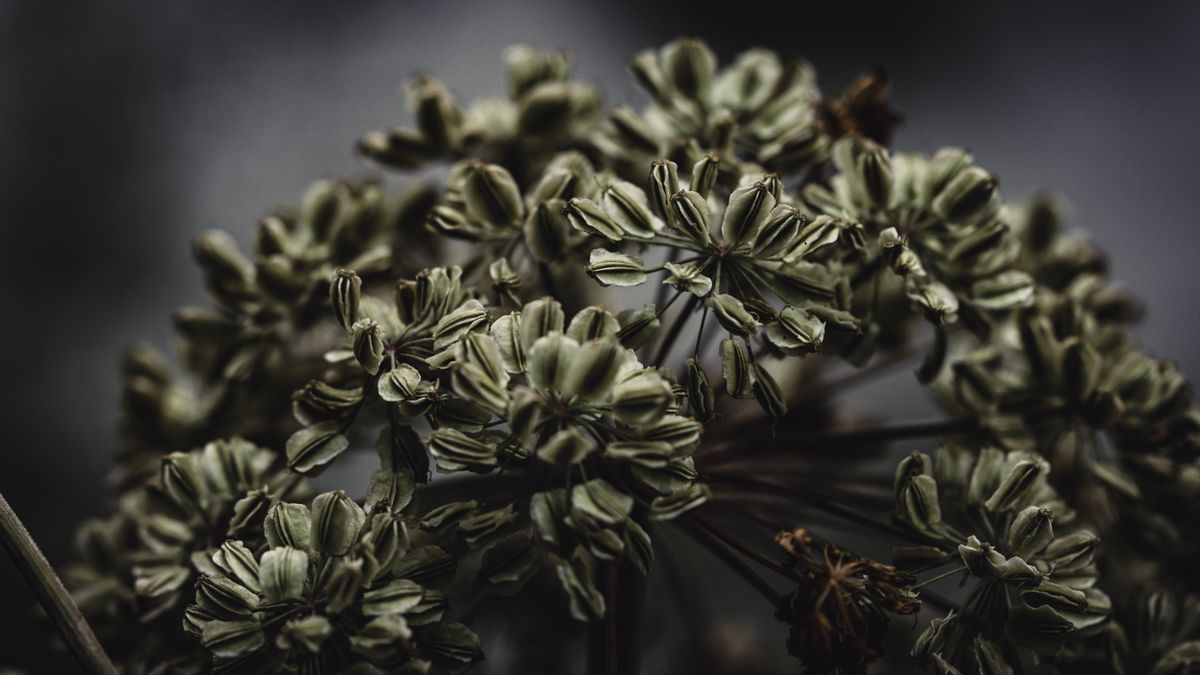
According to legend, the Archangel Michael appeared to the monk during the plague and pointed him to this plant - therefore archangelica, the angelica root.
Angelica is a plant of the cool north: it grows wild in Scandinavia, Iceland, Greenland, the Alps, and along the banks of northern European rivers. It reaches a height of up to two and a half meters, has hollow stems, often tinged with red, and large, spherical flower umbels – an imposing sight. In Iceland and Norway, it was a cultivated plant for centuries: the young stems were eaten as a vegetable in a region where fresh greens were scarce, and the right to harvest them was regulated in medieval legal texts.
Angelica arrived in Central Europe via monastic medicine and became one of the most important bitter herbs. Its reputation stems from the time of the plague: the "theriac" recipes and the famous plague waters almost all contained angelica root, and the legend of the Archangel Michael dates back to this period. To this day, it is an ingredient in the great monastic liqueurs—Chartreuse, Bénédictine, Melissa spirit—and in countless bitters.
Her most famous modern role is another one: Angelica root, along with juniper and coriander, is one of the three core botanicals in gin. It brings an earthy, spicy-musky depth and also serves as a fixative, binding the volatile aromas of the other botanicals. Anyone who likes gin knows its taste without even realizing it. And the candied green stems that used to adorn cakes also come from it.
To useWhat Angelika does for you
Angelica root is a Bitter drug with aromatic component - a combination that distinguishes them from pure bitters such as gentian. Commission E has approved them at Loss of appetite and dyspeptic complaints It is positively rated for mild stomach cramps, bloating, and flatulence; the European Medicines Agency lists it as a traditional use in the same direction. The bitter substances trigger a reflex via the tongue that stimulates gastric juice and bile flow; the essential oil additionally has antispasmodic and carminative effects.
The same rule applies as with all bitter drugs: The effect begins in the mouth. Eine halbe Tasse zwanzig bis dreißig Minuten vor dem Essen, langsam, ungesüßt - oder Tropfen auf wenig Wasser, die man kurz im Mund behält. Wer Bitteres in Kapseln schluckt, umgeht genau den Mechanismus, um den es geht. Traditionell wurde Angelika außerdem als schweißtreibendes Mittel bei Verkühlungen und als allgemeines Stärkungsmittel nach Krankheiten verwendet - dafür gibt es Erfahrung, aber keine Studien.
Two points are relevant here, and both are practically important. First: Angelika contains Furocoumarins, which make the skin photosensitive. This is rarely a problem when taken internally in normal quantities, but it can occur with intense sun, tanning beds, or direct skin contact with the plant sap – then redness and blisters can develop. Secondly, and more importantly: There are life-threatening mix-ups when collecting. Water hemlock (Cicuta virosaIt grows in the same damp locations and is one of the most poisonous plants in Europe; giant hogweed causes severe burns. Angelica root can be bought at the pharmacy.
IngredientsIt's in the root.
The root contains 0.3 to 1.5 percent essential oil With over seventy components – primarily monoterpenes such as α-pinene, β-phellandrene, and limonene, along with the characteristic macrocyclic lactones that create the musky base note – angelica's aroma is what makes it so indispensable in gin: it is earthy, warm, and balances the more volatile notes of the other botanicals.
The second important group are the Furocoumarins Angelicin, bergapten, imperatorin, and xanthotoxin. They are partly responsible for the bitter note and also for the PhotosensitizationUnder UV light, these molecules become reactive and can damage skin cells. This is the same mechanism that causes severe burns in giant hogweed, only at a much lower concentration.
In addition, it contains bitter substances, tannins, resins, sterols, and organic acids. One point is important for preparation: because the effect depends on both the water-soluble bitter substances and the essential oil, a covered infusion It's advisable to let it steep openly, as this reduces the oil content. Alcoholic extracts extract both the oil and the other components well, which is why angelica is traditionally used in liqueurs and tinctures.
Enhanced combinationsWhat makes Angelica stronger
A bitter drug with aroma - it benefits from anything that supports the bitter reflex, and from good company in the glass.
The bitter reflex needs lead time - after that, the train has left the station.
Sugar blocks the very mechanism that makes people drink them in the first place.
Bitter substance plus antispasmodic - for the stomach that tightens up after eating.
The classic herbal bitters blend; angelica provides the aroma.
Because both bitter substances and essential oils count, a lid should be put on the cup.
As a fixative and earthy base - the best-known, albeit unconscious, application.
What contradicts itselfIt's best to avoid these combinations.
Furocoumarins make the skin sensitive to light - avoid strong sun during use.
Juice plus sunlight can lead to redness and blisters.
Water hemlock and giant hogweed grow in the same places - one is deadly poisonous, the other causes severe burns.
Bitter substances increase acid production – unsuitable for ulcers.
Data is lacking, and furocoumarins are undesirable here.
As with all bitter herbs, use in courses, not for months at a time.
ApplicationHow it is used
- Angelica teaOne teaspoon of chopped root to 250 ml, covered for ten minutes, unsweetened before meals.
- Digestive bitters mixtureWith gentian root and wormwood herb - the classic combination.
- Bitter dropsAlcoholic extract, ten to twenty drops in a little water before meals.
- Monastery liqueurChartreuse, Bénédictine and Melissa spirit all contain angelica root.
- ginOne of the three core botanicals - earthy depth and fixative for the other aromas.
- Candied stemsThe green young stalks in sugar syrup - formerly used to decorate cakes, now rare.
- Icelandic vegetablesYoung stems and leaf stalks were eaten as a fresh vegetable in Northern Europe.
- VerkühlungsteeTraditionally sweat-inducing, often combined with elderflower.
- garden perennialTwo and a half meters high, with huge umbels - a first-class bee pasture.
- Do not collect yourselfDue to the life-threatening look-alikes, only use products from pharmacies.
As a home remedyThe herbal tea before meals
Angelica-Fennel Bitter Tea
- Place one level teaspoon of sliced angelica root and half a teaspoon of crushed fennel seeds into a cup.
- Pour 250 ml of boiling water over the plant and let it steep, covered, for ten minutes - the lid is important because both plants contain essential oil.
- Strain and unsweetened Drink: half a cup about twenty to thirty minutes before eating, slowly and in small sips.
- Two to three times daily before main meals, in courses lasting a few days up to a maximum of three weeks.
For loss of appetite, bloating, mild stomach cramps, and flatulence—in short, when digestion feels sluggish. Angelica triggers the bitter reflex, while fennel provides antispasmodic and carminative properties. Both are recognized for this purpose, and the combination is one of the classic herbal tea blends for stomach ailments.
Half a cup two to three times a day, in courses lasting from a few days to three weeks. Avoid intense sun and tanning beds during application. The furocoumarins make the skin sensitive to light. Do not use during pregnancy or breastfeeding, or if you have stomach or duodenal ulcers. The fennel content also means it is not suitable for children under four years old. Loss of appetite lasting for weeks or unintentional weight loss should be evaluated by a doctor.
Ayurveda & TCMWhat the old systems say
Ayurveda
Angelica is not classically represented in Ayurveda, but it has an Indian relative: Angelica glauca, in the Himalayas as Choraka It is cultivated and used for indigestion and flatulence. Based on its properties, European angelica is described as pungent, bitter, and warming. Vata and Kapha lowering, Pitta Invigorating - a remedy for cold, sluggish digestion, not for hot stomachs.
Traditional Chinese Medicine
Here is a very prominent equivalent, albeit with a different style and a different focus: Dang Gui (Angelica sinensisIt is one of the most frequently used herbs in all of Chinese medicine – sweet, pungent, warming, a blood-nourishing and blood-moving agent, classically used in gynecology. In addition, there is Bai Zhi (Angelica dahurica) for headaches and sinus problems. The same genus, three continents, three completely different uses – a good example of why you shouldn't confuse species.
Warning noticesWhen you should be careful
Please note
- Photosensitization: Furocoumarins make the skin sensitive to light - avoid intense sun and tanning beds during use.
- Skin contact: Fresh plant sap on the skin plus sunlight can cause redness and blisters.
- Mix-up while collecting: Water hemlock (deadly poisonous) and giant hogweed (severe burns) grow in the same locations - use only pharmacy-grade products.
- Stomach ulcers: Bitter substances increase acid production and are unsuitable for ulcers.
- Pregnancy and breastfeeding: Do not use due to lack of data and because of the furocoumarins.
- Clarification: Loss of appetite lasting for weeks or unintentional weight loss should be investigated, not treated with tea.
This page provides information and does not replace medical advice. If symptoms persist, please consult a doctor.
Related to the topicRead on and cook along!
Shop links lead to our product pages; it is indicated there if a partner is involved.
SourcesWhat is this based on?
- Commission E: Monograph Angelicae radix (angelica root), Federal Gazette 1990 - Loss of appetite and dyspeptic complaints.
- EMA/HMPC: European Union herbal monograph on Angelica archangelica L., radix - traditional use.
- Blaschek W (ed.): Wichtl - Herbal drugs and phytopharmaceuticals. 6th edition 2016, monograph Angelicae radix - Furocoumarins and photosensitization.
- Federal Institute for Risk Assessment: Assessment of furocoumarins in food and plant preparations.
- Roth L, Daunderer M, Kormann K: Poisonous plants - plant toxins. 6th edition - Cicuta virosa and Heracleum mantegazzianum as risks of confusion.