
Melanzani (Solanum melongena)
OriginThe eggplant from India
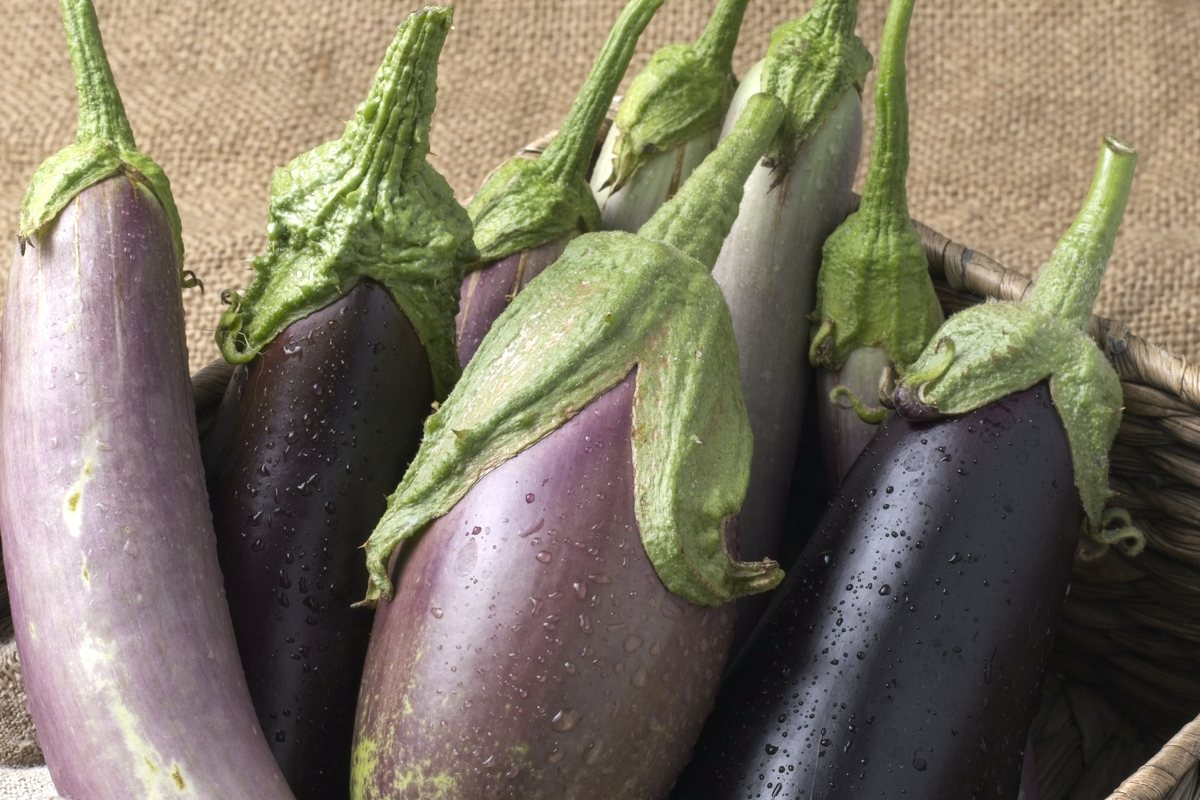
The English name eggplant It originates from white, egg-shaped varieties that were widespread in Europe in the 18th century.
Die Melanzani wurde in Indien und Südostasien domestiziert und kam über Persien und die arabische Welt ans Mittelmeer. Arabische Agronomen beschrieben ihren Anbau in Andalusien im Mittelalter; von dort verbreitete sie sich nach Italien und Südfrankreich.
For a long time, it was considered suspicious in Northern Europe - as a nightshade plant, it was even said to cause madness, hence the Italian name. melanzana, commonly known as mela insana interpreted. Today it is indispensable in moussaka, ratatouille, parmigiana and baba ghanoush.
To useWas die Melanzani für dich tut
Melanzani haben nur etwa 25 kcal pro 100 g, liefern rund 3 g Dietary fiber, They contain potassium, manganese, and folate. Therefore, they are an ideal, filling vegetable – as long as they are not fried in a lot of oil.
Inside the purple shell is Nasunin, an anthocyanin that has shown strong antioxidant activity in laboratory studies and protects cell membranes from oxidation. In addition, Chlorogenic acid, eines der wichtigsten Polyphenole der Melanzani. Die Schale also immer mitessen.
Die Melanzani ist ein Beispiel dafür, wie viel die Zubereitung ausmacht: Im Ofen gegart oder gegrillt bleibt sie leicht, frittiert kann sie ein Vielfaches ihres Gewichts an Fett aufnehmen.
IngredientsDas steckt in der Melanzani
Melanzani enthalten Anthocyane (vor allem Nasunin, ein Delphinidin-Glykosid), Chlorogensäure und andere Phenolsäuren, Ballaststoffe, Kalium, Mangan, Folat, Vitamin K sowie geringe Mengen Glykoalkaloide (Solasonin, Solamargin).
Moderne Sorten enthalten kaum noch Bitterstoffe und Glykoalkaloide, deshalb ist das Einsalzen gegen Bitterkeit meist nicht mehr nötig - es hilft aber, Wasser zu ziehen, damit die Melanzani weniger Öl aufnimmt.
Enhanced combinationsWas die Melanzani stärker macht
Die Melanzani ist ein Aromaträger - sie nimmt alles an, was man ihr gibt.
Baked instead of fried.
Ratatouille and Parmigiana.
Baba Ghanoush.
Indian Baingan Bharta.
Japanese glazed: Nasu Dengaku.
Keeps the purée light and fresh.
What contradicts itselfIt's best to avoid these combinations.
Raw, it is bitter, tough, and difficult to digest.
Absorbs many times its own amount of oil.
The nasunin is located in the shell.
It turns brown and bitter in the refrigerator.
That's where most of the glycoalkaloids are located.
Reife Melanzani glänzen und geben leicht nach.
In the kitchenWhere she belongs
- Baba GhanoushGrilled mashed potatoes with tahini.
- RatatouilleWith zucchini and bell peppers.
- moussakaGreek casserole.
- ParmigianaMit Paradeiser und Käse.
- Baingan BhartaIndian spices.
- Nasu DengakuGlazed with miso.
- Grilled slicesWith herbs and garlic.
- Melanzani-CurryWith chickpeas.
- CaponataSicilian sweet and sour.
- Gefüllte MelanzaniWith lentils or bulgur.
As a home remedyBaba Ghanoush - light and filling
Baba Ghanoush
- Zwei Melanzani mehrfach einstechen und im Ofen bei 220 °C 40 Minuten rösten, bis sie zusammenfallen.
- Let it cool slightly, scoop out the pulp and let it drain.
- Crush with 2 tablespoons of tahini, a clove of garlic, lemon juice, salt and a pinch of cumin.
- Serve with olive oil, parsley and pomegranate seeds.
Als ballaststoffreicher, kalorienarmer Dip statt fetter Aufstriche. Tahin liefert Calcium und gute Fette, die Melanzani Sättigung und Polyphenole.
It will keep for 3 to 4 days in the refrigerator.
Ayurveda & TCMWhat the old systems say
Ayurveda
Melanzani (VrintakaIn Ayurveda, it is considered bittersweet, light, and warming. It is described as stimulating the appetite, but is recommended sparingly in cases of excess Pitta; well-seasoned with cumin and ginger.
Traditional Chinese Medicine
In TCM (Qie Zi) gilt die Melanzani als süß und kühl. Sie soll Hitze klären und das Blut bewegen; traditionell wurde sie auch bei Schwellungen verwendet.
Warning noticesWhen you should be careful
Please note
- Raw: Do not eat raw - always cooked.
- Nightshade: Avoid if medically advised to follow a low-nightshade diet.
- Fat: Deep-fried food is very high in calories.
- Allergy: selten, Kreuzreaktion mit Paradeiser möglich.
- Histamine: Contains histamine - test for histamine intolerance.
This page provides information and does not replace medical advice. If symptoms persist, please consult a doctor.
Related to the topicRead on and cook along!
Shop links lead to our product pages; it is indicated there if a partner is involved.
SourcesWhat is this based on?
- Noda Y et al. Antioxidant activity of nasunin, an anthocyanin in eggplant peels. Toxicology 2000; 148(2–3): 119–123.
- Gürbüz N et al. Health benefits and bioactive compounds of eggplant. Food Chemistry 2018; 268: 602-610.
- Friedman M. Chemistry and anticarcinogenic mechanisms of glycoalkaloids produced by eggplants, potatoes, and tomatoes. Journal of Agricultural and Food Chemistry 2015; 63(13): 3323–3337.
- Aune D et al. Fruit and vegetable intake and the risk of cardiovascular disease, total cancer and all-cause mortality - a systematic review and dose-response meta-analysis of prospective studies. International Journal of Epidemiology 2017; 46(3): 1029–1056.
- USDA FoodData Central: Eggplant, raw.


