
OriginGreek hay and Indian everyday life
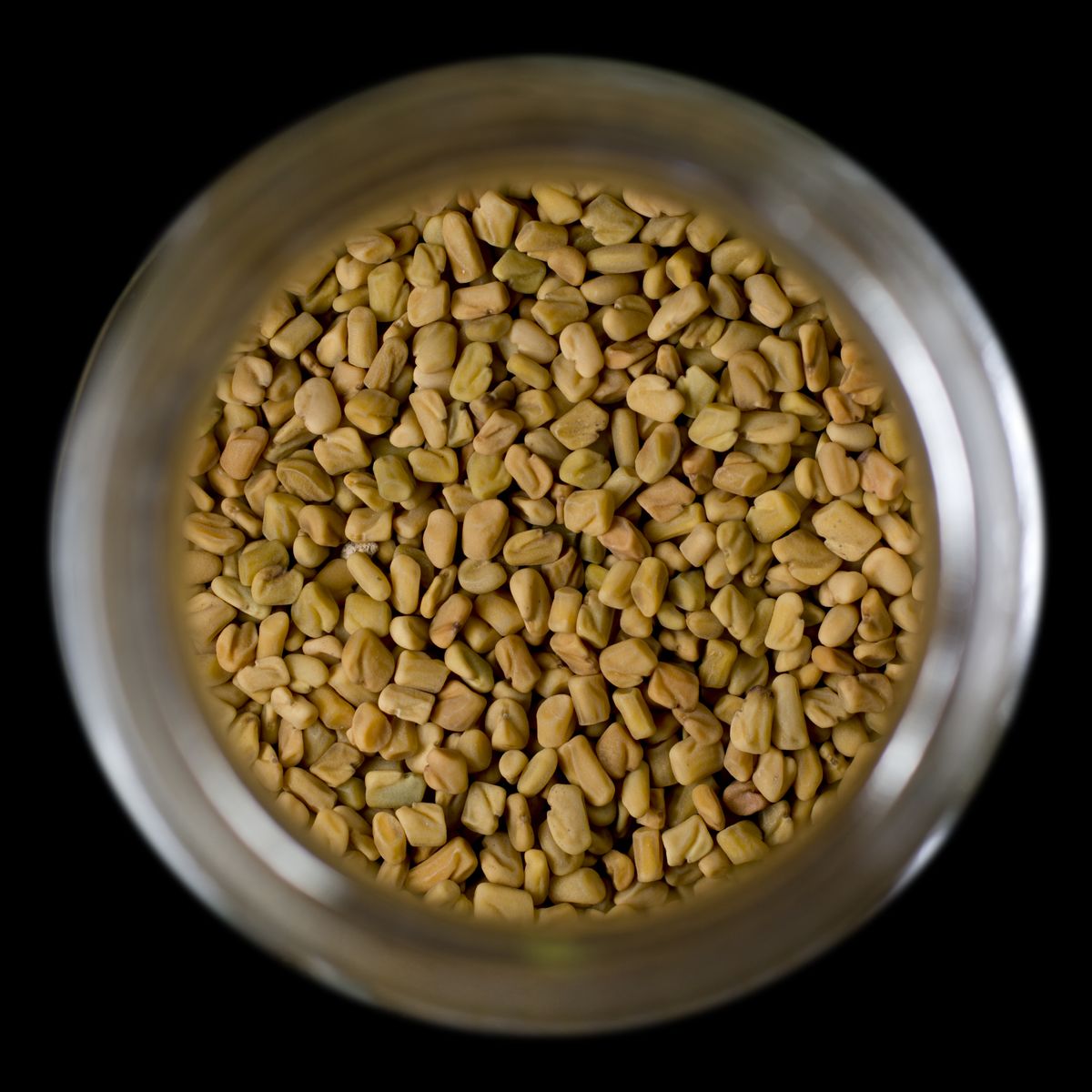
The botanical name literally means "Greek hay" - this is how the plant was described in ancient times as a fodder plant.
Trigonella foenum-graecum is an annual legume from the eastern Mediterranean and Western Asia that has been cultivated for at least four thousand years. Seeds have been found at Bronze Age sites in Iraq and in Egyptian tombs; it is mentioned as a medicinal plant in the Ebers Papyrus. The species name foenum-graecum, „Greek hay“, originates from Roman agriculture: The dried plant was used as animal feed and gave the hay a strong smell.
The plant grows to about half a meter tall, has trifoliate leaves like clover, and produces long, curved pods containing ten to twenty angular, yellowish-brown seeds. It is undemanding, fixes nitrogen as a legume, and is therefore widely cultivated as a cover crop in India. India is by far the largest producer today, and there fenugreek is not a niche spice, but an everyday staple. Methi The term refers to both the seeds and the leafy greens, and both are part of everyday cooking.
In Europe, fenugreek had two separate careers. As a medicinal plant, it grew in monastery gardens—Hildegard von Bingen knew of it, Commission E gave it a positive assessment, and in folk medicine, fenugreek poultices were a standard remedy for boils and inflammations. As a spice, however, it has remained almost unknown in Central Europe; where it does appear, it is hidden in curry powder and ready-made seasonings. It plays a third role in food technology: sotolon is the odor component responsible for the characteristic aroma of some seasoning sauces and the smell of lovage substitutes.
To useRecognized for little, advertised for much
The European Medicines Agency lists fenugreek seeds as traditional use With two areas of application: internally as a remedy for temporary loss of appetite, and externally as a poultice for minor skin inflammations. Commission E gave a positive assessment of these two uses in 1986. This is the officially recognized scope, and it is manageable. Everything else said about fenugreek falls into the category of "researched, but not proven.".
Internal use is based on the bitter substances and high mucilage content: bitterness stimulates appetite and gastric juices, while the mucilage forms a protective layer on the stomach lining. For external use, it is the mucilage that, when mixed with warm water, creates a thick paste – a classic poultice, similar to those formerly made with flaxseed. Moist heat plus a swelling paste, that's all it is, and precisely what is beneficial for a developing boil.
There is indeed research on blood sugar levels. The amino acid 4-hydroxyisoleucine, which is found almost exclusively in fenugreek, increases insulin secretion in animal studies, and the mucilage slows down sugar absorption from the intestines—an effect also seen in psyllium husks and oat bran. Meta-analyses of smaller human studies show slight reductions in fasting blood sugar and HbA1c. However, these studies are small, methodologically inconsistent, and conducted with highly variable dosages. This is insufficient to classify fenugreek as a diabetes remedy—but it is enough to say that anyone taking diabetes medication who also consumes larger quantities of fenugreek should inform their doctor.
The second major area of application is milk production. Fenugreek is the most widely used herbal galactog worldwide, and there are a handful of small randomized studies that show an increase in milk supply—and others that do not. A Cochrane review of galactogs yielded no clear results. Nevertheless, for breastfeeding women concerned about milk supply, it is one of the less harmful options; however, the most effective measure remains frequent breastfeeding and good lactation support, not a tea.
IngredientsSotolon - the substance you smell on yourself
The scent of fenugreek comes almost exclusively from a single molecule: sotolon, a furanone. It is one of the most intensely odorous natural compounds known and is perceptible even in concentrations of just a few nanograms per liter. This same molecule also characterizes lovage substitutes, aged sherry, and maple syrup. And it has a property that surprises many: those who consume large quantities of fenugreek will subsequently smell of it themselves – sotolon is excreted and can be detected in sweat and urine, sometimes for one to two days.
This is more medically relevant than it sounds. Newborn screening looks for a rare metabolic disorder called maple syrup urine disease, in which the urine smells like maple syrup – this is also a sotolon. Mother's consumption of fenugreek can mimic this smell in the infant and has been described in case reports as a cause of false positives. If a breastfeeding mother takes fenugreek and notices an unusual odor in her child, she should mention it instead of panicking – and conversely, she should mention her fenugreek use if a screening test shows an abnormal result.
The largest component by volume is mucilage: 25 to 45 percent galactomannan, a polysaccharide with enormous swelling capacity. This forms the thick paste used for poultices, and this also results in the delayed effect on sugar absorption in the intestines. In addition, it contains 20 to 30 percent protein – unusually high for a spice – the alkaloid trigonelline, steroidal saponins such as diosgenin, flavonoids, and the aforementioned amino acid 4-hydroxyisoleucine.
The bitterness is practically crucial for cooking. Raw fenugreek seeds are extremely bitter and hardly palatable in larger quantities. Briefly roasting them in hot fat reduces some of the bitter compounds and simultaneously develops the sotolon aroma – which is why fenugreek is almost always first fried in fat in Indian cuisine. The timing is critical: only a few seconds. If it gets too dark, it develops a lingering, unpleasant bitterness that ruins the entire dish.
Enhanced combinationsHow fenugreek works
Fenugreek isn't a spice you can just sprinkle on. It needs fat, heat, and timing – and a few partners to balance its bitterness.
The Bengali five-spice blend: fenugreek, nigella, fennel, black mustard, cumin – fried whole in hot oil until the seeds pop. Fenugreek provides the bitter base.
Fenugreek is an ingredient in almost every curry powder, and it's responsible for the characteristic aroma. Without it, a curry blend tastes bland.
Frische oder getrocknete Bockshornkleeblätter mit Erdäpfel - Aloo Methi It is one of the most well-known Indian home-cooked meals, and a good introduction to leafy greens.
Not optional: Without briefly toasting the seeds in fat, they remain bitter and flavorless. A few seconds are enough until they become fragrant and take on a light color.
The classic poultice: mix ground seeds with hot water to form a thick paste, spread it lukewarm onto a cloth, and apply it. This is the application explicitly recommended by Commission E.
The seeds germinate reliably in three to four days and produce spicy, slightly bitter sprouts for salad and bread - the mildest form of the plant.
What contradicts itselfIt's best to avoid these combinations.
Fenugreek is traditionally considered to promote labor and is used to induce childbirth in several cultures. It should be avoided in medicinal quantities during pregnancy – as a spice in food, it is safe.
As a legume, it is related to peanuts, chickpeas, and lupins, and cross-reactions have been documented—sometimes even severe ones. If you have a known legume allergy, do not try it without consulting a doctor.
Larger quantities can further lower blood sugar. This should be discussed in clinical practice, in addition to metformin, sulfonylureas, or insulin.
There are indications of an effect on coagulation. If you are taking Marcumar, DOACs, or have an upcoming surgery, discuss the use of larger doses of this medication beforehand.
If roasted too dark, it becomes permanently bitter and ruins the entire dish. There's no going back – it's better to throw it away and start again.
Like all mucilage-rich drugs, it can delay the absorption of other active ingredients. Leave a one- to two-hour interval.
To which courtFrom curry paste to sprouting jar
- Panch PhoronSauté whole seeds with nigella, fennel, mustard and cumin in hot oil until they pop - then add the vegetables.
- Aloo MethiFrische oder getrocknete Bockshornkleeblätter mit Erdäpfel, Kreuzkümmel und Chili gebraten.
- Curry powderGround as an ingredient in your own mixtures, about five percent of the total amount - more makes the mixture bitter.
- HilbeThe Yemeni paste made from soaked, ground fenugreek with lemon and chili - as a dip for bread.
- SproutsThree to four days in a sprouting jar, then spicy and crunchy on bread or in a salad.
- BreadBaked into some Ethiopian and Egyptian breads; gives a distinctive smell.
- DalHalf a teaspoon of whole seeds in the toasted spice mix at the end of cooking.
- Cheese alternativesIn vegan cheese recipes, fenugreek is used for the cheesy-spicy note - Sotolon does an amazing job here.
- Nursing teaIncluded in many breastfeeding teas; to prepare, crush the seeds and let them steep for ten minutes.
- envelopeMix 50 g of ground seeds with hot water to form a paste - the external monograph application.
As a home remedyThe cover - the application with monograph
Fenugreek cataplasm
- Finely grind 50g of fenugreek seeds – in a coffee grinder or a powerful blender. Ready-made flour is also fine, but it should smell fresh.
- Mix with approximately 250 ml of hot water to form a thick, spreadable paste. The mucilage will swell considerably within a few minutes; if it becomes too firm, add water drop by drop.
- Allow to cool to hand temperature. Do not apply while hot – check skin temperature before applying the porridge to the body.
- Spread the paste about half a centimeter thick onto a clean cotton cloth, fold the cloth over and place it on the affected area.
- Secure with another cloth and leave for twenty to thirty minutes. Repeat once or twice daily.
- If redness spreads, if the area becomes overheated, if there is pus with a red streak towards the center of the body, or if there is fever, stop immediately and consult a doctor.
Externally, for local skin inflammations and maturing boils – this is the application explicitly recommended by Commission E and the EMA. Internally, for temporary loss of appetite, as a tea made from crushed seeds.
For external use, apply 50 g of flour per poultice. For internal use, take up to 6 g of seeds daily according to Commission E. Do not use during pregnancy, if you have a known legume allergy, or if you are taking diabetes or anticoagulation medication; consult your doctor beforehand.
Ayurveda & TCMWhat the old systems say
Ayurveda
In Ayurveda, fenugreek is called Methika and is one of the most widely used culinary herbs. It is considered bitter and warming, Kapha- and vata-lowering, and is associated with the digestive fire. Traditionally, it is also a postpartum herb: in many Indian families, new mothers receive preparations containing fenugreek, often as a sweet porridge with ghee. This is the same principle of use that has made it the most widely used plant-based lactation aid worldwide.
Traditional Chinese Medicine
In the Chinese materia medica, fenugreek appears as Hu Lu Ba "Barbarian's beard," a reference to its origin via Western trade routes, is described as bitter and warming, with a connection to the kidneys and liver. It belongs to the group of drugs that strengthen kidney yang and dispel cold. It is used for cold pains in the lower abdomen and legs. This is a completely different application than in Europe, where it is used as a warming tonic, and in Europe as an appetite stimulant and poultice.
Warning noticesWhen you should be careful
Please note
- Not during pregnancy: Fenugreek is traditionally considered to promote labor and is used in many places to induce childbirth. Medicinal amounts should be avoided during pregnancy; as a culinary spice, it is safe.
- Legume allergy: As a relative of peanuts, chickpeas, and lupins, it can cause cross-reactions, in some cases severe. If you have a known allergy, do not consume without consulting a doctor.
- Blood sugar lowering medications: Larger quantities can further lower blood sugar. Consult your doctor if you are taking diabetes medication.
- Anticoagulants: Indications of an effect on coagulation. Discuss regularly taking larger quantities of anticoagulants or before surgery.
- Smell of maple syrup: Sotolon passes into sweat and urine. In breastfed infants, this can raise suspicion of a metabolic disorder – mention the medication if in doubt.
- Distance to medications: The high mucilage content can delay the absorption of other active ingredients. Leave a one- to two-hour interval.
This page provides information and does not replace medical advice. If symptoms persist, please consult a doctor.
Related to the topicRead on and cook along!
Shop links lead to our product pages; it is indicated there if a partner is involved.
SourcesWhat is this based on?
- European Medicines Agency, HMPC: European Union herbal monograph on Trigonella foenum-graecum L., semen - traditional use.
- Commission E, Monograph „Foenugraeci semen“, Federal Gazette No. 22 of 01.02.1990.
- Neelakantan N. et al.: Effect of fenugreek on glycaemic control - a meta-analysis of clinical trials. Nutrition Journal 2014.
- Cochrane Database of Systematic Reviews: Treatments for breast engorgement and interventions for increasing breast milk production - Overview of the evidence for galactagogues.
- Sewell A. et al.: Maple syrup urine odor due to maternal fenugreek ingestion. New England Journal of Medicine 1999 (case report).


