OriginThe climbing plant that lives twice
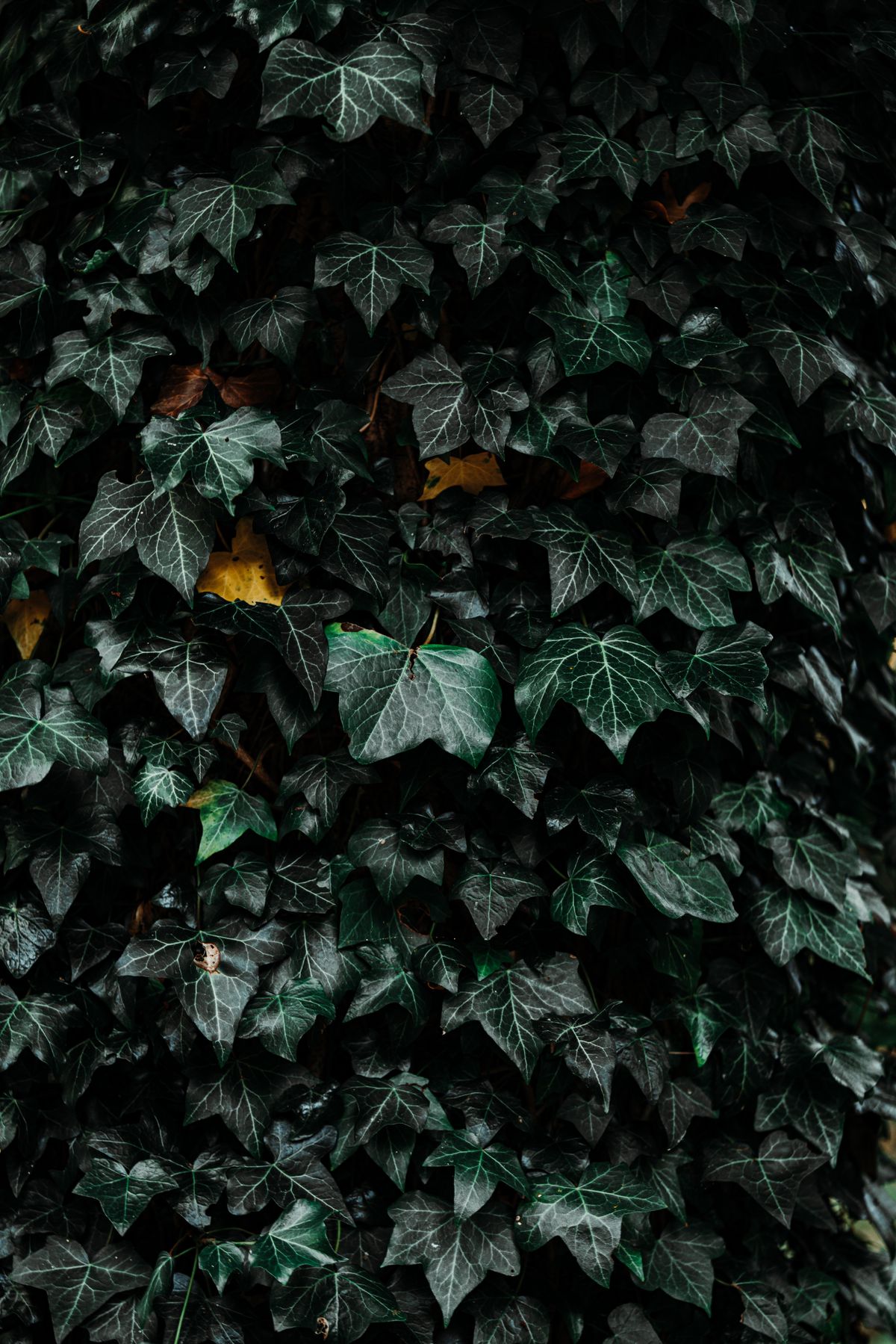
Ivy has two life forms - and only the second one blooms, namely in October, when nothing else is blooming.
Hedera helix Ivy is an evergreen climbing shrub native to all of Europe that grows up to twenty meters high on trees, walls, and rocks. It climbs using aerial roots that do not absorb nutrients but simply hold on – ivy is not a parasite, and a healthy tree will not suffer from it, even though this misconception persists. It only becomes problematic when it completely overgrows and shades a tree's crown, or when its weight causes an already weakened tree to topple during a storm.
Botanically, it's a special case with two life forms. As long as it climbs, it develops the familiar three- to five-lobed leaves and doesn't flower. Only when it reaches the top and has enough light does it transition into its mature form: the leaves become unlobed and egg-shaped, the shoots grow upright and bushy instead of climbing, and only this form flowers and fruits. An ivy that never climbs a wall never flowers. Cuttings of the mature form retain this characteristic and continue to grow as an upright shrub.
Its flowering period is September and October, which makes it ecologically important: at a time when almost nothing else is in bloom, ivy is one of the last major nectar sources for bees, wasps, hoverflies, and butterflies. The berries ripen over the winter and are eaten by blackbirds and thrushes in February and March – an important food source for birds during this lean time. They are poisonous to humans. In cultural history, ivy is the herb of Dionysus and a symbol of fidelity and eternal life because it is evergreen and does not detach itself.
To useThe mechanism of action that is best described
Ivy leaf dry extract is one of the few herbal preparations containing well-established use- EMA status: as an expectorant for productive cough. Commission E gave a positive assessment in 1988. In Germany, ivy is the best-selling herbal cough remedy, and this is not solely due to marketing – there are several controlled studies with a total of several thousand participants, mostly conducted by manufacturers, but methodologically sound.
What makes ivy special is the understanding of its mechanism of action – research in this area is more advanced than for almost any other cough remedy. The saponin α-hederin inhibits the internalization of β2-adrenergic receptors on lung cells. Put simply: these receptors are normally retracted into the cell interior after activation; α-hederin prevents this, so more receptors remain on the cell surface. The result is an increased response to the body's own adrenaline – the bronchial muscles relax, and the type II cells of the alveoli produce more surfactant, which thins the mucus.
This is an unusually concrete explanation for a plant's effect, and it aligns with clinical observations: fewer spasmodic coughing fits and easier expectoration. Studies show a reduction in cough duration and an improvement in symptom scores compared to placebo. Here too, the cold lasts the same amount of time, but coughing becomes easier.
The line must be clearly drawn. Ivy is a remedy for productive coughs with thick mucus associated with a cold. It is not an asthma medication – even though the β2 mechanism might suggest otherwise – and it does not replace a rescue inhaler or standard asthma therapy. It is not an antibiotic. And it is not suitable for coughs that last longer than three weeks or are accompanied by fever, shortness of breath, or blood in the sputum – these conditions require medical evaluation.
IngredientsWhy you shouldn't plant ivy yourself
The active ingredients are triterpene saponins, primarily hederacoside C, which is converted to α-hederin in the body and during the extraction process. α-Hederin is the actual active ingredient; hederacoside C is its precursor. The content varies considerably depending on leaf age, season, and plant life stage—juvenile leaves contain more than mature leaves, and the content is lower in spring than in autumn.
And now to the most important point of this page. Ivy is not suitable for home preparation for three reasons. First, the active ingredient content varies so much that a sensible dosage is impossible with self-collected leaves – and the daily dose is only 0.3 grams, which makes the range between effective and excessive very narrow. Second, fresh ivy leaves contain falcarinol, a polyacetylene that can cause severe contact dermatitis; among gardeners and landscapers, "ivy dermatitis" is a well-known occupational hazard. Third, the berries are highly toxic – their consumption leads to vomiting, diarrhea, and, in larger quantities, circulatory problems.
Therefore, ivy is the plant in this archive where we most emphatically advise: buy the ready-made product. Standardized dry extracts are tested for their hederacoside-C content, precisely dosed, available in age-appropriate forms for children, and well-tolerated. The manufacturing process also removes the irritating components. Homemade ivy tea is not a more economical version of the same product, but rather a different and inferior alternative.
A practical tip for parents: Ivy berries are found in many gardens within reach of small children. They are bluish-black, pea-sized, and grow in clusters – they look edible. If you suspect they have been eaten, contact poison control; severe poisoning is rare, but vomiting and diarrhea are common.
Enhanced combinationsIvy in cough medicine
Ivy is almost always used as a ready-made preparation, and the sensible combinations are accordingly those that are available there.
The combination with the best evidence for acute bronchitis: ivy via the β2 mechanism, thyme with antibacterial and antispasmodic properties. Ready-to-use syrup is the most common form.
Ivy preparations are available in tested dosages for children from one year of age - one of the few herbal options with robust data in this age group.
Adequate fluid intake and humid air thin mucus. This is not a minor detail, but rather the foundation upon which every expectorant works.
Elevating the head of the bed significantly reduces nighttime coughing fits. Simple, free, and effective.
Standardization to hederacoside C is the quality benchmark. Finished preparations from the pharmacy meet this standard.
Not medicinal, but important: A flowering ivy in October is one of the last food sources for insects. Leave it where it won't bother anyone.
What contradicts itselfIt's best to avoid these combinations.
Fluctuating active ingredient content, narrow dosage range, and irritating accompanying substances. Ivy is the plant where a ready-made preparation is clearly the better choice.
Highly poisonous. A real risk in gardens with small children – the bluish-black umbels look edible.
Falcarinol in fresh leaves causes contact dermatitis. Wear gloves when gardening with ivy.
The β2 mechanism sounds appealing, but ivy is no substitute for either emergency inhaler or basic therapy. Such a switch is dangerous.
Using marshmallow, mallow, or ribwort plantain as an expectorant for a cough without phlegm is the wrong approach. In that case, marshmallow, mallow, or ribwort plantain are indicated.
Saponins can cause nausea and stomach upset, especially on an empty stomach. Take with or after a meal.
ApplicationApplication methods - all available from the pharmacy
- cough syrupThe most common form, also suitable for children from one year of age in tested dosages.
- dry extractCapsules and tablets for adults, standardized to hederacoside C.
- Combination with thymeThe preparation with the best research data for acute bronchitis.
- effervescent tabletsFor adults who find the juice too sweet.
- Dosage according to ageIvy preparations are dosed according to age - the package instructions are binding.
- For the mealSaponins irritate the stomach on an empty stomach; take with or after meals.
- Application durationIf a cough persists for more than a week without improvement, consult a doctor.
- No teaSelf-collected leaves do not yield a doseable preparation.
- Gloves in the gardenFresh leaves can trigger contact dermatitis.
- Secure berriesKeep an eye on fruiting shoots in gardens with small children.
As a home remedyWhat helps instead
The measures that support ivy sap production
- Ivy itself does not belong in the teapot - this section therefore describes what you can do in addition to the ready-made preparation to make it work.
- Drink plenty of fluids: Water and mild teas help thin thick mucus. Two liters a day is a sensible goal when you have a cold, provided there are no contraindications.
- Humid air: A damp towel over the radiator or a bowl of water in the room. Dry air from heating is one of the main reasons why coughs worsen at night.
- Inhaling pure steam: A bowl of hot water, a towel over your head, ten minutes. No additives – the steam alone is the active ingredient. Not for small children, risk of scalding.
- Elevating the head of the bed while sleeping. An extra blanket under the mattress at the head of the bed noticeably reduces nighttime coughing fits.
- If you have a cough lasting longer than three weeks, high fever, shortness of breath, blood in your sputum, or weight loss: consult a doctor. This applies regardless of what medication you are taking.
To be used as an adjunct to a productive cough associated with a cold - together with an ivy preparation from the pharmacy, which is the actual application.
For ivy itself: 0.3 g of leaves daily according to Commission E, almost always as a standardized, ready-made preparation according to the package instructions. Do not prepare your own remedy, do not use berries, and do not apply fresh leaves to the skin.
Ayurveda & TCMWhat the old systems say
Ayurveda
Ivy is a European plant and not used in Ayurveda. It is used for respiratory illnesses with thick mucus – the Kapha-area - are located there Vasa (Adhatoda vasica), Pippali and Yashtimadhu, The focus is on licorice. Interestingly, licorice is also rich in saponins and acts via a similar mechanism to European saponin-containing drugs.
Traditional Chinese Medicine
In Chinese materia medica, Hedera with Chang Chun Teng It is represented as a fringe drug. It is described as bitter and neutral, with a connection to the liver and lungs and the functions of expelling wind and eliminating dampness. The central Chinese cough drugs are different; the saponin-rich Platycodon root is one example. Jie Geng It occupies the position there that ivy and primrose share in ours - a remarkable example of how the same class of material was independently found to perform the same task.
Warning noticesWhen you should be careful
Please note
- No self-addressing: Fluctuating active ingredient content, narrow dosage range, irritating accompanying substances. Ivy should be used as a standardized, ready-made preparation.
- Berries are poisonous: Ingestion leads to vomiting and diarrhea; in larger quantities, to circulatory problems. Take care in gardens with small children.
- Contact dermatitis: Falcarinol in fresh leaves can cause a severe skin reaction. Wear gloves when gardening.
- Not an asthma medication: Despite the β2 mechanism, ivy does not replace emergency spray or basic therapy.
- Not suitable for dry, irritating coughs: The wrong choice as an expectorant for a cough without phlegm.
- Persistent cough: If symptoms last over three weeks and include fever, shortness of breath, or blood in the sputum, consult a doctor.
This page provides information and does not replace medical advice. If symptoms persist, please consult a doctor.
Related to the topicRead on and cook along!
Shop links lead to our product pages; it is indicated there if a partner is involved.
SourcesWhat is this based on?
- European Medicines Agency, HMPC: European Union herbal monograph on Hedera helix L., folium - well-established and traditional use.
- Commission E, monograph „Hederae helicis folium“, BAnz No. 122 from July 6, 1988.
- Sieben A. et al.: α-Hederin, but not hederacoside C and hederagenin, from Hedera helix, affects the binding behavior, dynamics and regulation of β2-adrenergic receptors. Biochemistry 2009.
- Holzinger F., Chenot J.-F.: Systematic review of clinical trials assessing the effectiveness of ivy leaf extract for acute upper respiratory tract infections. Evidence-Based Complementary and Alternative Medicine 2011.
- Study Group on the Developmental History of Medicinal Plant Science, University of Würzburg: Medicinal Plant of the Year 2010 - Ivy.