
Fisolen (Phaseolus vulgaris)
OriginFrom the Andes to the kitchen garden
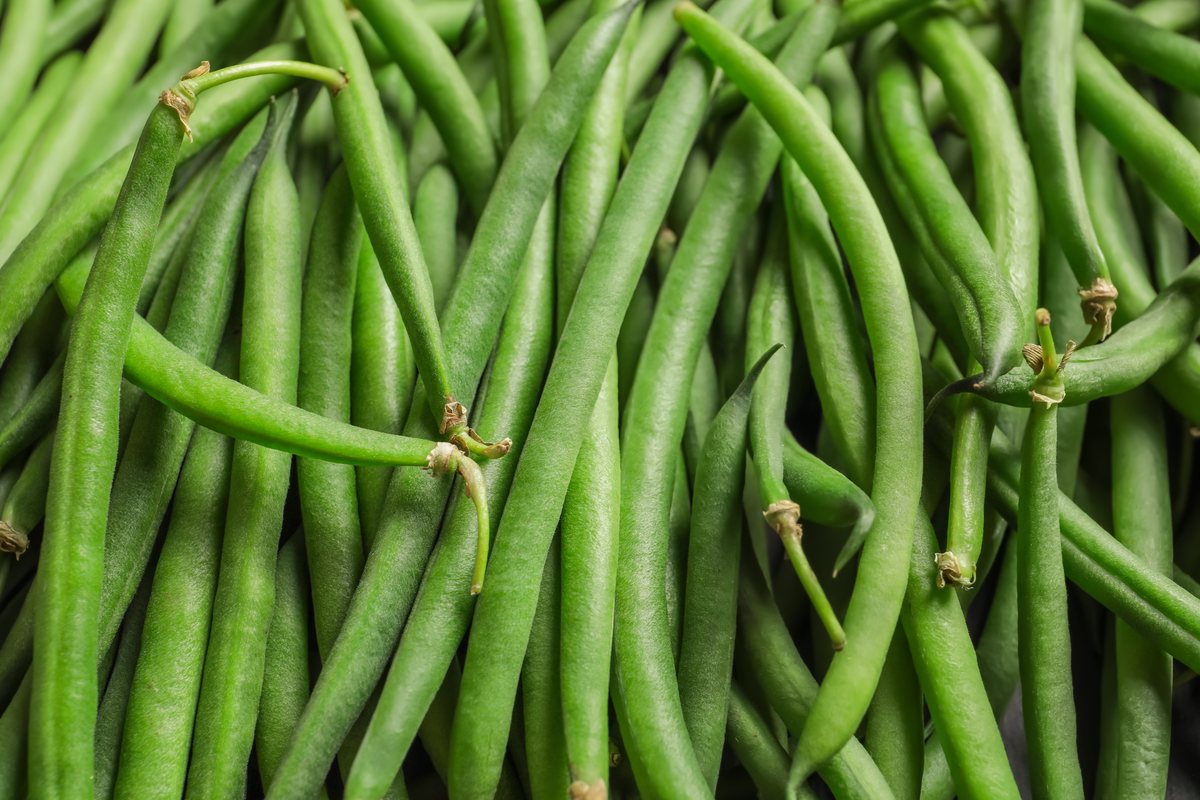
The common bean was domesticated twice independently – in Mexico and in the Andes.
Wild garden beans grow from Mexico to Argentina. As early as 8,000 years ago, people in Central America and the Andes began cultivating them, together with maize and squash, as the "three sisters": the maize serves as a trellis, the beans fix nitrogen, and the squash shades the soil. Beans arrived in Europe with Spanish ships in the 16th century and quickly displaced the old broad bean.
One distinguishes the low Bush bean (var. nanus) and the climbing Pole bean, which climbs up to three meters high. Commercially available varieties include snap beans, princess beans, cut beans, and yellow wax beans. The climbing scarlet runner bean, however, is a separate species (Phaseolus coccineus) - and also poisonous when raw.
To useWas Fisolen für dich tun
100 g rohe Fisolen haben laut USDA nur rund 31 kcal, aber 2,7 g Dietary fiber, 1.8 g protein, approximately 33 µg Folate, 12 mg vitamin C and approximately 43 µg Vitamin K A 200g serving covers the estimated daily requirement of vitamin K. It also contains potassium, magnesium, and carotenoids.
Die Ballaststoffe sättigen, fördern eine regelmäßige Verdauung und machen Fisolen zu einem guten Sattmacher bei wenig Energie. Große Beobachtungsstudien verbinden einen hohen Gemüse- und Hülsenfruchtverzehr mit weniger Herz-Kreislauf-Erkrankungen - für Fisolen allein gibt es aber keine eigenen Belege. Sie sind schlicht ein nährstoffreiches, leichtes Sommergemüse.
The most important point is safety: Phasin Phasin is a lectin that binds to the intestinal lining. Even a few raw beans can cause nausea, abdominal cramps, vomiting, and diarrhea after two to three hours; children are particularly vulnerable due to their low weight. Heat destroys phasin, but according to the German Federal Institute for Risk Assessment (BfR), simply boiling, gently steaming, or braising is insufficient.
IngredientsThis is what's in green beans
Fisolen enthalten Kohlenhydrate (vor allem Zucker und Stärke), Ballaststoffe wie Pektine und Cellulose, Eiweiß einschließlich des Lektins Phasin, Flavonoide wie Quercetin- und Kaempferol-Glykoside, Chlorophyll, Beta-Carotin, Lutein sowie Folat, Vitamin K, Vitamin C, Kalium, Magnesium, Calcium und Eisen.
During cooking, some vitamin C and folate leach into the water. Discard the cooking water anyway, as it also contains traces of phasin. Vitamin K, carotenoids, and dietary fiber are heat-stable.
Enhanced combinationsWas Fisolen stärker macht
Fisolen brauchen Hitze, etwas Fett und ein würziges Kraut.
The classic combination - spicy and easily digestible.
Vitamin K and carotenoids are fat-soluble.
For the bean salad - but only after cooking.
Haricots verts amandine.
Mediterranean style braised.
Rhenish or as Salade Niçoise.
What contradicts itselfIt's best to avoid these combinations.
Phasin - also keep an eye on children in the garden.
Not enough heat for phasin.
Three minutes are not enough for detoxification.
Always throw it away.
Below 100 °C, lectin remains active.
It remains green, but vitamins are lost.
In the kitchenWhere they belong
- Beans with savoryTossed in butter.
- Bean saladWith onions and vinegar.
- Green bean stewMit Erdäpfel und Möhren.
- Bacon beansCooked in a bundle.
- Salade niçoiseMit Erdäpfel, Ei und Oliven.
- Haricots vertsWith roasted almonds.
- Pears, beans and baconA classic from Northern Germany.
- Braised beansMit Paradeiser und Knoblauch.
- curryWith coconut milk and lentils.
- Wok beansFirst boiled, then seared.
As a home remedyBean salad with savory for light summer cuisine
Bean salad
- 500 g Fisolen putzen und mit einem Zweig Bohnenkraut in sprudelndem Salzwasser 12 bis 15 Minuten weich kochen.
- Drain, discard cooking water, briefly rinse beans with cold water.
- Mix a finely diced shallot with 2 tablespoons of wine vinegar, 3 tablespoons of oil, salt and pepper.
- Mix in the still lukewarm beans and let them soak for at least 30 minutes.
A light, fiber-rich side dish for summer. Savory is traditionally added to legumes to prevent bloating – an anecdotal practice not supported by studies, but it tastes good.
Serve 150 to 200 g per person as a side dish. The salad will keep for two days in the refrigerator.
Ayurveda & TCMWhat the old systems say
Ayurveda
Im Ayurveda gelten Fisolen als süß und adstringierend, kühlend und leicht - ausgleichend für Pitta und Kapha. Bei Vata-Neigung werden sie gut gegart und mit wärmenden Gewürzen wie Kreuzkümmel oder Ingwer gegessen.
Traditional Chinese Medicine
Die westliche TCM-Ernährungslehre ordnet Fisolen als süß und neutral ein. Sie sollen die Mitte (Milz und Magen) stärken und Feuchtigkeit ausleiten - gegart und mit einem würzigen Kraut wie Bohnenkraut besonders verträglich.
Warning noticesWhen you should be careful
Please note
- Never raw: Even small amounts of phasin cause nausea, vomiting, abdominal cramps, and diarrhea; in severe cases, bloody diarrhea and circulatory problems. If raw beans are ingested—especially by children—call poison control immediately.
- Ferment: Boil vigorously, not just steam, simmer or cook at a low temperature; discard the cooking water.
- Blood thinners: When taking vitamin K antagonists like Marcumar, eat regular amounts instead of suddenly eating large quantities.
- Flatulence: For those with a sensitive digestive system, smaller portions are recommended, cooked thoroughly and with savory or caraway.
- Allergy: Cross-reactions with other legumes such as peas, peanuts or soy are rare and possible.
This page provides information and does not replace medical advice. If symptoms persist, please consult a doctor.
Related to the topicRead on and cook along!
Shop links lead to our product pages; it is indicated there if a partner is involved.
SourcesWhat is this based on?
- USDA FoodData Central: Beans, snap, green, raw.
- Federal Institute for Risk Assessment (BfR): Lectins in plant-based foods: Is there a health risk? Statement 03/2024 dated January 23, 2024.
- Federal Institute for Risk Assessment (BfR): Beans should only be enjoyed cooked. Press release dated July 19, 2021.
- Rodhouse JC, Haugh CA, Roberts D, Gilbert RJ. Red kidney bean poisoning in the UK: an analysis of 50 suspected incidents between 1976 and 1989. Epidemiology and Infection 1990; 105(3): 485–491.
- Consumer Advice Center Bremen: Green beans - when prepared correctly, a nutrient-rich legume. Press release from July 25, 2023.
- Federal Centre for Nutrition (BZfE): Pulses: From shopping to the kitchen.


