
Kidney bean (Phaseolus vulgaris)
OriginThe kidney from the New World
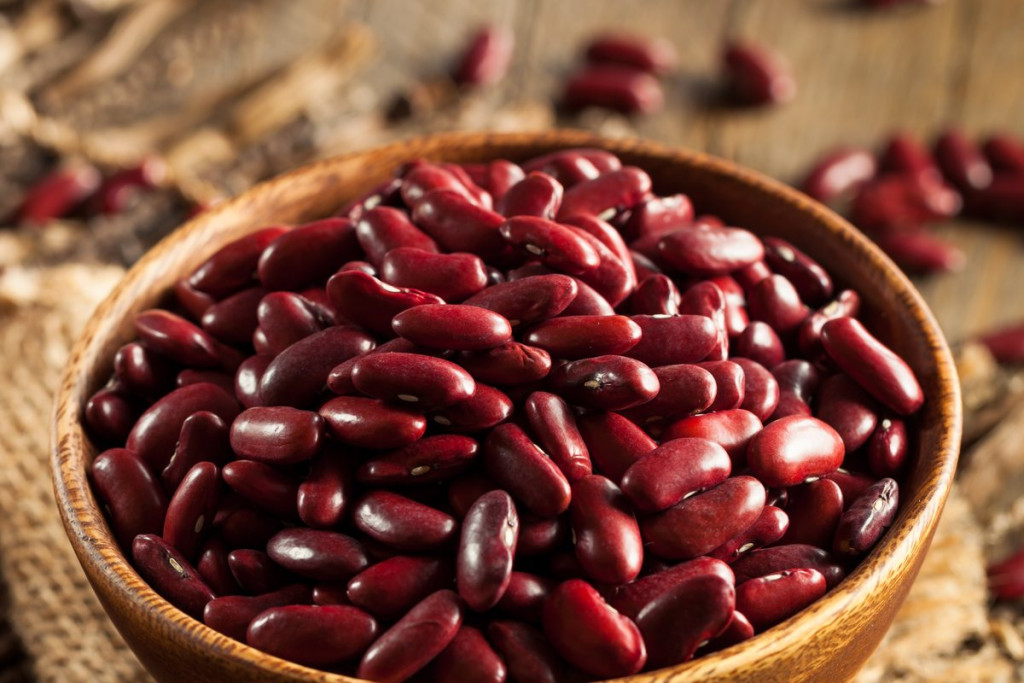
Her English name kidney bean It simply means "kidney bean" - after the shape of the seeds.
The common bean was cultivated independently twice several thousand years ago: in Mexico and in the Andes. Together with maize and squash, it formed the "three sisters" of indigenous agriculture.
Beans arrived in Europe in the 16th century with Spanish sailors and quickly displaced the Old World broad bean. The red kidney bean became particularly popular in North America, the Caribbean, and northern India, where it was used as a staple food. Rajma It's a national dish. In Germany, it's almost exclusively imported. Our bean page introduces the common garden bean and its native varieties; here, we're focusing on the red kidney bean.
To useWhat kidney beans can do for you
100g of cooked kidney beans provide around 130 kcal, almost 9g of carbohydrates. protein and about 7 g Dietary fiber, plus about 3 mg iron, 130 µg Folate and around 400 mg of potassium - with hardly any fat.
Like all legumes, kidney beans cause blood sugar to rise slowly and provide a long feeling of satiety. Observational studies link regular consumption of legumes to a lower risk of cardiovascular disease and type 2 diabetes. However, the plant-based iron is absorbed less efficiently than iron from meat – vitamin C in the same meal can help.
But the most important characteristic is a warning: Raw kidney beans contain particularly high levels of Phytohaemagglutinin, Kidney beans contain a lectin, often called phasin. Even a few raw or undercooked beans can cause severe nausea, vomiting, and diarrhea after one to three hours. When cooked properly, the lectin is completely destroyed – then kidney beans are an exceptionally healthy food.
IngredientsThis is what's in kidney beans
Kidney beans contain starch, protein (rich in lysine, low in methionine), soluble and insoluble fiber, resistant starch, and oligosaccharides such as raffinose and stachyose, which are fermented in the large intestine and can cause bloating. They provide the minerals iron, potassium, magnesium, phosphorus, zinc, and copper, and the vitamins primarily folate, vitamin B1, and vitamin B6.
The red seed coat is packed with polyphenols, including anthocyanins, flavonols, and tannins. It also contains lectins (phytohaemagglutinin), trypsin inhibitors, and phytic acid – these are broken down or rendered harmless by soaking and cooking.
Enhanced combinationsWhat makes kidney beans stronger
Kidney beans need heat, spice, and a partner to complement their protein.
Grains supplement the missing methionine.
Improves iron absorption.
A classic ingredient in chili, it is considered easy on the digestion.
For chili sin carne.
Enhances the earthy flavor.
Already cooked, just rinse.
What contradicts itselfIt's best to avoid these combinations.
Phasin - just a few beans are enough.
Below 100 °C, the lectin is not reliably destroyed.
Discard, start fresh.
The lectin remains active even after germination.
Only in thoroughly cooked pastries.
Tannins inhibit iron absorption.
In the kitchenWhere they belong
- Chili sin carneWith tomatoes, corn and cumin.
- Chili con carneThe Tex-Mex classic.
- Rajma ChawalNorth Indian bean curry with rice.
- Rice and PeasCaribbean style with coconut milk.
- Bean saladWith red onions and vinegar.
- BurritosWith rice and salsa.
- Bean frittersMade from cooked beans and rolled oats.
- stewWith potatoes and peppers.
- Bean spreadWith garlic and lemon.
- BrowniesPureed beans in the batter.
As a home remedyCook kidney beans safely
Safe basic bean recipe
- Sort through 250g of dried kidney beans, wash them and soak them overnight in three times the amount of water.
- Discard the soaking water and rinse the beans thoroughly.
- Cover with fresh water and boil vigorously for at least 10 minutes, skimming off any foam.
- Reduce the heat and cook the beans without salt for 45 to 90 minutes until tender; a bean should be easily crushed.
- Salt only at the very end. Once cooled, it will keep for 3 days in the refrigerator or can be frozen in portions.
For a satisfying, protein- and fiber-rich meal without risk. Soaking and long cooking also make them more digestible.
250g of dried beans yield approximately 600g of cooked beans, enough for 4 servings.
Ayurveda & TCMWhat the old systems say
Ayurveda
In Ayurveda, the red bean is considered (RajmaIt is considered heavy, dry, and rather difficult to digest. It is said to increase Vata and is therefore soaked well, cooked for a long time, and prepared with cumin, ginger, asafoetida, and a little ghee.
Traditional Chinese Medicine
The kidney bean is an American food and is not described in the classical texts of Traditional Chinese Medicine (TCM). In modern Chinese nutritional theory, red beans are generally classified as sweet and neutral and are said to strengthen the spleen and kidneys as well as eliminate dampness.
Warning noticesWhen you should be careful
Please note
- Poisonous when raw: Raw or undercooked kidney beans cause vomiting and diarrhea due to phytohaemagglutinin - always soak, change the water and boil vigorously for at least 10 minutes.
- Slow Cooker: Never cook dried beans directly in a slow cooker or at low temperatures; at around 80 °C the lectin can become even more toxic than when raw.
- Suspected poisoning: Call the poison control center if you experience symptoms after eating raw beans; children are at greater risk due to their low body weight.
- Flatulence: If you have irritable bowel syndrome, test small amounts; rinsed canned beans are often better tolerated.
- Kidneys: In cases of kidney disease with potassium restriction, the amount should be determined by a doctor.
This page provides information and does not replace medical advice. If symptoms persist, please consult a doctor.
Related to the topicRead on and cook along!
Shop links lead to our product pages; it is indicated there if a partner is involved.
SourcesWhat is this based on?
- Rodhouse JC et al. Red kidney bean poisoning in the UK: an analysis of 50 suspected incidents between 1976 and 1989. Epidemiology and Infection 1990; 105(3): 485–491.
- US Food and Drug Administration: Bad Bug Book - Handbook of Foodborne Pathogenic Microorganisms and Natural Toxins, 2nd edition 2012, chapter Phytohaemagglutinin (Kidney Bean Lectin).
- Federal Institute for Risk Assessment (BfR): Lectins in plant-based foods: Is there a health risk? Statement 03/2024 dated January 23, 2024.
- Federal Institute for Risk Assessment (BfR): Beans should only be enjoyed cooked. Press release dated July 19, 2021.
- USDA FoodData Central: Beans, kidney, red, mature seeds, cooked, boiled, without salt.