
Flaxseed (Linum usitatissimum)
OriginThe Most Useful
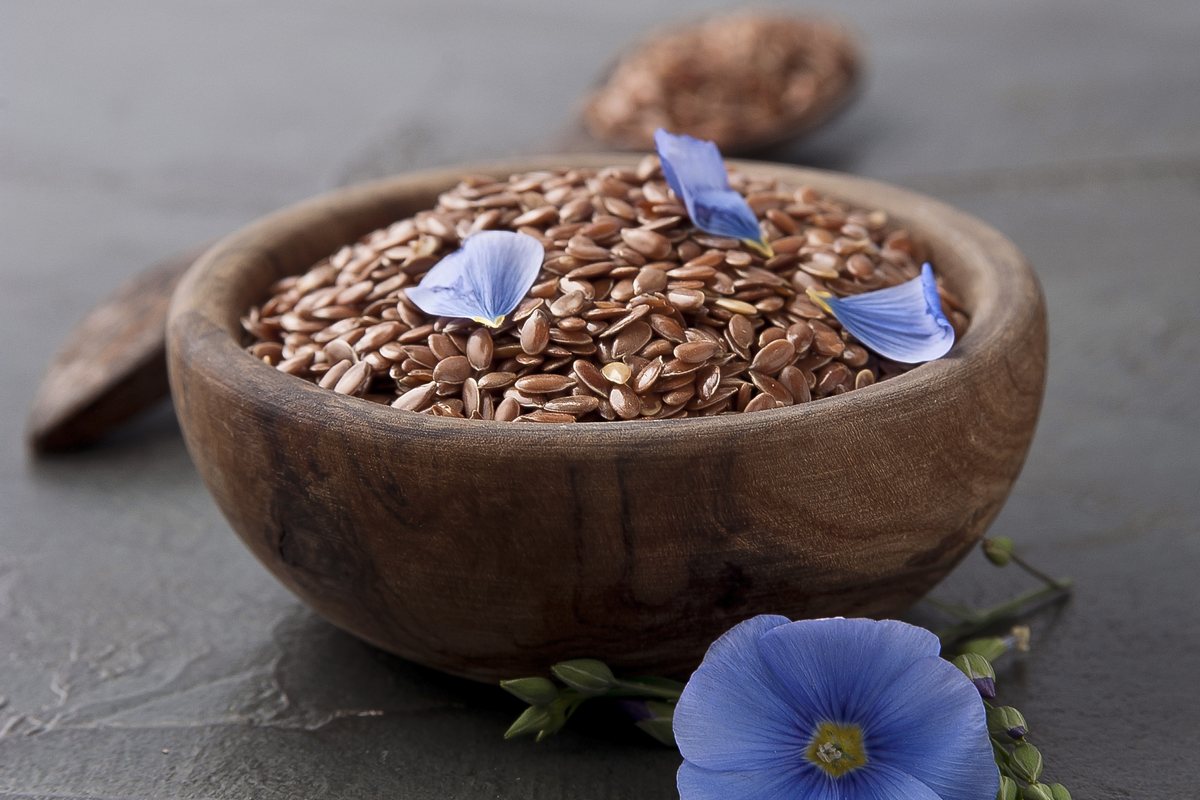
Linnaeus gave flax the nickname usitatissimum - „The most useful of all“: clothing, oil, food and medicine from one plant.
Flax was domesticated in the Near East over 9,000 years ago – for both fiber and seed. Egyptian mummies were wrapped in linen, and flax seeds and fabric remnants from the Neolithic period have been found in the pile-dwelling settlements on Lake Constance. Until the 19th century, flax was the most important fiber crop in Central Europe before cotton displaced it.
Fields of blue-flowering flax used to be a typical sight in Germany. Today, flaxseed comes primarily from Canada, Russia, and Kazakhstan, but increasingly also from domestic cultivation. Besides brown flaxseed, there is also golden-yellow flaxseed, which has a somewhat milder flavor.
To useWhat flaxseed does for you
Flaxseed is a recognized Medicinal drug for constipationCommission E and the European Medicines Agency describe it as being used for chronic constipation and irritable bowel syndrome with constipation; as mucus, it is also used for gastritis. Its mucilage swells when it comes into contact with water, increasing stool volume and softening it.
Flaxseed is the richest source of Alpha-linolenic acid (plant-based Omega-3) and for Lignans, Plant substances with a weak hormone-like effect. In a controlled study with people with high blood pressure, 30 g of ground flaxseed daily for six months lowered blood pressure by around 10/7 mmHg – an effect comparable to that of a medication.
Important: Flaxseed is necessary for Omega-3 and lignans crushed It must be whole, otherwise it will pass through the intestines undigested. Whole flaxseed, which swells when wet, or ground flaxseed is sufficient for its laxative effect – both only with plenty of liquid.
IngredientsThis is what's in flaxseed
Flaxseed consists of approximately 40 percent fat, of which over half... Alpha-linolenic acid. In addition, it contains approximately 20 percent protein and approximately 27 percent fiber, many of which are... Mucus in the seed coat, the lignan secoisolariciresinol diglucoside, magnesium, thiamin and manganese.
Flaxseed also contains cyanogenic glycosides like linamarin, from which prussic acid can be produced. In typical amounts, it is considered harmless; however, large quantities of raw, ground flaxseed should not be eaten at once. The amount decreases during baking and cooking. Ground flaxseed quickly becomes rancid – grind it fresh or store it in the refrigerator.
Enhanced combinationsWhat makes flaxseed stronger
Flaxseed needs water, time and - for the Omega-3 - a mill.
Grind in a coffee grinder, store in a cool place, and consume within one week.
Use at least 150 ml of liquid per tablespoon - otherwise it can clog instead of helping.
Ground flaxseed in muesli or yogurt.
1 tbsp ground flaxseed plus 3 tbsp water, soak for 10 minutes - replaces one egg.
Pellkartoffeln mit Topfen und Leinöl - die Omega-3-Mahlzeit aus Schlesien und der Lausitz.
Flaxseed in bread - baked and well chewed.
What contradicts itselfIt's best to avoid these combinations.
Without liquid, flaxseed can clog the intestines - even leading to intestinal obstruction in cases of narrowing.
Mucus delays the absorption of other medications - a two-hour interval is recommended.
Do not use in cases of narrowing of the digestive tract, acute inflammation, or swallowing difficulties.
Pre-ground flaxseed oxidizes quickly - grind it fresh.
Do not consume large quantities of raw, crushed seeds at once because of the cyanogenic glycosides.
Flaxseed can lower blood sugar - if you are taking insulin or tablets, be careful of hypoglycemia.
In the kitchenWhere he belongs
- Flaxseed porridgeOats, ground flaxseed, apple, cinnamon.
- Flaxseed breadWholemeal bread with plenty of flaxseed.
- Topfen mit LeinölServe with boiled potatoes.
- Flaxseed crackersWhole seeds mixed with water and spices, baked thinly.
- SmoothieOne tablespoon of crushed flour makes it creamy.
- Egg substituteIn vegan pastries and fritters.
- Yogurt bowlWith berries and nuts.
- SemmelnSprinkled with flax seeds.
- Meatball bindingInstead of breadcrumbs.
- Flaxseed mucilageAs a gentle diet for the stomach.
As a home remedyFlaxseed for constipation and irritated stomach
Properly taking flaxseed
- For constipation: Take 1 tablespoon of whole or ground flaxseed with at least 150 ml of water, 2 to 3 times daily.
- Or soak them in water overnight and eat them with the soaking water in the morning.
- For flaxseed mucilage for an irritated stomach: Soak 1 tablespoon of whole flaxseed in 250 ml of cold water for 30 minutes, strain, and drink the mucilage slightly warmed.
- Drink plenty of fluids throughout the day.
Chronic constipation, irritable bowel syndrome with constipation, and – in the form of mucus – irritated gastric mucosa. This is how Commission E and the European Medicines Agency describe it. The effect begins after 12 to 24 hours, but the full effect often only develops after a few days.
Up to 3 tablespoons a day, always with plenty of water. Do not use in cases of intestinal narrowing, acute abdominal pain of unknown origin, or difficulty swallowing. Leave two hours between taking this product and any other medication. Consult a doctor if you experience sudden constipation, blood in your stool, or weight loss.
Ayurveda & TCMWhat the old systems say
Ayurveda
Flaxseed (AtasiIn Ayurveda, it is considered sweet, bitter, oily, heavy, and warming. It calms Vata, moistens the intestines, and is recommended for constipation and dry skin; for Pitta, it should only be used in moderation.
Traditional Chinese Medicine
In Traditional Chinese Medicine (TCM), flaxseed (Ya Ma ZiIt is described as sweet and neutral. It is said to nourish blood and fluids, moisten dryness, and clear the intestines – similar to hemp seeds. Huo Ma Ren, the classic drug for constipation caused by dryness.
Warning noticesWhen you should be careful
Please note
- Liquid: Always use plenty of water - otherwise there is a risk of blockage.
- Medications: A two-hour interval is recommended, especially for thyroid hormones and diabetes medications.
- Intestinal diseases: Not for use in cases of intestinal narrowing, intestinal obstruction, or acute inflammation.
- Crowd: Do not use very large quantities of raw, crushed seeds at once.
- Pregnancy: Safe as food; high doses should be used with caution due to the lignans.
This page provides information and does not replace medical advice. If symptoms persist, please consult a doctor.
Related to the topicRead on and cook along!
Shop links lead to our product pages; it is indicated there if a partner is involved.
SourcesWhat is this based on?
- Rodriguez-Leyva D et al. Potent antihypertensive action of dietary flaxseed in hypertensive patients. Hypertension 2013; 62(6): 1081–1089.
- HMPC. Community herbal monograph on Linum usitatissimum L., semen. European Medicines Agency 2015.
- Commission E: Monograph Lini semen (linseed), Federal Gazette.
- Goyal A et al. Flax and flaxseed oil: an ancient medicine & modern functional food. Journal of Food Science and Technology 2014; 51(9): 1633–1653.
- USDA FoodData Central: Seeds, flaxseed.


