
OriginFrom Captain Cook to the first-aid kit
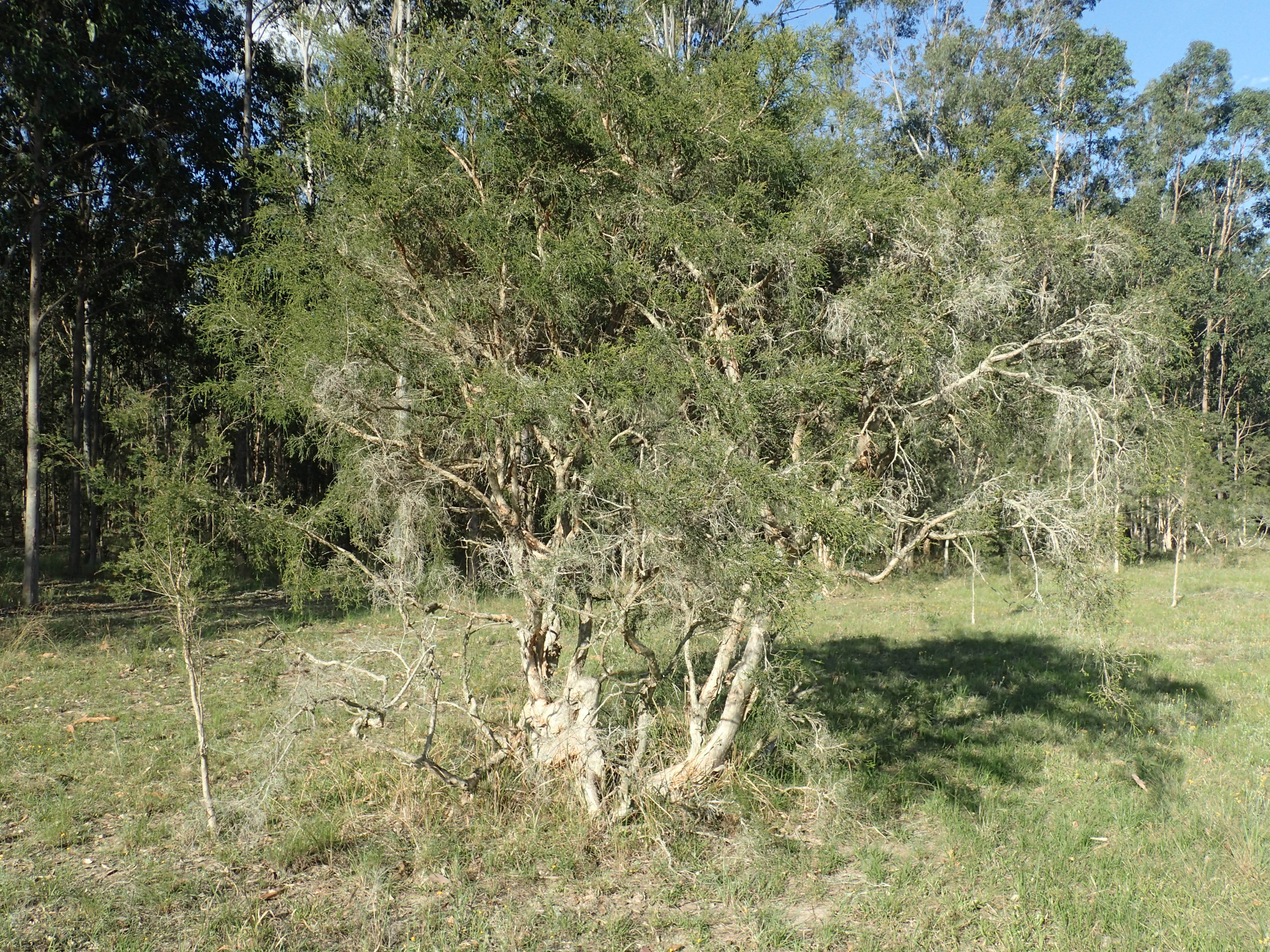
Australian soldiers in World War II had tea tree oil in their first aid kit - the harvest was considered vital to the war effort.
Melaleuca alternifolia The tea tree is a small tree or large shrub native to a narrowly defined area in northeastern New South Wales, Australia, where it grows in marshy lowlands. Its leaves are narrow and needle-like, and the essential oil is extracted from them by steam distillation. The name tea tree originates from Captain James Cook, whose crew prepared a tea-like infusion from the leaves – using the tea shrub. Camellia sinensis The plant has nothing to do with it.
Die Aborigines der Bundjalung-Region nutzten die zerriebenen Blätter traditionell auf Wunden und als Aufguss bei Verkühlungen. In die westliche Medizin kam das Öl in den 1920er Jahren, als der australische Chemiker Arthur Penfold seine antiseptische Wirkung untersuchte und feststellte, dass sie die der damals gebräuchlichen Karbolsäure deutlich übertraf. Das machte es schlagartig bekannt.
During World War II, tea tree oil was considered a vital war commodity in Australia: it was included in soldiers' first-aid kits, and harvesters were exempt from military service. After the war, antibiotics largely displaced the oil until it returned in the 1970s and 80s with the growing interest in natural products. Today, tea trees are cultivated on a large scale in plantations, and the ISO 4730 standard defines the composition an oil must have to be classified as tea tree oil.
To useWhere it has actually been studied
There is no EMA monograph on the uses of tea tree oil, but it does have something many herbal remedies lack: several randomized clinical trials. Its use in acne is the best studied. In an Australian study with over one hundred participants, a five percent tea tree oil preparation performed similarly to five percent benzoyl peroxide – the onset of action was slower, but the side effects were significantly fewer. Further placebo-controlled studies confirmed an improvement in inflammation levels and overall skin condition.
Studies have also been conducted on athlete's foot. A 25% to 50% tea tree oil preparation led to clinical improvement in a significant proportion of participants; however, the mycological cure rate—that is, the actual proof that the fungus is gone—was considerably lower than with standard antifungal medications. Tea tree oil can alleviate symptoms, but it does not replace targeted treatment for persistent nail or foot fungus.
A third area investigated is head lice, where tea tree oil has proven effective in laboratory tests and small studies. Here too, approved lice treatments have a stronger evidence base, and for children, tolerability is an additional consideration. For wound disinfection, there are laboratory findings demonstrating its effectiveness against numerous bacteria, including MRSA, but insufficient clinical data to recommend it as a wound antiseptic.
The active ingredient is terpinen-4-ol, which makes the cell membranes of bacteria and fungi permeable. ISO standard 4730 requires at least thirty percent of this substance and simultaneously limits the 1,8-cineole content to below fifteen percent – cineole is a skin irritant, and an oil rich in cineole is less well tolerated. Therefore, when purchasing this product, ISO compliance is not a minor detail, but the decisive quality criterion.
IngredientsWhy an old bottle is more dangerous than a new one
Tea tree oil contains over a hundred individual substances, but two are key: terpinen-4-ol as the active ingredient and 1,8-cineole as an irritant. The ISO 4730 standard defines upper and lower limits for fifteen components and is the reason why tea tree oil is a reproducible product at all. The bottle should state "ISO 4730" or provide a terpinen-4-ol content rating.
The most important practical point concerns oxidation, and it is almost universally overlooked. Tea tree oil reacts with atmospheric oxygen, producing oxidation products—ascaridol, 1,2,4-trihydroxymenthane, and peroxides—which are hardly present in fresh oil. These very breakdown products are the actual contact allergens. Studies show that fresh tea tree oil rarely causes sensitization, while oxidized oil frequently does. In Europe, tea tree oil is one of the most common triggers of contact allergies among essential oils—and this is primarily due to storage issues.
This leads to clear rules: buy small bottles, dark glass, tightly sealed, store in a cool place, and discard six to twelve months after opening. An oil that no longer smells fresh and camphoraceous, but pungent or turpentine-like, has oxidized and should be thrown away. Anyone who keeps a bottle in a warm bathroom cabinet for years will end up with a different product than when they started.
The second absolute rule concerns ingestion. Tea tree oil is orally toxic. There are numerous cases of poisoning, predominantly in children, with symptoms including confusion, impaired coordination, altered mental status, and in one case, coma—sometimes after ingesting just a few milliliters. Tea tree oil should never be taken internally and should be kept out of the reach of children. The same applies to pets: cats can barely metabolize terpenes, and there are documented cases of poisoning in cats and dogs after external application. Tea tree oil has no place in a household with a cat.
Enhanced combinationsDilute correctly, store correctly
When it comes to tea tree oil, two practical questions determine almost everything: How old is the oil, and how diluted is it?
The concentration tested. Apply directly to inflamed areas, once or twice daily. The effect sets in more slowly than with benzoyl peroxide, but it is better tolerated.
In cases of athlete's foot, 25 to 50 percent of the dose was used - this is high and should only be used on intact skin and for a limited time.
For most applications, one to five percent in jojoba, almond, or coconut oil is sufficient. Undiluted, it is only acceptable for spot treatments and short periods.
Store in a cool, tightly sealed container. Discard after six to twelve months of opening – the oxidation products are the allergens.
At least 30 percent terpinen-4-ol, at most 15 percent cineole. Without this information, an oil cannot be evaluated.
Test a small area before first use and wait 24 hours - contact allergies are common with this oil.
What contradicts itselfIt's best to avoid these combinations.
Absolutely contraindicated. There are numerous cases of poisoning with confusion, impaired coordination, and loss of consciousness, predominantly in children.
Cats can barely metabolize terpenes; poisonings after external application have been documented. It is also problematic for dogs. Do not use at all in households with cats.
Contact allergens only develop with age. Oils with a pungent or turpentine-like odor should be disposed of.
When applied undiluted to larger areas of skin, it is highly irritating and significantly increases the risk of sensitization.
Essential oils should be kept away from the nose and mouth of small children. And the bottle should be kept out of their reach.
Sufficient clinical data is lacking for wound disinfection, and it is irritating to open skin. Wounds should be treated cleanly, not treated with drops.
ApplicationApplications and safety rules
- acne gel5 % in a gel or carrier oil, applied selectively to inflamed areas.
- Athlete's footDiluted in a foot bath or applied topically; stubborn fungus requires an antifungal medication.
- Nail careDabbed onto discolored nails - as a care treatment, not as a treatment for nail fungus.
- Foot deodorantA few drops in a neutral foot spray to combat odor.
- washA few drops in the washing machine to combat musty odors.
- cleaningUsed as a fragrance and active ingredient in cleaning products.
- ISO 4730The quality criterion - look on the bottle.
- Dark glassSmall bottle, stored in a cool place, should be disposed of after six to twelve months.
- Never internallyNo exceptions, no "dilution that works".
- Not suitable for households with cats.Cats hardly metabolize terpenes; cases of poisoning have been documented.
As a home remedyThe acne preparation
Five percent tea tree oil gel
- Use fresh tea tree oil that meets ISO 4730 standards – at least 30 percent terpinen-4-ol, at most 15 percent cineole. An old bottle from the bathroom cabinet is not suitable.
- Perform a patch test before first use: place a drop of the prepared mixture in the inside of your elbow and wait 24 hours. Contact allergies are common with this oil.
- For a five percent preparation: 5 drops of tea tree oil to approximately 5 ml – one teaspoon – of neutral aloe vera gel or jojoba oil. Mix well.
- Apply to inflamed areas once or twice a day, avoiding large areas. Avoid the eyes.
- Be patient: In the studies, the effect set in more slowly than with benzoyl peroxide, but was comparable after a few weeks. Four to six weeks is a realistic assessment period.
- Discontinue use if redness, burning, scaling, or itching occurs. Severe, scarring acne should be treated by a dermatologist.
For mild to moderate acne, athlete's foot, and general foot care. Not for severe, scarring acne, not on open wounds, and never for internal use.
One to five percent for most topical applications, up to 25 percent for athlete's foot on intact skin. Never ingest. Do not use in households with cats. Keep bottle out of reach of children.
Ayurveda & TCMWhat the old systems say
Ayurveda
The tea tree is an Australian plant and not used in Ayurveda. For skin infections and acne, other plants are used there. Neem (Azadirachta indica), Manjistha Turmeric is the main ingredient – although neem also provides an antimicrobial plant oil and is therefore the closest functional counterpart. Tea tree oil is now widely used in modern Indian cosmetics, but with Western justification.
Traditional Chinese Medicine
The Chinese materia medica also lacks this. Melaleuca alternifolia. For skin diseases with "damp-heat" and "toxins" - the category into which acne and fungal infections fall there - specific drugs are available, such as... Ku Shen and Huang Bai, which are applied externally as washes. The observation that a strong-smelling plant extract helps externally against itchy, inflamed skin is found in both traditions – the remedies are different.
Warning noticesWhen you should be careful
Please note
- Never use internally: Tea tree oil is orally toxic. Cases of poisoning with confusion, impaired coordination, and unconsciousness have been documented, predominantly in children. Keep the bottle out of reach.
- Not suitable for households with cats: Cats barely metabolize terpenes; poisoning after external application has been documented. Also problematic for dogs.
- Oxidized oil is the allergen: Contact allergens develop during aging in the air. Store small bottles in a dark and cool place and discard after six to twelve months.
- Always dilute: One to five percent for most applications. Applied undiluted over large areas, it irritates and sensitizes.
- Compatibility test: Test a small area before first use and wait 24 hours.
- No substitute for stubborn fungus: In cases of nail fungus and severe athlete's foot, the mycological cure rate is significantly worse than with antifungal medications.
This page provides information and does not replace medical advice. If symptoms persist, please consult a doctor.
Related to the topicRead on and cook along!
Shop links lead to our product pages; it is indicated there if a partner is involved.
SourcesWhat is this based on?
- Bassett IB et al.: A comparative study of tea-tree oil versus benzoyl peroxide in the treatment of acne. Medical Journal of Australia 1990.
- Satchell AC et al.: Treatment of interdigital tinea pedis with 25 % and 50 % tea tree oil solution. Australasian Journal of Dermatology 2002.
- Hammer KA et al.: A review of the toxicity of Melaleuca alternifolia (tea tree) oil. Food and Chemical Toxicology 2006.
- Rutherford T. et al.: Allergy to tea tree oil - retrospective review of patch test results. Australasian Journal of Dermatology 2007.
- ISO 4730: Essential oil of Melaleuca, terpinen-4-ol type (tea tree oil) - Standard specifications for composition.