
Karfiol (Brassica oleracea var. botrytis)
OriginKohl with a university education
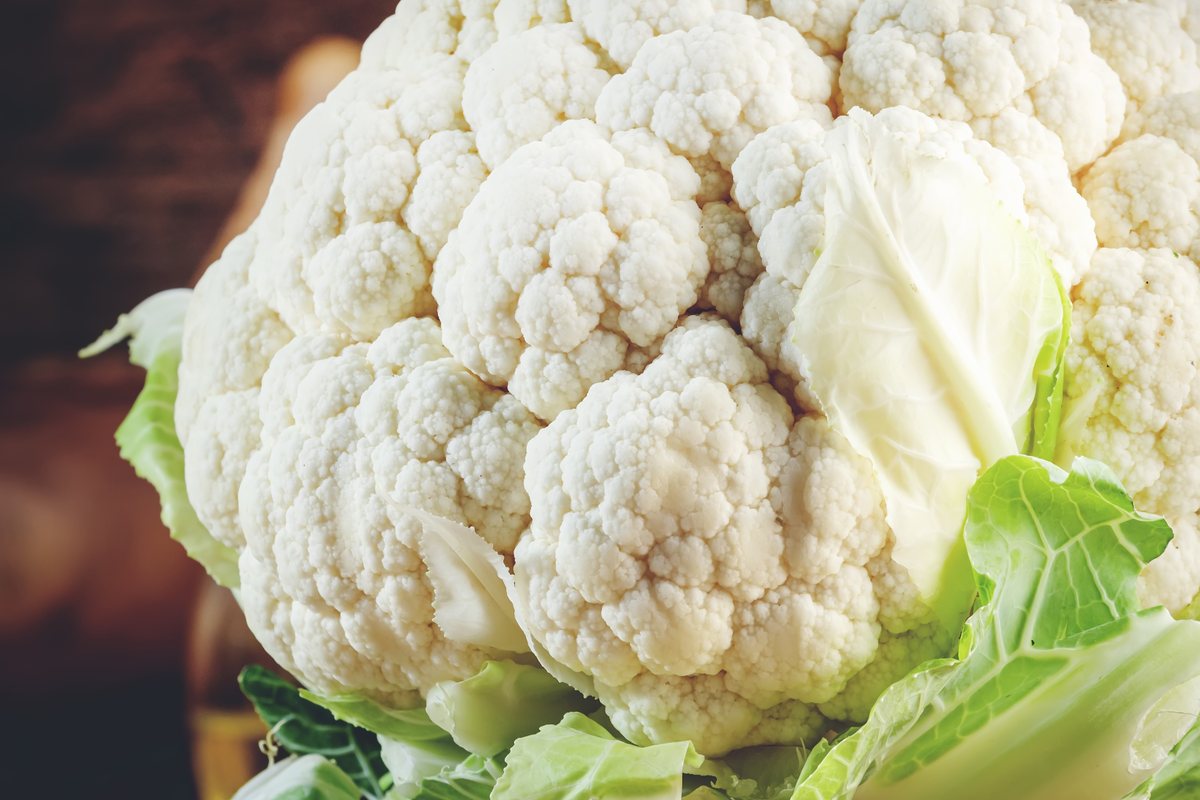
„Karfiol ist nichts anderes als Kohl mit einer Hochschulbildung“, spottete Mark Twain.
Karfiol ist eine Zuchtform des Wildkohls Brassica oleracea, der an den Küsten Europas wächst - genau wie Brokkoli, Grünkohl, Kohlsprossen, Weißkohl und Kohlrabi. Die Blütenstände wurden im östlichen Mittelmeer, vermutlich in Zypern und der Levante, auf Größe und Zartheit gezüchtet. Arabische Gelehrte beschrieben ihn im 12. Jahrhundert, über Italien kam er im 16. Jahrhundert nach Frankreich und Deutschland.
For a long time, it was considered a fine vegetable for upscale dining. The head remains white only because the leaves protect it from the sun – in sunlight, it produces chlorophyll and turns greenish. Besides white varieties, there are purple (anthocyanins), orange (beta-carotene), and green varieties, as well as Romanesco with its fractal spirals.
To useWas der Karfiol für dich tut
Karfiol ist ein light and nutrient-rich vegetablesWith approximately 25 kcal per 100 g, it provides about 48 mg of vitamin C, as well as folate, vitamin K, potassium, choline, and fiber. Because it is so low in carbohydrates, it is a popular substitute for rice or mashed potatoes.
Like all cabbage vegetables, it contains Glucosinolate. When cruciferous vegetables are cut and chewed, the enzyme myrosinase converts them into isothiocyanates such as sulforaphane, which, in laboratory and animal studies, activate the body's own detoxification enzymes. Observational studies link a high consumption of cruciferous vegetables with a slightly lower risk of some types of cancer—a correlation, not proof.
Für die Küche heißt das: Karfiol klein schneiden und einige Minuten liegen lassen, bevor er gegart wird - dann haben die Enzyme Zeit, ihre Arbeit zu tun. Und nicht zerkochen: Langes Kochen in viel Wasser spült Vitamin C und Glucosinolate aus.
IngredientsDas steckt im Karfiol
Karfiol enthält Vitamin C, Folate, vitamin K, vitamin B6, potassium, choline, and fiber. Among the secondary plant compounds are... Glucosinolate Glucobrassicin and glucoraphanin are the primary active compounds; colored varieties also contain anthocyanins or carotenoids.
Die schwefelhaltigen Abbauprodukte der Glucosinolate sind für den typischen Kohlgeruch beim Kochen verantwortlich - je länger gekocht, desto stärker. Karfiol enthält außerdem den Zuckeralkohol Mannit, der bei empfindlichen Menschen Blähungen fördert.
Enhanced combinationsWas den Karfiol stärker macht
Karfiol ist ein Geschmacksträger: mild genug für Butter, kräftig genug für Kurkuma und Röstaromen.
Chop into small pieces and leave to stand for 10 minutes - this will allow more sulforaphane to form before the heat stops the enzyme.
If the cabbage is cooked thoroughly, mustard or raw cruciferous vegetables can provide the missing myrosinase.
Bei 220 °C geröstet wird Karfiol nussig-süß statt kohlig.
Aloo Gobi, Karfiol-Curry - indische Gewürze mögen den milden Kohl.
The classic remedies for bloating - add it to the cooking water or sprinkle it over roasted cabbage.
Karfiol polnisch: mit Butter und gerösteten Semmelbröseln.
What contradicts itselfIt's best to avoid these combinations.
Prolonged cooking makes it mushy, smelly and low in nutrients - steam or roast it until al dente.
Mannitol and fiber cause bloating - small portions, well cooked.
Glucosinolates can inhibit the thyroid gland's iodine uptake in very large quantities - this is not a problem with a normal diet and iodized salt.
Cabbage contains vitamin K - eat it regularly instead of avoiding it.
Brown spots and odor indicate age - consume within a few days.
The tender inner leaves and the peeled stem are edible and taste excellent roasted.
In the kitchenWhere he belongs
- Karfiol polnischSteamed with butter, breadcrumbs and chopped egg.
- Oven-baked cauliflowerWhole head roasted with spiced oil and tahini.
- Aloo GobiIndisch mit Erdäpfel, Kurkuma und Kreuzkümmel.
- KarfiolreisFinely chopped raw, briefly fried - rice substitute.
- KarfiolpüreeMit etwas Butter und Muskat statt Erdapfelpüree.
- KarfiolsuppeWith nutmeg and roasted hazelnuts.
- GratinTopped with cheese.
- Karfiol-WingsBaked crispy in dough and spices.
- raw foodThinly sliced with lemon, parsley and pomegranate.
- InsertedAs mixed pickles with mustard seeds.
As a home remedyTea for cabbage bloating
Caraway-fennel-anise tea
- Lightly crush half a teaspoon each of caraway, fennel and anise in a mortar.
- Pour 250 ml of boiling water over it.
- Cover and let steep for 10 minutes to prevent the essential oil from evaporating.
- Strain and drink warm after the cabbage dish.
Bloating and a feeling of fullness after eating cabbage dishes. The three seeds are recognized by Commission E for digestive problems with bloating; crushing the seeds opens them so that the oil gets into the tea.
One to three cups a day. For infants, only after consulting a pediatrician. Consult a doctor if you experience persistent, severe bloating.
Ayurveda & TCMWhat the old systems say
Ayurveda
Karfiol gilt im Ayurveda als kühlend, trocken und schwer verdaulich - er erhöht Vata und wird deshalb fast immer gekocht und mit Kreuzkümmel, Ingwer, Asant und Ghee zubereitet, wie im Gobi Sabzi.
Traditional Chinese Medicine
In der TCM ist Karfiol süß und neutral. Er soll Milz und Magen stärken, die Nieren kräftigen und die Knochen festigen; als milder Kohl wird er auch bei schwacher Verdauung empfohlen.
Warning noticesWhen you should be careful
Please note
- Flatulence: For irritable bowel syndrome, small, well-cooked portions are recommended.
- Blood thinners: Maintain a consistent intake of vitamin K while taking coumarins.
- Thyroid: Only very large quantities of raw ingredients are problematic in cases of iodine deficiency.
- Purines: Moderately - usually unproblematic in normal amounts for people with gout.
- Allergy: Rare; cross-reaction with other cruciferous plants and mustard is possible.
This page provides information and does not replace medical advice. If symptoms persist, please consult a doctor.
Related to the topicRead on and cook along!
Shop links lead to our product pages; it is indicated there if a partner is involved.
SourcesWhat is this based on?
- Higdon JV et al. Cruciferous vegetables and human cancer risk: epidemiological evidence and mechanistic basis. Pharmacological Research 2007; 55(3): 224–236.
- Traka M, Mithen R. Glucosinolates, isothiocyanates and human health. Phytochemistry Reviews 2009; 8:269–282.
- Commission E: Monographs Carvi fructus, Foeniculi fructus, Anise fruit, Federal Gazette.
- Twain M. Pudd'nhead Wilson. 1894.
- USDA FoodData Central: Cauliflower, raw.


