
OriginThe root that turns red
If you cut the rhizome, it is initially light-colored – and turns blood red within minutes. For the medieval doctrine of signatures, this was proof enough that the plant had something to do with blood.
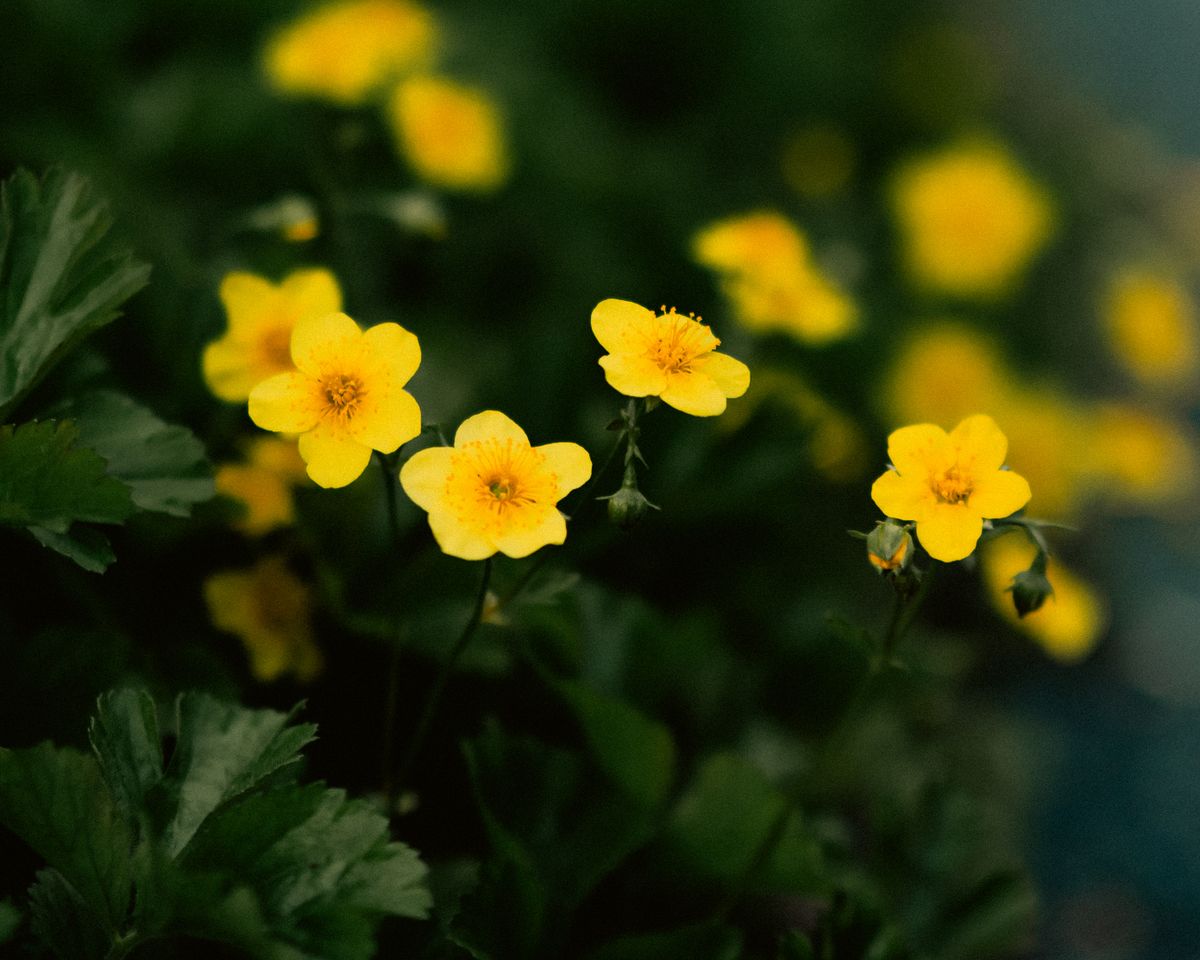
The tormentil is an inconspicuous little rose relative with four-petaled yellow flowers – a rarity, as almost all cinquefoils have five petals. It grows on poor, acidic soils: heaths, matgrass meadows, bog edges, and open pine forests. Above ground, it is easily overlooked; its value lies in the tuberous, woody rhizome, which is dug up in spring or autumn.
The second name Tormentil comes from Latin tormentum, The term "torture" referred to abdominal cramps and colic, against which the root was used as early as the Middle Ages. The German name "Blutwurz" (bloodroot) refers to the red cut surface: when cut, the tannins oxidize in the air and color the tissue deep red. In the doctrine of signatures, this was considered an indication that the plant stops bleeding – in fact, the tannins have an astringent effect on wounds, so the old interpretation coincidentally reflects a real effect.
In the Bavarian Forest and the Bohemian Forest, it has its own tradition as Bloodroot schnappsThe rootstock is steeped in fruit brandy, which then turns reddish-brown and distinctly tart. Today, this is primarily a regional specialty drink, but its origins lie in its former use as a stomach remedy. Due to heavy harvesting pressure and the decline of suitable habitats, one should not dig up the plant oneself – pharmacies stock comes from collections in Eastern Europe and from cultivated sources.
To useWhat tormentil can do for you
Bloodroot is the classic tannin drug Our flora – with a tannin content of 15 to 22 percent, it is among the strongest of all. The European Medicines Agency and Commission E list it as nonspecific acute diarrheal diseases and externally at mild inflammation of the oral and pharyngeal mucosa. Both are based on the same purely physical principle.
Tannins bind to the proteins of the outermost mucous membrane layer, forming a thin, firmer protective layer. In the intestines, this means that the irritated mucous membrane releases less fluid, permeability decreases, and peristalsis calms down. In the mouth, it means that the inflamed area receives a protective coating, which soothes the burning sensation. This isn't an active ingredient that attaches to a specific site—it's a surface reaction, and that's precisely why it's so reliable and well-tolerated.
Two things are involved. First: Tannins do not only bind mucosal proteins. They also bind iron from food and can delay the absorption of medications – therefore, leave at least an hour between taking tablets and not taking them directly with iron-rich meals. Secondly: Diarrhea is a symptom, not a diagnosis. Acute diarrhea in adults can be treated for a few days with tannins and – much more importantly – with Liquids and electrolytes Accompanying symptoms. Symptoms lasting longer than three days, with blood, with high fever, in infants, young children and elderly people: These should be investigated by a doctor, and early on.
IngredientsThat's what's in the rootstock
The largest share is made up of the condensed tannins - Catechin tannins of the proanthocyanidin type, which make up 15 to 22 percent of the dry mass. These are what oxidize in air and color the cut surface red, and they are what create the furry feeling in the mouth. In addition, there are hydrolyzable tannins such as ellagitannins and the characteristic tannins of the genus. Tormentil red, an oxidation product of tannins.
In addition, it contains triterpenes, including tormentoside, as well as flavonoids, phenolic acids, and resin. However, practically only the tannin fraction is crucial for its effects – tormentil is one of the few medicinal plants where the effect is so clearly attributable to a single group of substances.
This leads to a clear rule for preparation: Tannins need heat and time. For the diarrhea tea, the cut rootstock is used as decoction To prepare, bring to a boil and simmer gently for ten to fifteen minutes, then strain. A short infusion yields significantly less extract. For mouthwashes, prepare a correspondingly stronger infusion. A note on tolerability: Concentrated tannins can cause nausea on an empty, sensitive stomach – in that case, use a weaker infusion more frequently.
Enhanced combinationsWhat makes tormentil stronger
With a tannin-containing drug, preparation and distance to other things are crucial - combinations play a smaller role than usual.
Tannins only dissolve completely when boiled - an infusion is not enough.
The most important part of the treatment is not the plant, but the balance of water and salts.
The second classic tannin drug for diarrhea - together as a tea or simply chew blueberries.
Bloodroot astringent, chamomile antispasmodic - a good combination for diarrhea with abdominal cramps.
For sore gums, canker sores and after dental treatments - use a stronger dose than for tea.
After an infection, rebuilding the intestinal flora helps more than any further astringent.
What contradicts itselfIt's best to avoid these combinations.
Without cooking, a large portion of the tannins remain in the rootstock.
Tannins bind to active ingredients and delay their absorption - at least one hour apart.
Tannins significantly inhibit the absorption of iron from plant-based foods.
If diarrhea lasts for three days, the problem is not the dose, but the lack of investigation.
Strong tannin solutions can cause nausea and vomiting.
Diarrhea at this age is a matter for the doctor, not for tea.
ApplicationHow it is used
- Diarrhea teaAdd one teaspoon of chopped rootstock to 250 ml, bring to a boil, simmer for 10–15 minutes, then strain.
- MouthwashDouble the amount, cooked for a correspondingly longer time, cooled - for sore gums and mouth ulcers.
- gargle solutionFor a scratchy throat, drink three to four times a day, but do not drink immediately afterwards.
- Combined with blueberriesCook dried blueberries along with the other ingredients - the second tannin-containing remedy for diarrhea.
- Combination with chamomileFor diarrhea with cramps: Boil tormentil, add chamomile only afterwards and let it steep.
- tinctureAlcoholic extract, diluted for rinsing or taken drop by drop internally.
- Bloodroot schnappsThe Bavarian specialty - rootstock steeped in fruit brandy.
- Wound dressingHistorically: Decoction applied to small, superficial wounds.
- Do not dig it up yourselfPopulations have declined due to habitat loss and harvesting pressure.
- electrolyte solutionThe really important part for diarrhea - water, salt, a little sugar.
As a home remedyThe diarrhea tea
Bloodroot decoction for acute diarrhea
- Place one level teaspoon of cut bloodroot into a small pot containing 250 ml of cold water.
- Bring to a boil, then simmer gently over low heat for ten to fifteen minutes – covered, so that not too much evaporates.
- Strain and drink lukewarm. Two to three cups throughout the day, each at least one hour apart from other medications.
- More important than the tea: Drink plenty of fluids and replace electrolytes at the same time - salted broth, diluted juice or an electrolyte mixture from the pharmacy.
For acute, nonspecific diarrhea and as a complementary treatment for sore mouth and throat mucosa. The tannins thicken the outermost layer of the mucous membrane and thus soothe the irritated intestinal wall – this is easily understood and recognized by the EMA and Commission E. However, one should be aware of the context: In cases of acute diarrhea, the course of the illness is determined by fluid and electrolyte balance, not by the tea. The tea makes it more comfortable and shorter, while the electrolytes ensure its safety.
Two to three cups daily, for a maximum of three days. Leave at least one hour between medications and other medications and not with iron-rich meals. Seek immediate medical attention if you experience diarrhea lasting three days, bloody stools, high fever, severe abdominal pain, or signs of dehydration – and in infants, young children, pregnant women, and the elderly, consult a doctor sooner.
Ayurveda & TCMWhat the old systems say
Ayurveda
Bloodroot is not represented in Ayurveda. Based on its properties, it would be classified as bitter (Kashaya), cool and drying - Pitta and Kapha lowering, Vata Increasing, because bitter substances are drying. For diarrhea, which in Ayurvedic thought is an excess of moisture and movement, this would be the appropriate direction. A general principle, not a traditional one.
Traditional Chinese Medicine
Tormentil is absent from the Chinese Materia Medica, but the principle is firmly established there: herbs that "astringe and stop escape" - such as Wu Bei Zi, the gallnut drug, or Shi Liu Pi, Pomegranate peel contains the same tannins and is used to treat chronic diarrhea. The same rule applies here: astringents should only be given for acute infections once the underlying cause has subsided.
Warning noticesWhen you should be careful
Please note
- Medications: Tannins bind to active ingredients and delay their absorption - maintain a distance of at least one hour.
- Iron: The absorption of plant-based iron is significantly inhibited - do not drink it with iron-rich meals.
- Stomach: Concentrated tannin solutions can cause nausea and vomiting on an empty stomach.
- Duration: Diarrhea lasting three days, accompanied by blood, high fever, or severe pain, should be investigated by a doctor.
- Children and elderly people: Here, diarrhea is a case for the doctor earlier on due to the risk of dehydration.
- Electrolytes: Replenishing fluids and salts is more important than any plant when suffering from diarrhea.
This page provides information and does not replace medical advice. If symptoms persist, please consult a doctor.
Related to the topicRead on and cook along!
Shop links lead to our product pages; it is indicated there if a partner is involved.
SourcesWhat is this based on?
- EMA/HMPC: European Union herbal monograph on Potentilla erecta (L.) Raeusch., rhizoma - traditional use for nonspecific acute diarrhea and mild inflammation of the oral mucosa.
- Commission E: Monograph Tormentillae rhizoma (tormentilla rhizoma), Federal Gazette 1985.
- Blaschek W (ed.): Wichtl - Herbal drugs and phytopharmaceuticals. 6th edition 2016, monograph Tormentillae rhizoma.
- European Pharmacopoeia (Ph. Eur.): Monograph Tormentillae rhizoma - Minimum tannin content.
- Robert Koch Institute: Recommendations for the treatment of acute diarrheal diseases - priority of oral rehydration.


