
Chia seeds (Salvia hispanica)
OriginThe grain of the Aztecs
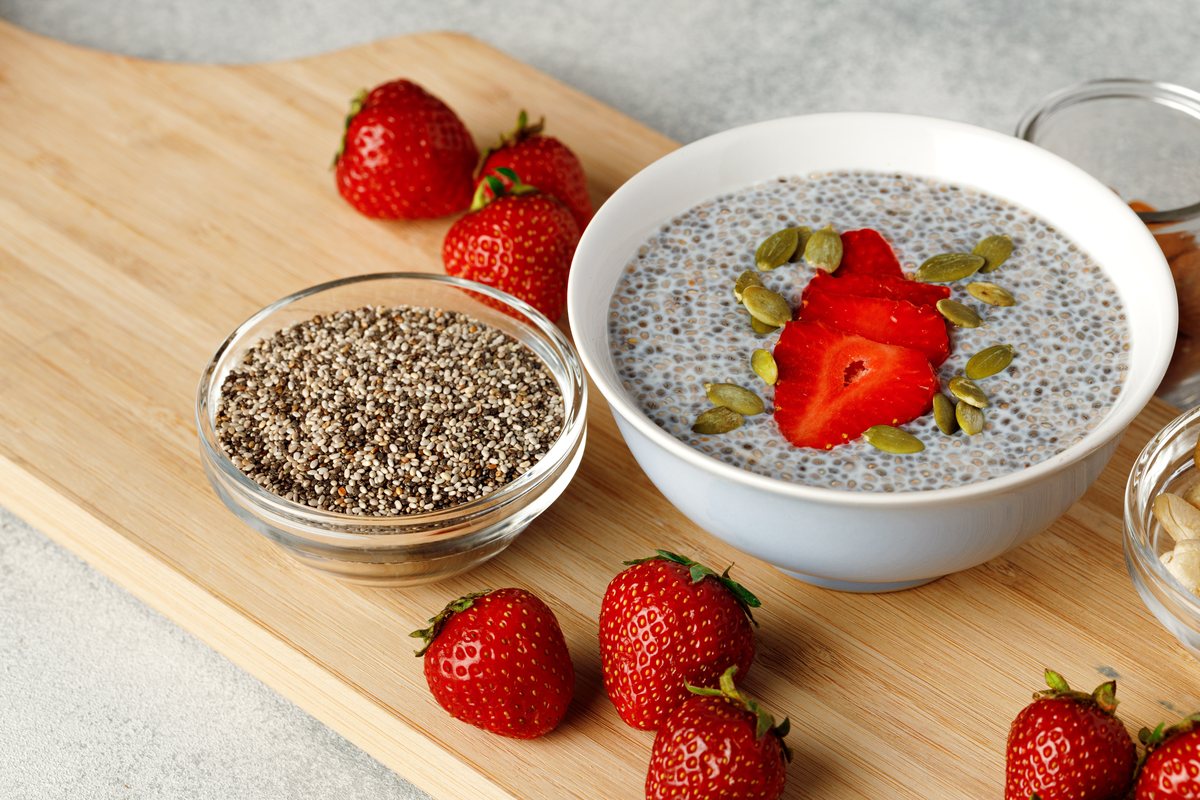
The name comes from Nahuatl: chian It means something like "oily".
Chia was cultivated in Central America even before the Aztecs and was a staple food alongside corn, beans, and amaranth. The seeds were ground, mixed into drinks, and delivered as tribute to the rulers. After the Spanish conquest, the plant largely disappeared from the fields.
Chia was rediscovered in Argentina and Mexico in the 1990s. In the EU, chia seeds have been approved as a novel food since 2009 – initially only for bread, but now for many products. Chia is now also cultivated in some parts of Germany, but the majority comes from South America.
To useWhat chia seeds can do for you
100g of chia seeds provide approximately 34g Dietary fiber, 17 g protein and about 30 g fat, of which around 18 g Alpha-linolenic acid (plant-based omega-3). This is supplemented with approximately 600 mg. Calcium, Magnesium, phosphorus, and iron. A typical 15g serving therefore provides about 5g of fiber and 2.5g of omega-3.
The highlight is her mucusThe seed coat forms a gel in liquid, which provides long-lasting satiety, keeps stools soft, and slows the rise in blood sugar after a meal. However, if you don't drink enough, the opposite effect occurs – chia seeds always need sufficient water.
Clinical studies to date have shown only small or inconsistent effects on weight, blood pressure, and blood lipids. Only a small portion of the plant-based omega-3 fatty acids is converted into EPA and DHA in the body. Therefore, chia seeds are a good source of fiber and omega-3, but they do not replace fish or algae oil, nor a balanced diet.
IngredientsThis is what's in chia seeds
Chia seeds contain fat with a very high proportion of alpha-linolenic acid, protein, soluble and insoluble fiber (especially the swellable seed mucilage), calcium, magnesium, phosphorus, iron, zinc, and polyphenols such as caffeic acid, chlorogenic acid, quercetin, and myricetin.
The antioxidants in the seed coat allow whole seeds to have a long shelf life. Ground seeds and chia oil, on the other hand, oxidize quickly and should be stored in a cool place.
Enhanced combinationsWhat makes chia stronger
Chia needs liquid - and good partners, because it hardly tastes of anything itself.
Allow to soak for at least 10 minutes.
It helps with iron absorption and adds flavor.
Overnight oats with chia seeds.
Similar profile, short distances.
1 tbsp chia + 3 tbsp water = 1 egg.
For chia pudding.
What contradicts itselfIt's best to avoid these combinations.
Swells in the esophagus - risk of choking.
Otherwise, more likely constipation.
This is what the EU recommends for packaged seeds.
ALA is hardly converted to EPA/DHA.
Oxidizes quickly.
Only fully soaked.
In the kitchenWhere they belong
- Chia puddingOvernight with plant-based milk.
- Overnight OatsWith oats and berries.
- Chia jamBerries with chia seeds instead of gelling sugar.
- SmoothieSoaked in a spoonful.
- Brot und SemmelnIn the dough or on top.
- Egg substituteChia gel in the cake.
- Yogurt toppingWith fruit.
- Energy ballsWith dates and nuts.
- salad dressingChia gel thickens the sauce.
- lemonadeChia Fresca from Mexico.
As a home remedyChia gel for a calm digestion
Chia gel
- Put 1 tablespoon of chia seeds into a glass.
- Pour 150 ml of water or unsweetened tea over it and stir well.
- Stir again after 5 minutes, then let it soak for 15 to 30 minutes.
- Eat the gel plain, with a little lemon or in yogurt, and drink another glass of water with it.
For sluggish digestion, it acts as a mild bulking agent, similar to flaxseed or psyllium husk. The gel softens the stool and fills the stomach.
One glass per day. Always pre-soaked and with plenty of liquid. Take medication 1 to 2 hours apart.
Ayurveda & TCMWhat the old systems say
Ayurveda
Chia is not described in classical Ayurveda. According to current understanding, the soaked seeds are considered cooling, heavy, and moistening – balancing for Pitta, but not essential for Kapha.
Traditional Chinese Medicine
Chia seeds also play no traditional role in Traditional Chinese Medicine (TCM). As a mucilaginous herb, it would be classified as a moistening and expectorant, similar to flaxseed.
Warning noticesWhen you should be careful
Please note
- Swallow: Never eat dry food - always soaked or with plenty of liquid.
- Medications: Take with a 1 to 2 hour interval between doses, because bulking agents delay absorption.
- Crowd: no more than 15 g daily.
- Colon: Avoid if you have intestinal narrowing or difficulty swallowing.
- Allergy: Cross-reactions with other members of the mint family, such as mint, oregano, or sage, are rare.
This page provides information and does not replace medical advice. If symptoms persist, please consult a doctor.
Related to the topicRead on and cook along!
Shop links lead to our product pages; it is indicated there if a partner is involved.
SourcesWhat is this based on?
- Ullah R et al. Nutritional and therapeutic perspectives of Chia (Salvia hispanica L.): a review. Journal of Food Science and Technology 2016; 53(4): 1750–1758.
- Teoh SL et al. Clinical evidence on dietary supplementation with chia seed (Salvia hispanica L.): a systematic review and meta-analysis. Nutrition Reviews 2018; 76(4): 219–242.
- Commission Decision 2009/827/EC on the authorisation of the placing on the market of chia seeds as a novel food ingredient.
- Rawl R, Kahrilas PJ. Esophageal food impaction caused by chia seeds. American Journal of Gastroenterology 2014; Conference paper.
- USDA FoodData Central: Seeds, chia seeds, dried.


